Churchill, Roosevelt and Stalin met in Tehran in 1943. Roosevelt apparently said that Churchill had a thousand ideas a day, four of them good. Did he not understand that this is how you have good ideas. Quality is a function of quantity.
— Nick
In 1786, Tehran was chosen as the capital of Iran, and it is now the country’s largest city, home to around 9 million people at the southern foot of the Alborz Mountains. Six Americans posing as a film crew top a list that also holds the Big Three at the Soviet embassy, a Mughal diamond, a photographer king shot at prayer and a tower that outlived its name.
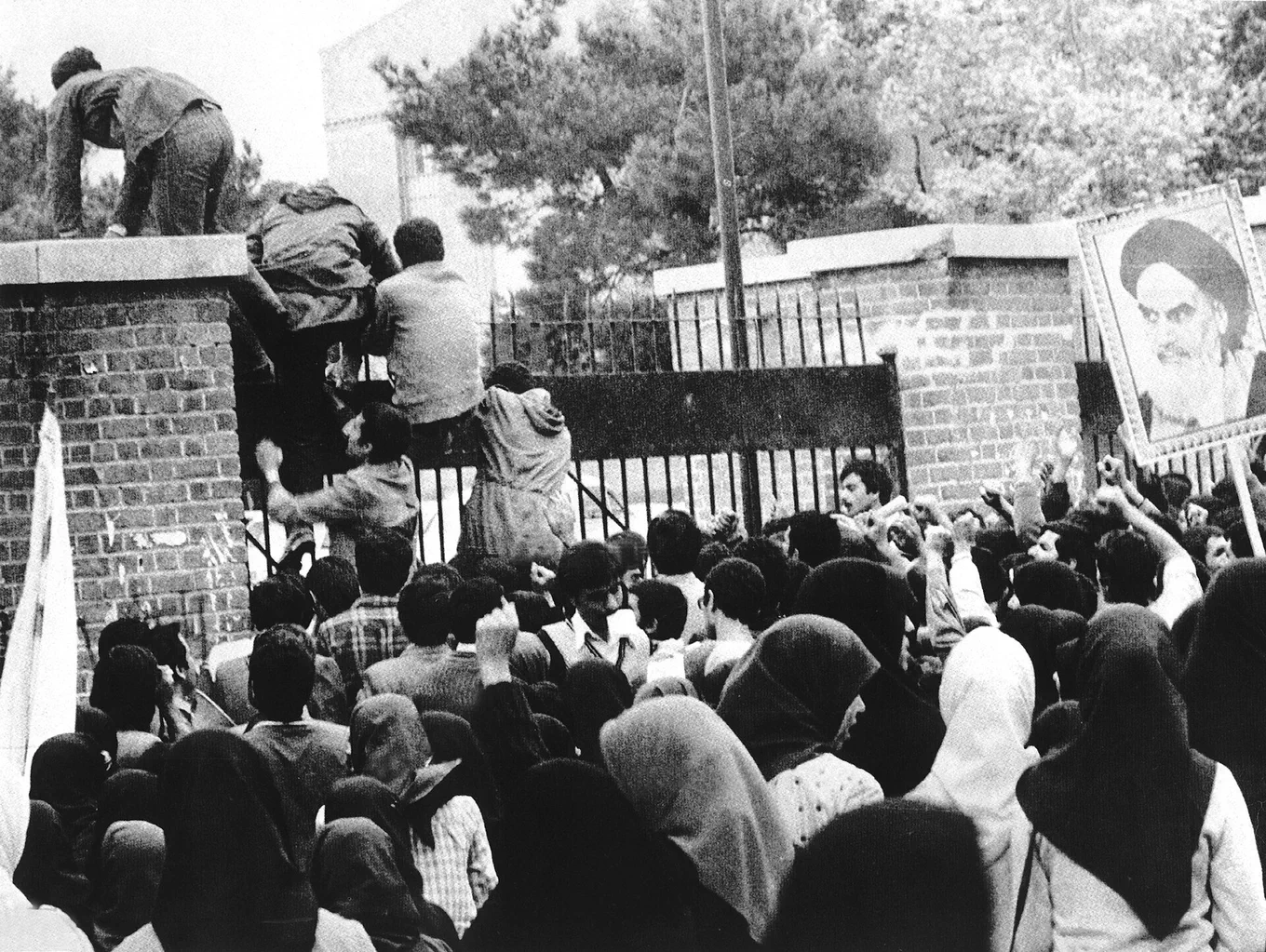
Stand here. Outside the former US embassy compound. Part of it is now the Den of Espionage Museum, and its walls carry anti-American murals.
Students climbing the gates of the US embassy compound in Tehran as it was stormed at the start of the hostage crisis.Unknown / Public domain.
Ben Affleck’s Argo won Best Picture, and its story starts here. In 1979, Iranian students stormed the US embassy and took dozens of diplomats hostage, but six Americans evaded capture. Two Canadian diplomats hid them in their homes for 79 days. Then the CIA gave the six a cover story. They were Canadians, scouting locations for a science-fiction film called Argo. They walked through passport control at Mehrabad Airport. America thanked Canada with flags and billboards. The CIA’s full part stayed secret until 1997.
2 Stalin, Roosevelt, and Churchill at Tehran’s Soviet embassy
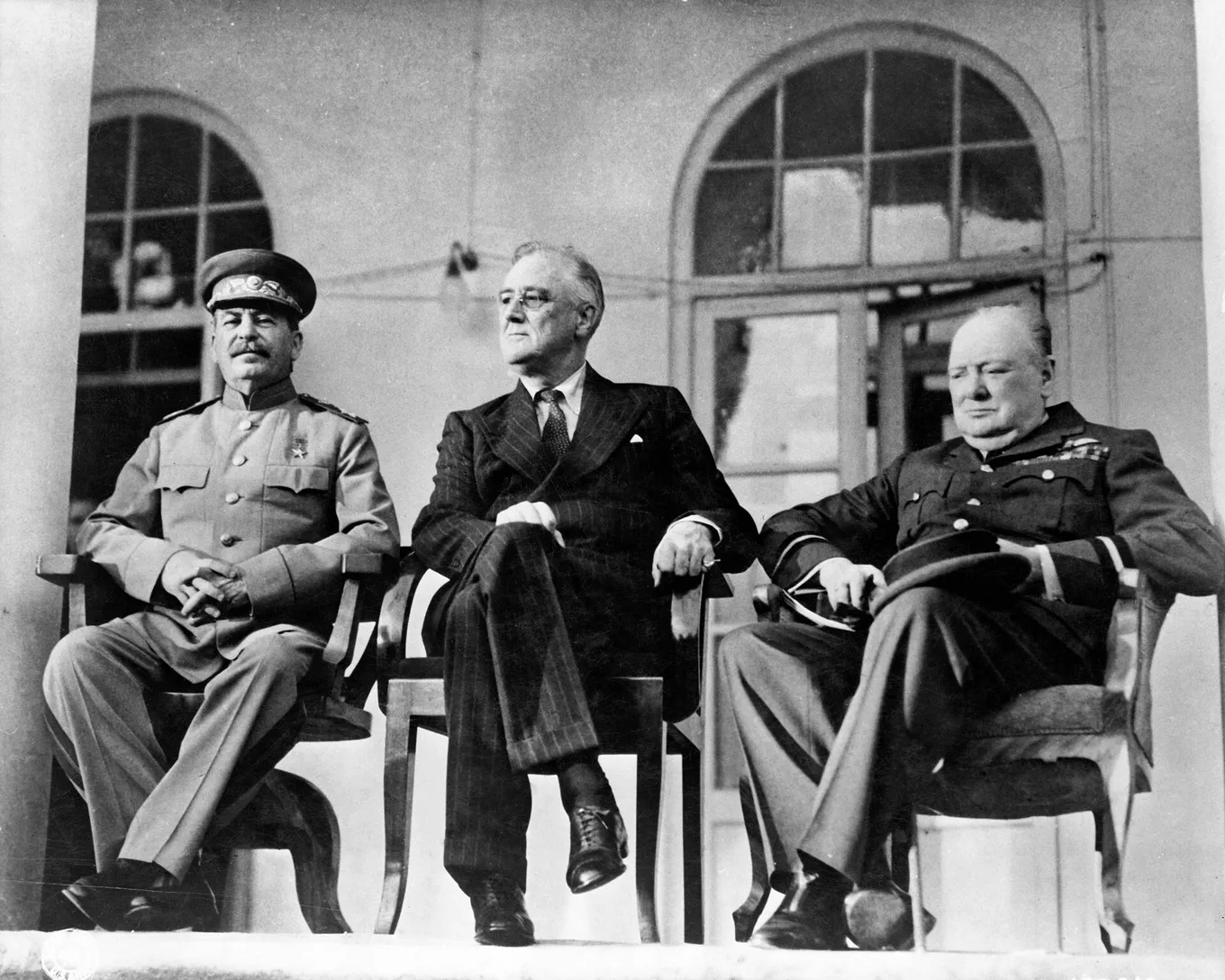
Stand here. Outside Atabek Garden, on Nofel Loshato Street. The Russian embassy, Soviet in 1943, has occupied the garden since 1915.
Stalin, Roosevelt and Churchill on the portico of the Soviet embassy in Tehran during the Tehran Conference.U.S. Signal Corps / Public domain.
In November 1943, Churchill, Roosevelt, and Stalin met here as the Big Three for the first time, and fixed the invasion of France for May 1944. Roosevelt had settled into the American legation, but the Soviets warned of a German plot to kill him. He didn’t believe it, and British intelligence called it “complete baloney”, but he moved into the Soviet embassy, guarded by thousands of secret police. Americans suspected Stalin had invented the plot. With Roosevelt under his roof, Stalin could spy on him more easily.
3 Nader Shah and the Sea of Light diamond in Tehran
Stand here. The Treasury of National Jewels, inside the Central Bank of Iran on Ferdowsi Street. The jewels went back on public show in the 1990s.
Nader Shah of Iran occupied Delhi in 1739 and took the entire treasury of the Mughal emperors, the Koh-i-Noor and the Peacock Throne included. Among the haul was the Daria-i-Noor, the Sea of Light, the world’s largest known pink diamond. Eight years later, Nader was assassinated in a rebellion, and his empire quickly fell apart. The diamond passed from his grandson to another ruler and into the Qajar treasury. The Koh-i-Noor ended up in Britain’s crown jewels. The Sea of Light is still here.
4 Naser al-Din Shah, the photographer king of Golestan Palace
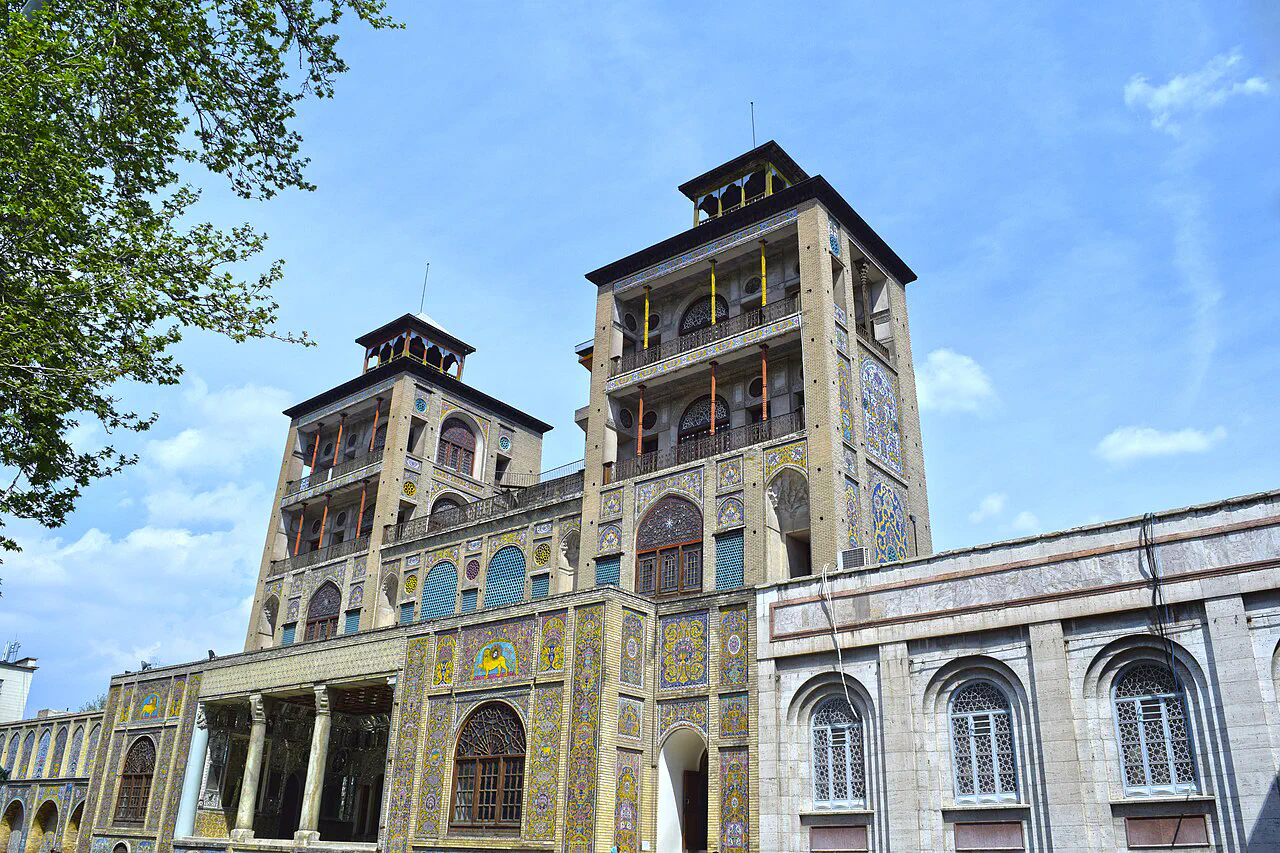
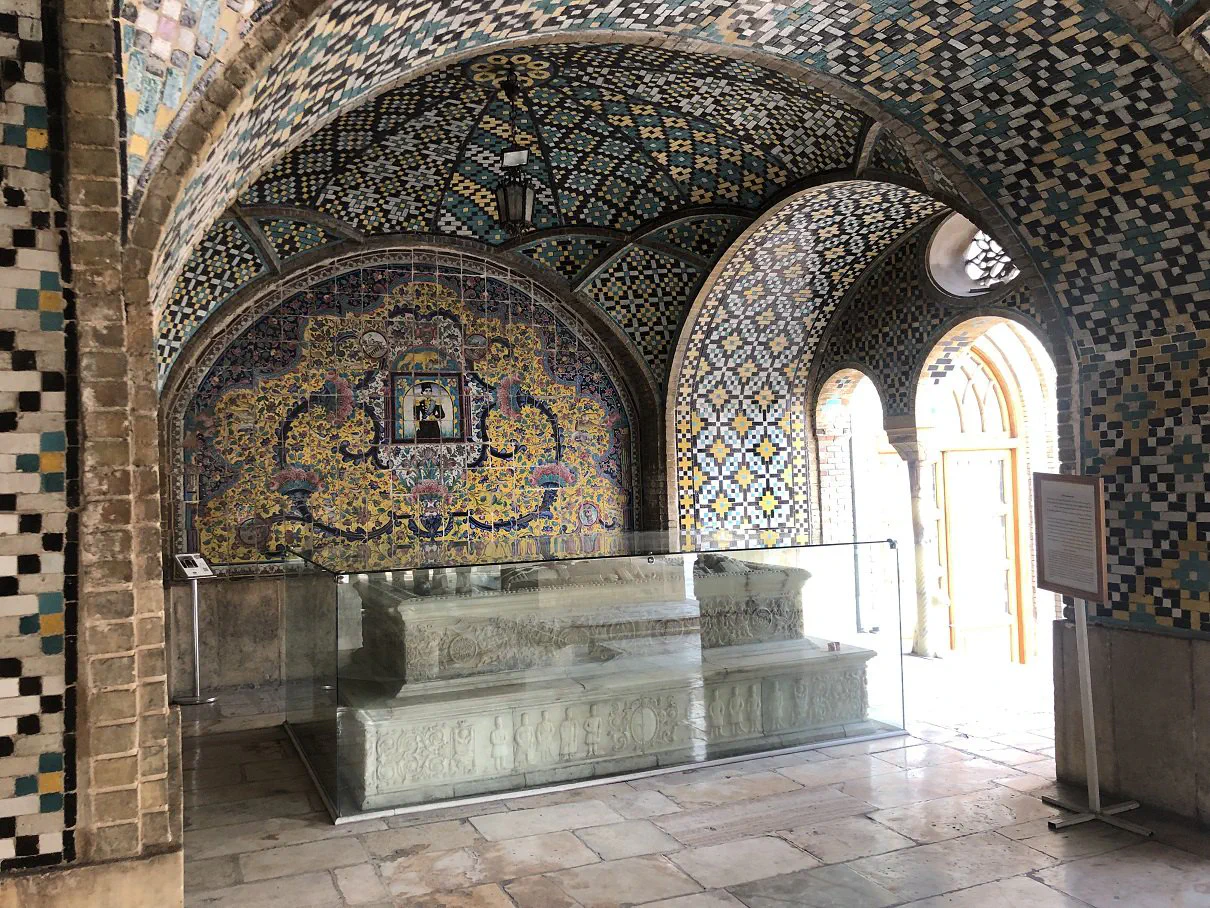
Stand here. Golestan Palace, the Qajar royal complex, now mostly museums. His marble tombstone, bearing his full effigy, is kept in its Khalvat-e Karim Khani.
One of Iran’s first photographers was its king, Naser al-Din Shah, who ruled for close to 48 years. He set up a studio in this palace and had himself photographed hundreds of times. But on 1 May 1896, as he prayed at a shrine near Tehran, a man shot him with a revolver said to be old and rusty. The killer had planned it in Istanbul the year before, and was hanged in public that August. The Shah was buried in the shrine where he fell.
5 Hossein Amanat, the exiled architect of the Azadi Tower
Stand here. Azadi Square, once the westernmost entrance to the city. The tower still stands, about 45 metres of white marble, with a museum beneath it.
At 24, Hossein Amanat won a national competition to design a gateway to Tehran. It was built in 1971 for the 2,500th anniversary of the Persian Empire, and named Shahyad, the Shah’s Memorial. After the 1979 revolution, a monument to the Shah looked an obvious target, but the tower survived, renamed Azadi, or Freedom. Amanat, a member of the persecuted Baháʼí Faith, was outside Iran when the revolution came, and settled in Canada. As Radio Free Europe put it, his best-loved work was co-opted by the government that once put him on a death list.
Pack nothing. Leave Friday.
Every Friday, I write a free letter, Journey, that takes us on a trip through places, stories, and ideas.
Persepolis(Marjane Satrapi, 2000–2003). An autobiographical graphic novel. Satrapi shelters in her basement as Tehran comes under attack, and later says goodbye at Mehrabad Airport as she leaves for Paris.
Reading Lolita in Tehran(Azar Nafisi, 2003). A memoir of teaching English literature at the University of Tehran, and of the seven women students who met weekly at her house to discuss Western literature.
Films to watch before you visit Tehran
Argo(Ben Affleck, 2012). A film. The embassy seizure and the escape of the six, shot in Los Angeles and Istanbul.
A Separation(Asghar Farhadi, 2011). A film. Nader, Simin, and their ten-year-old daughter, Termeh, an upper-middle-class family living in a flat in Tehran.
Taxi*, also known as *Taxi Tehran(Jafar Panahi, 2015). A docufiction film. Panahi drives the streets of Tehran pretending to be a share-taxi driver, filming in the open.
Questions
Where was the Tehran Conference held?
At the Soviet embassy, from 28 November to 1 December 1943. It stood next to the British embassy and was guarded by thousands of secret police. The Russian embassy has occupied the same site, Atabek Garden on Nofel Loshato Street, since 1915.
Was Argo filmed in Tehran?
No. Filming began in Los Angeles in August 2011, with more in McLean, Virginia; Washington, D.C.; and Istanbul. The film’s chase as the plane takes off did not happen. The real six passed through passport control at Mehrabad Airport on the morning of Sunday 27 January 1980.
When did Tehran become the capital of Iran?
In 1786, when Agha Mohammad Khan of the Qajar dynasty chose it. The Qajars’ royal complex, Golestan Palace, still stands in the city. It was inscribed as a UNESCO World Heritage Site in 2013 and is used mainly as museums.