The Hague, the third-largest city in the Netherlands, sits on the North Sea coast and is the seat of the Dutch government, though Amsterdam is the official capital. It had no city rights until 1806. Its stories are a two-guilder Vermeer, two brothers lynched outside a prison, a philosopher’s sign that never went up, a painter who bought his own panorama, and a palace built to end war.
1 The two-guilder Girl with a Pearl Earring, Mauritshuis
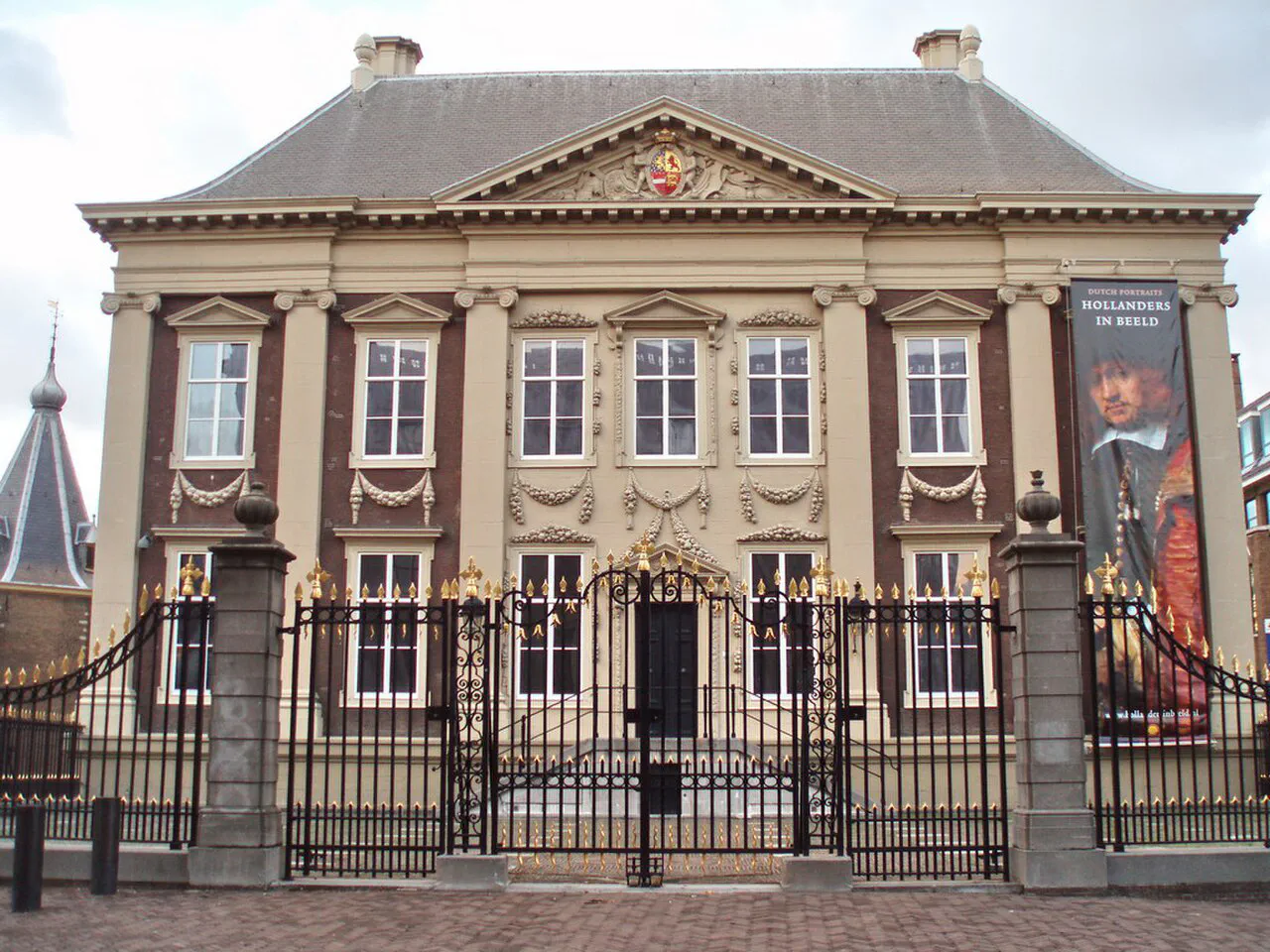
Stand here. The Mauritshuis, at Plein 29 beside the Binnenhof and the Hofvijver pond. An art museum, and the painting’s home since 1902.
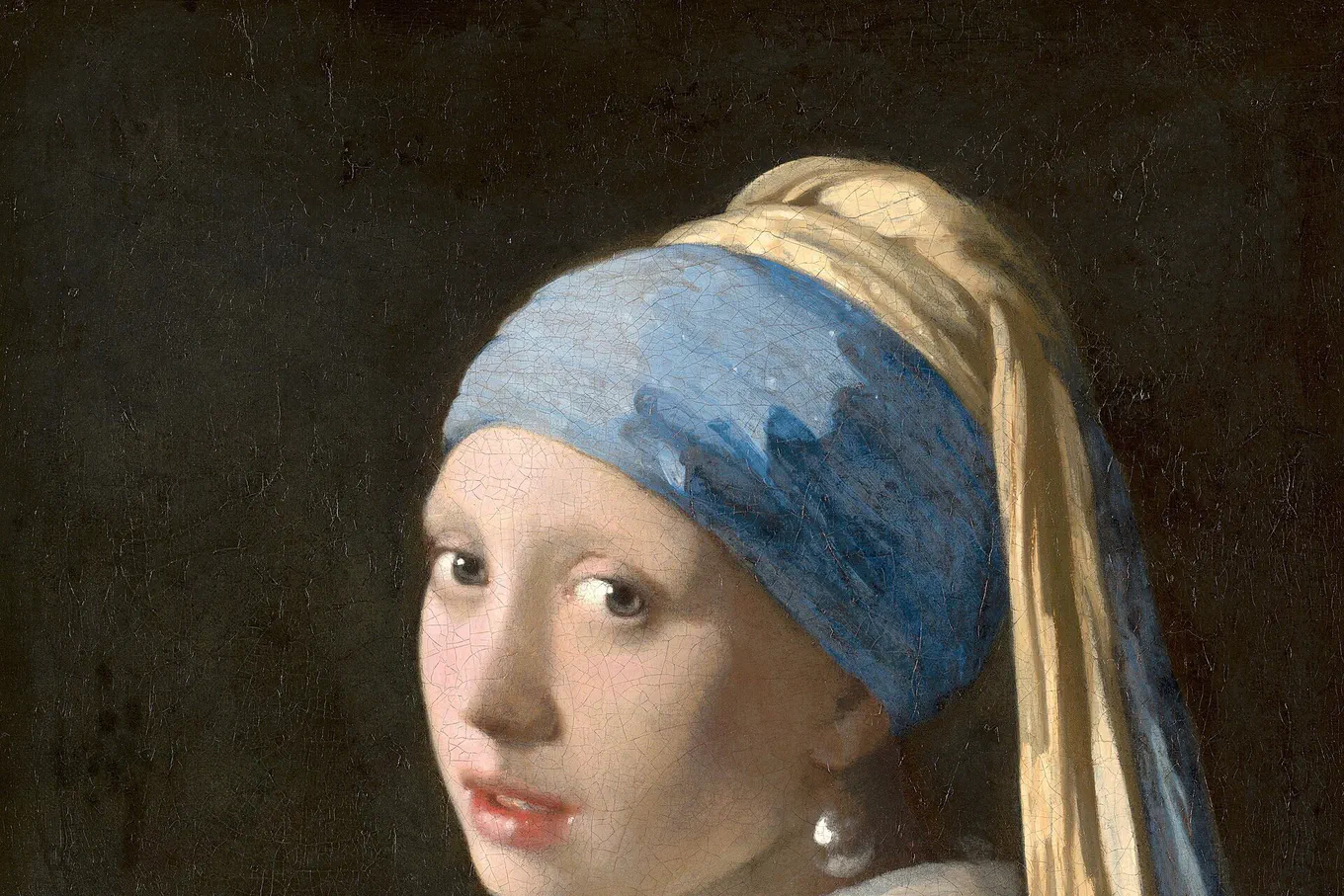
Vermeer’s “Girl with a Pearl Earring”, painted around 1665 and held by the Mauritshuis in The Hague.Johannes Vermeer / Public domain.
Vermeer’s Girl with a Pearl Earring, the painting behind the novel and the Scarlett Johansson film, was once sold in The Hague for almost nothing. In 1881, it came up at auction with parts of its paint coming away. A collector, Arnoldus des Tombe, bought it on the advice of a man who wanted to keep Vermeers from going abroad. Des Tombe had no heirs, so he left the painting to the Mauritshuis. For a Vermeer, he had paid two guilders and thirty cents, about €24 at 2015 prices.
2 The De Witt brothers and the mob at the Gevangenpoort
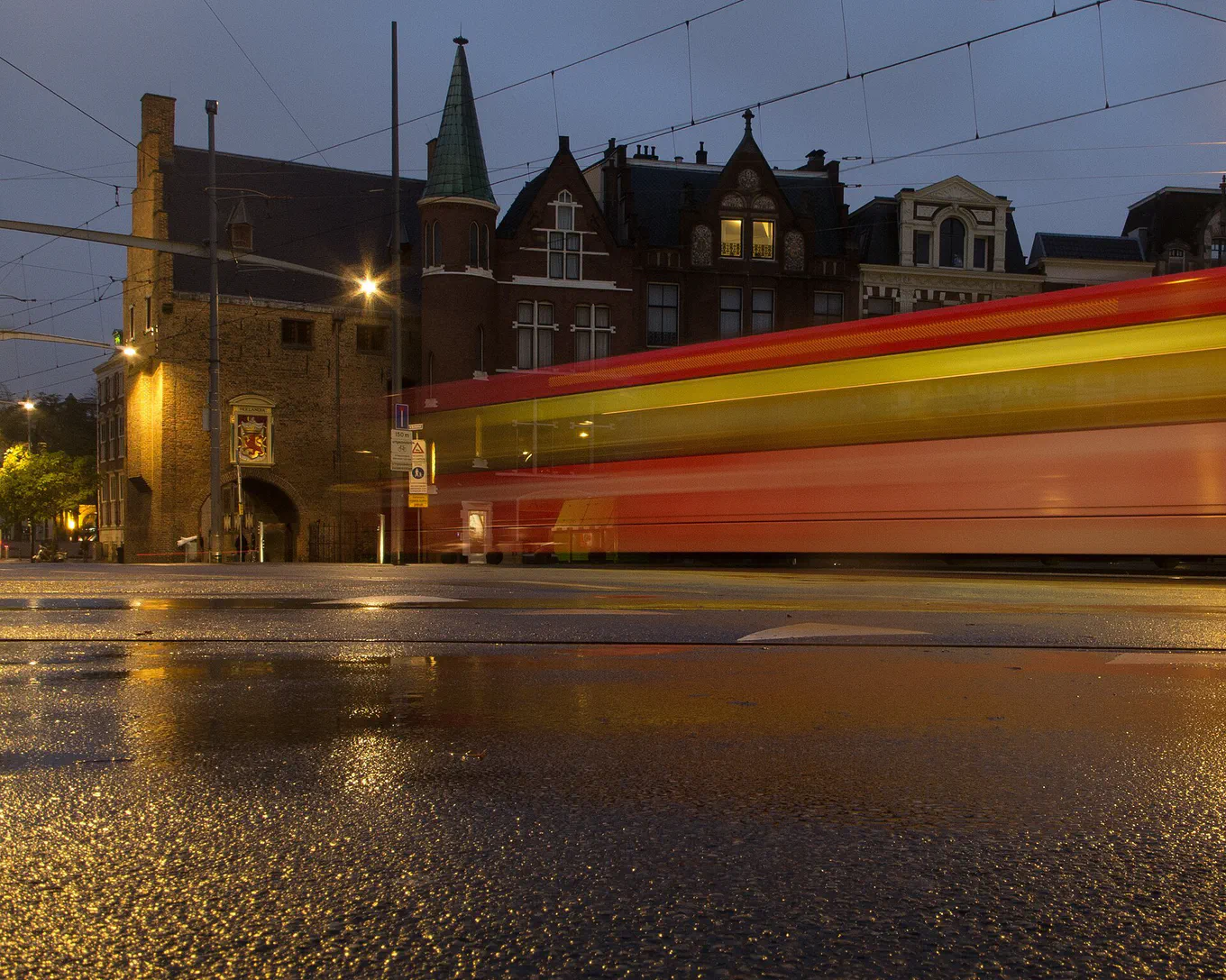
Stand here. The Gevangenpoort, a medieval gate and prison on the Buitenhof, a prison museum since 1882. The brothers died on the square in front.
In 1672, a year of war, Johan de Witt, who ran the Dutch Republic’s politics, survived a knife attack and resigned. It wasn’t enough for his enemies. His older brother Cornelis was arrested on trumped-up charges and sentenced to exile. On 20 August, Johan went the few steps from his house to the Gevangenpoort to see him off. Members of The Hague’s civic militia shot both brothers and left them to the mob. Their naked, mutilated bodies were strung up on the public gibbet.
3 Spinoza’s sign for the De Witt murderers, Paviljoensgracht
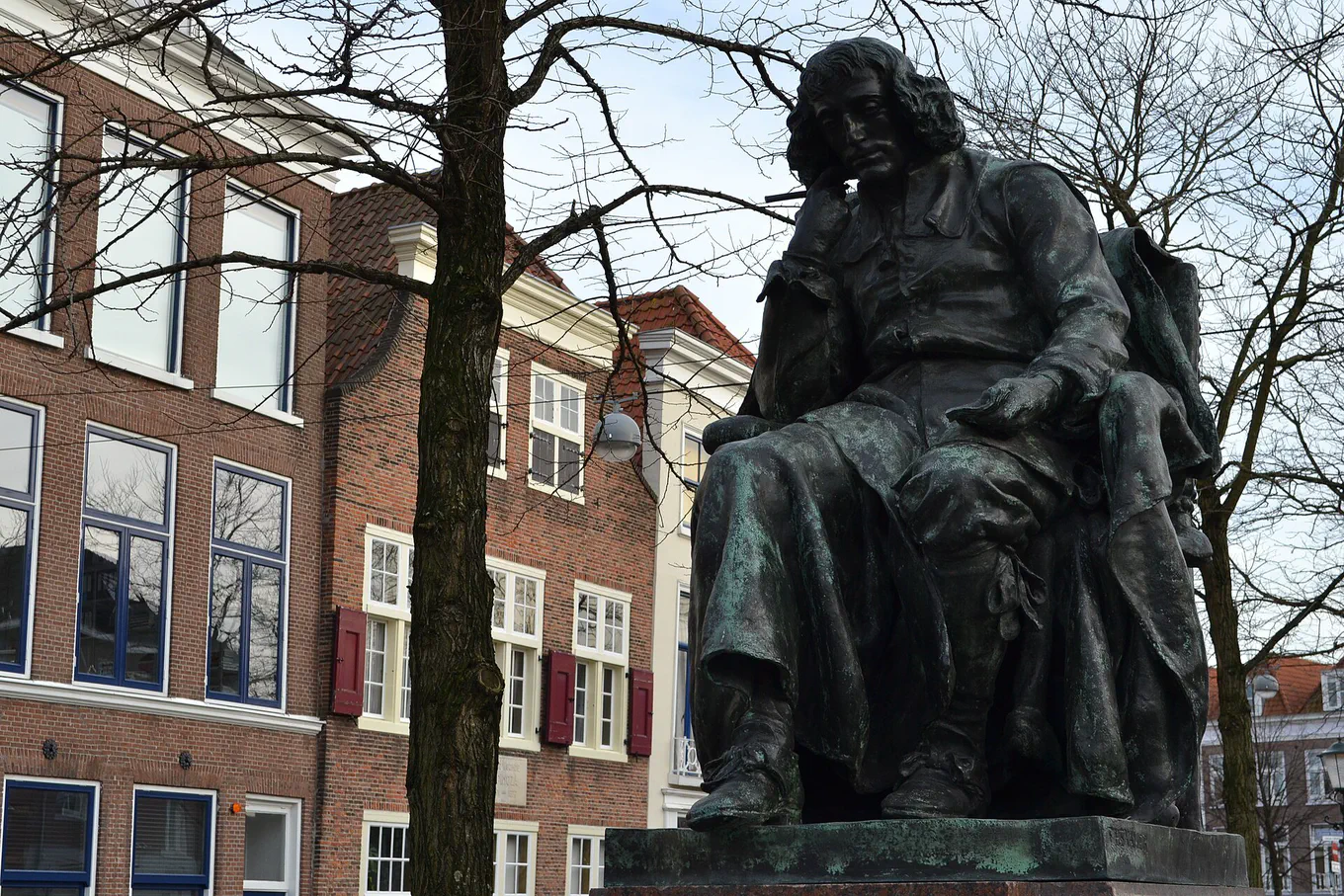
Stand here. Paviljoensgracht 72–74, the house of the decorative painter Hendrick van der Spijck, still standing. Spinoza’s statue is diagonally opposite.
The philosopher Baruch Spinoza moved to The Hague in 1670 and earned his living grinding lenses. When the De Witt brothers were lynched in 1672, the story goes that he was so shocked he wanted to put up a placard at the spot reading ultimi barbarorum, “the worst barbarians”. A landlord or friend stopped him, and probably saved his life. In 1677, Spinoza died in his first-floor room here, of a lung illness that grinding glass may have made worse. He never saw his masterpiece, the Ethics, in print.
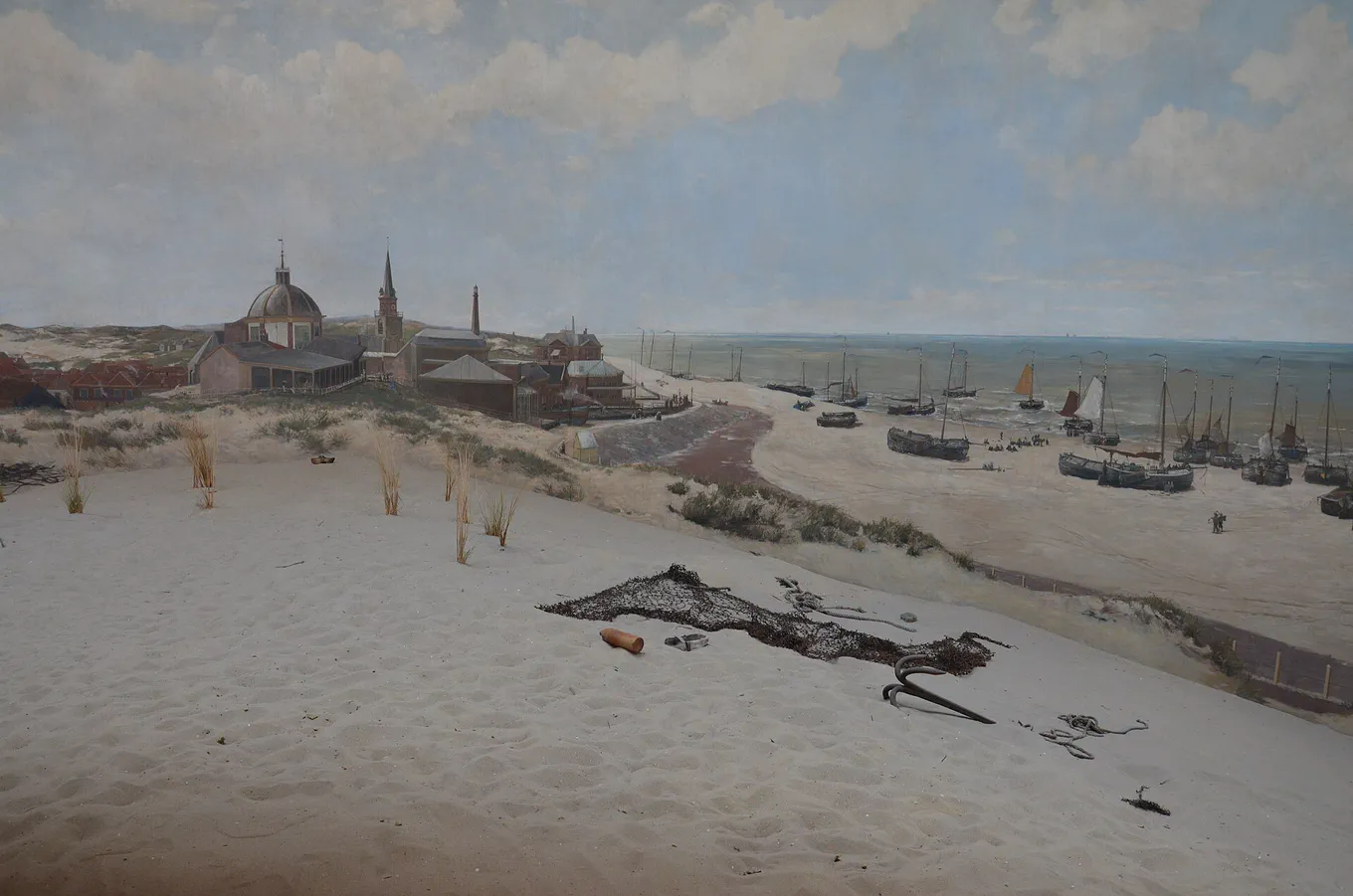
4 Hendrik Mesdag buys his own panorama of Scheveningen
Stand here. Panorama Mesdag, Zeestraat 65, now a museum. It is the oldest panorama in the world still in its original location.
At 35, Hendrik Willem Mesdag gave up banking to paint the sea. A Belgian company hired him to paint a panorama, a picture that circles the viewer, of Scheveningen’s sea, dunes, and fishing village. With his wife, Sientje, and three other painters, he finished it in four months. But the fashion for panoramas was passing, and in 1886 the company went bankrupt. Mesdag was so upset that he bought his own masterpiece. He paid its losses himself for the next 29 years, until he died in 1915.
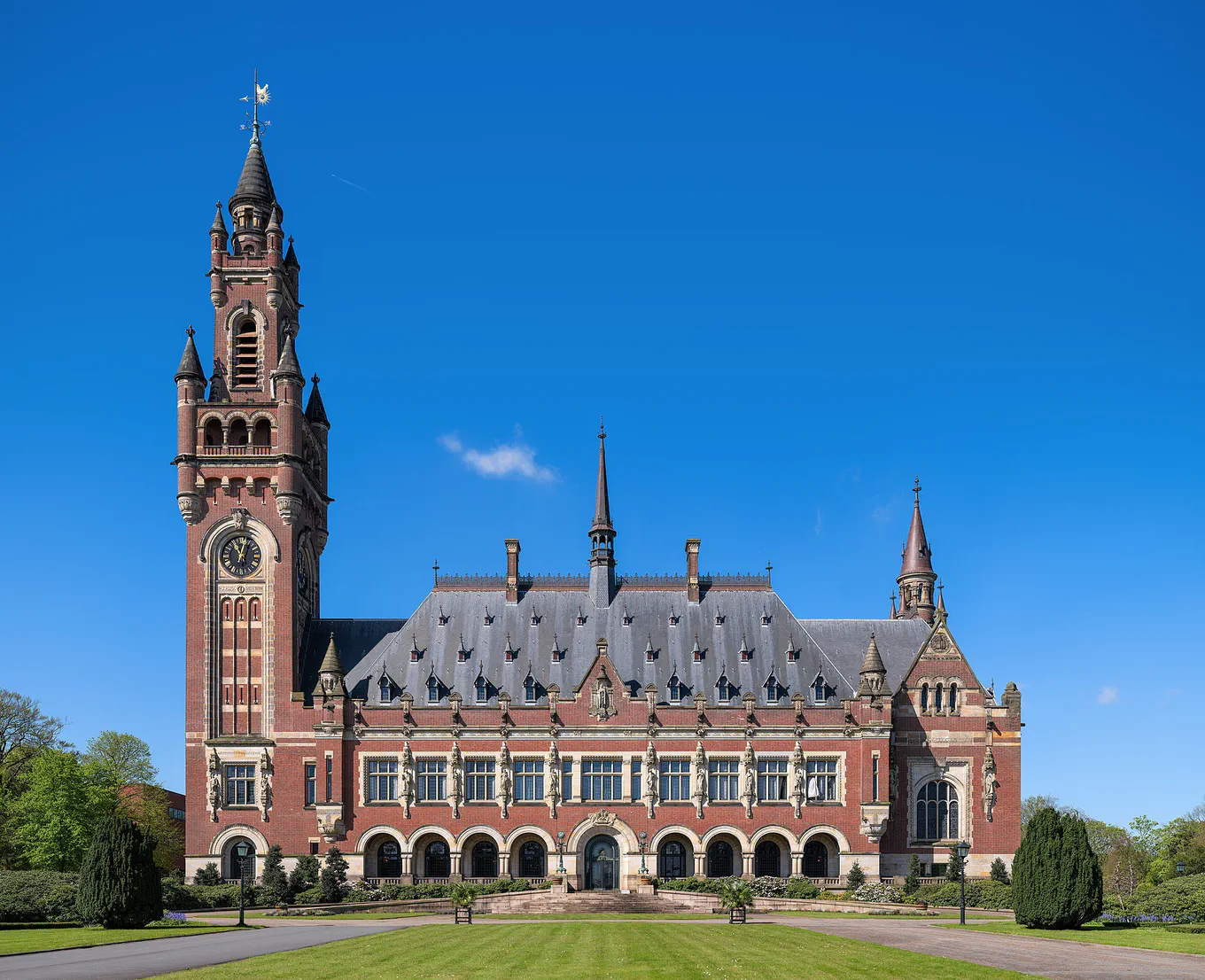
5 Andrew Carnegie’s Peace Palace and the war that followed
Stand here. The Peace Palace, Carnegieplein 2, home of the International Court of Justice. The palace opens only for guided tours.
Andrew Carnegie, the industrialist who paid for Carnegie Hall in New York, gave $1.5 million to build a palace in The Hague for a court created to end war. At its opening on 28 August 1913, he predicted that the end of war was “as certain to come, and come soon, as day follows night”. The next summer, as delegates made their way to a peace conference by train, Germany was invading Belgium.
Eline Vere(Louis Couperus, 1889). A novel set in Hague society, written in the house at Surinamestraat 20.
Girl with a Pearl Earring(Tracy Chevalier, 1999). A historical novel imagining how Vermeer’s painting came to be made. The painting it imagines hangs in the Mauritshuis.
Intimacies(Katie Kitamura, 2021). A novel. A woman leaves New York for The Hague to interpret at the International Criminal Court, for a former president on trial for war crimes.
Films to watch before you visit The Hague
Black Book(Paul Verhoeven, 2006). A film. A Jewish woman under a false name joins a resistance group in The Hague, where the German headquarters was.
Girl with a Pearl Earring(Peter Webber, 2003). A film of Chevalier’s novel, with Scarlett Johansson as a servant in Vermeer’s household and Colin Firth as the painter.
The Hitman’s Bodyguard(Patrick Hughes, 2017). A film. An imprisoned hitman is escorted from the UK to testify at the International Criminal Court in The Hague, arriving with seconds to spare.
Questions
Is The Hague the capital of the Netherlands?
No. Amsterdam is the official capital, but The Hague is the seat of government. The Cabinet, the States General (the Dutch parliament), the Supreme Court, and the Council of State are all based here, and so is the International Court of Justice.
Where can you see Girl with a Pearl Earring?
In the Mauritshuis, an art museum at Plein 29, beside the Binnenhof and the Hofvijver pond. The painting has been in its collection since 1902. After years of being shown around the world, it came back to stay in 2014.
Can you go inside the Peace Palace?
Only on a guided tour, for both the palace and its gardens. The visitor centre in the entrance building looks out over both. The palace houses the International Court of Justice and the Permanent Court of Arbitration.