Shawshank is my favourite film, and the Stephen King story behind it is called Rita Hayworth and Shawshank Redemption. Before she was a pin-up on a cell wall, she was Margarita Cansino, twelve, dancing in Tijuana because California said she was too young. A week after a studio boss saw her, she had a screen test.
— Nick
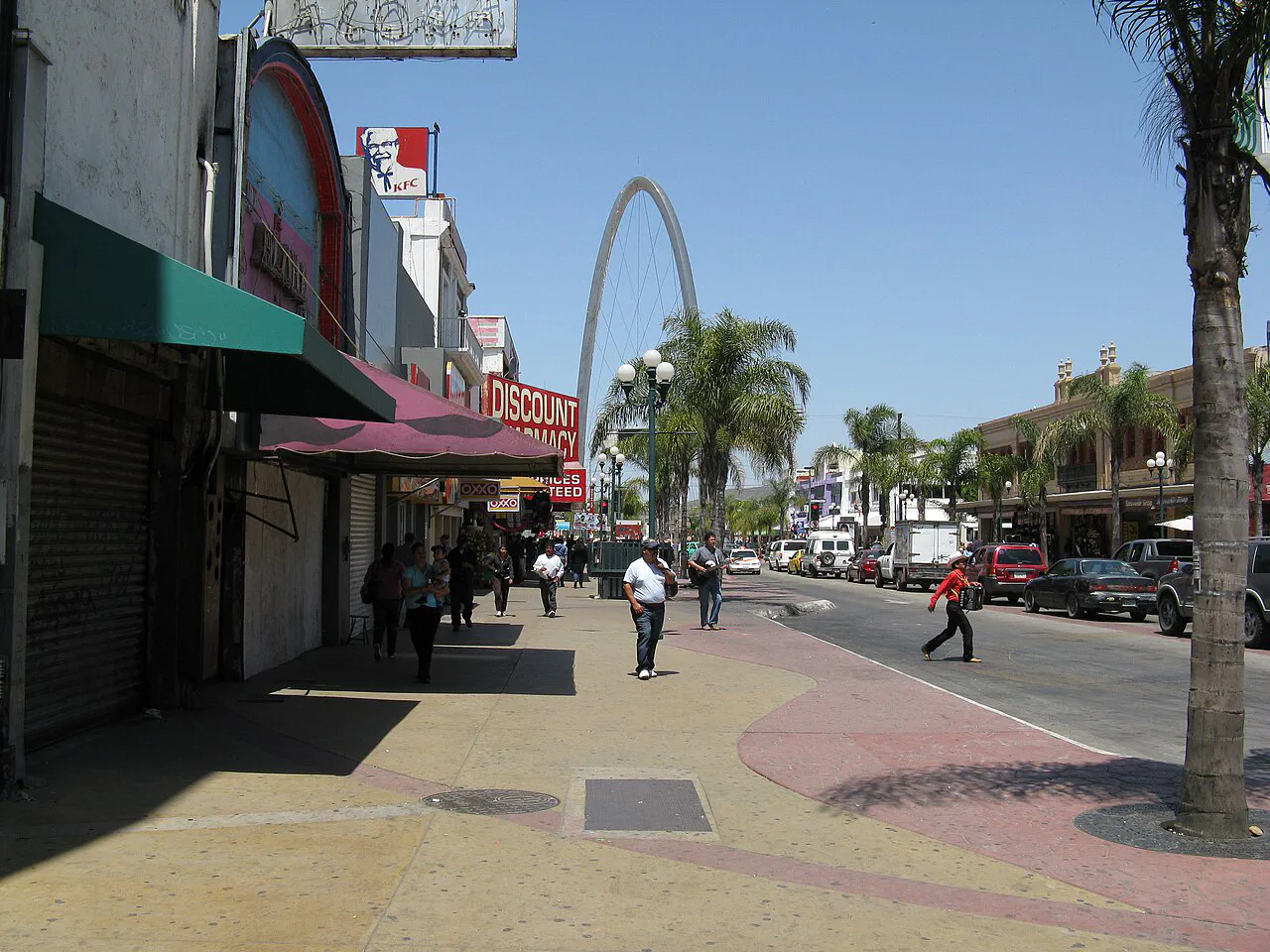
Tijuana is the most populous city in Baja California, Mexico, on the border with the United States, and it shares a metro area with San Diego. It dates its founding to 11 July 1889. In the 1920s, Prohibition sent Americans over the border for legal drinking and gambling. Its stories are a salad, a twelve-year-old dancer, a racehorse’s last race, a trumpet record, and a First Lady at the fence.
1 Caesar Cardini and the first Caesar salad in Tijuana
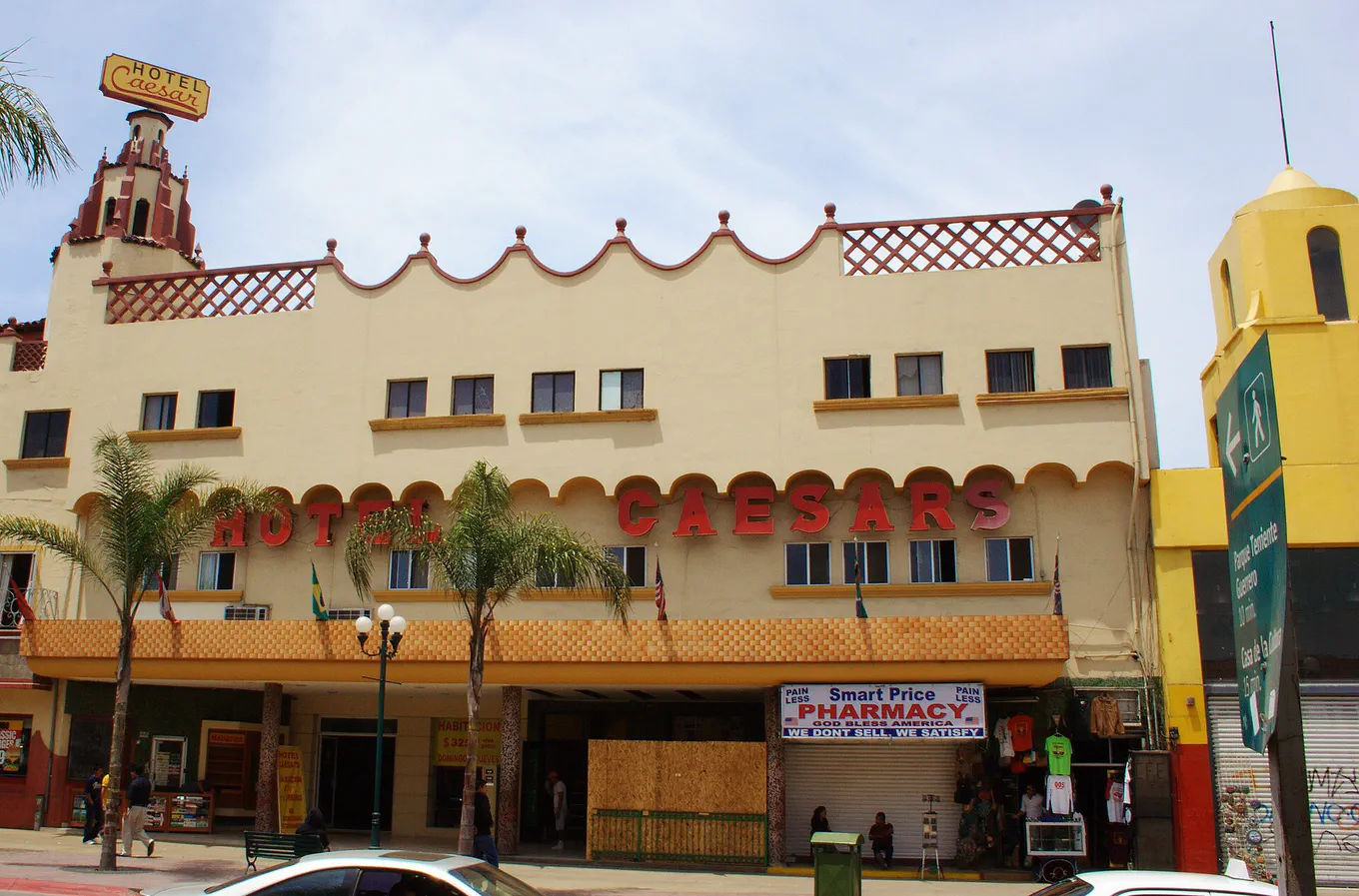
Stand here. Caesar’s, in the hotel of the same name on Avenida Revolución. In 1931, the Cardinis moved to a larger building with hotel rooms, so this isn’t the 1924 kitchen.
The Caesar salad was born in Tijuana on 4 July 1924, at Caesar Cardini’s restaurant, Caesar’s. Cardini, an Italian immigrant, lived in San Diego but ran Caesar’s across the border for Americans getting round Prohibition. By one account, a Fourth of July rush left the kitchen short, so Cardini made do with what he had and tossed the salad at the table. His brother, several of his staff, and a cook’s family have all claimed it too. At Caesar’s, waiters still toss the salad at the table.
2 Rita Hayworth, discovered dancing at Agua Caliente in Tijuana
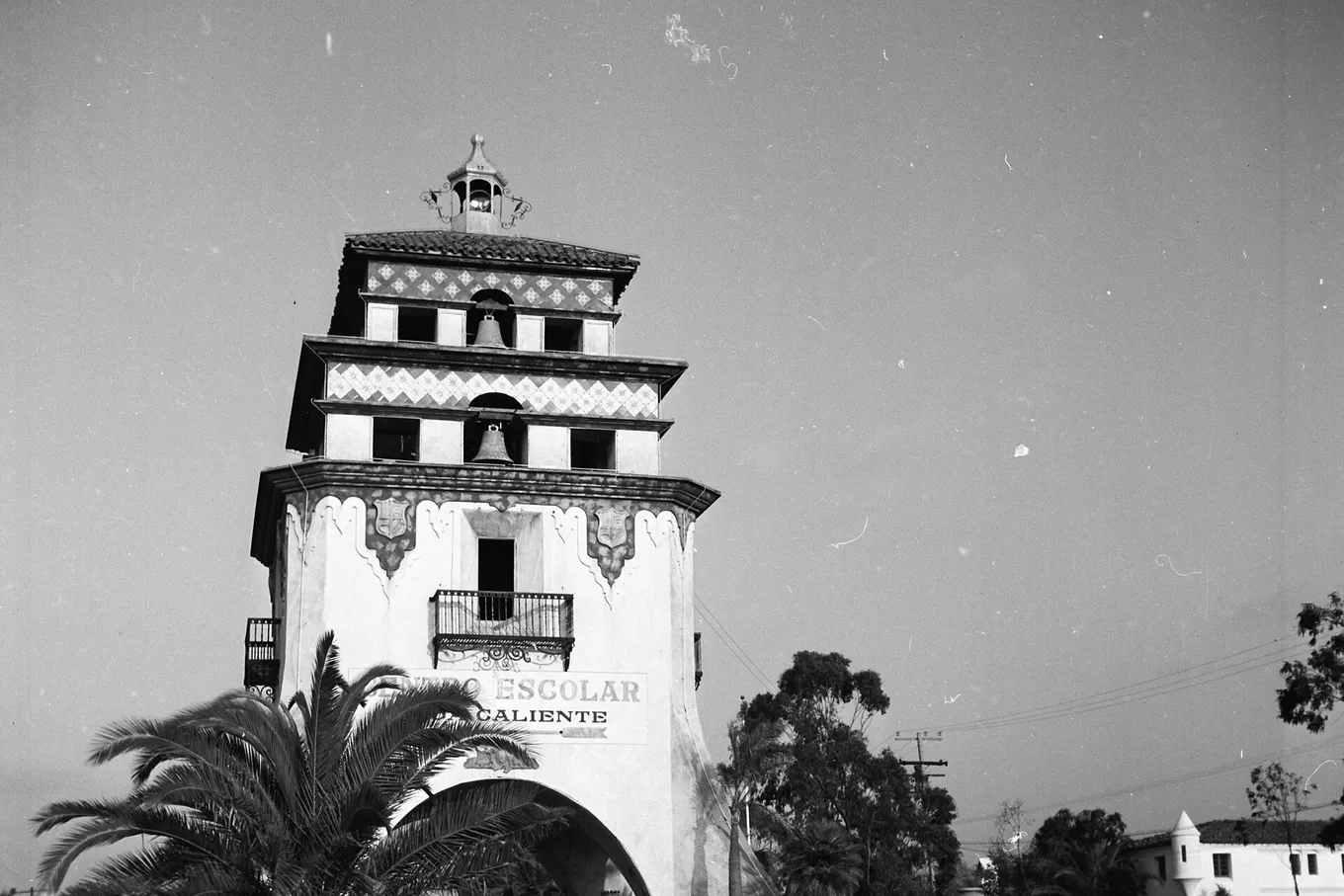
Stand here. The old Agua Caliente resort closed in 1935 and became a state school. Its original guest bungalows are still standing.
Before she was Rita Hayworth, the star of Gilda, she was Margarita Cansino. In 1931, at twelve, she became half of her father Eduardo’s dance act, the Dancing Cansinos, with her brown hair dyed black to make her look older. California law said she was too young to dance in nightclubs, so her father took her across the border to Tijuana. At the Caliente Club, the head of the Fox Film Corporation watched her dance. A week later, she had a screen test.
3 Phar Lap’s last race at Agua Caliente, Tijuana
Stand here. Caliente Hipódromo, once the Agua Caliente racetrack. Its original grandstand burned in 1971, and greyhound racing ended in 2024.
Phar Lap, Australia’s champion racehorse, was brought to Tijuana for the Agua Caliente Handicap, which offered the biggest prize North American racing had ever seen. David J. Davis, who took him there, made Tommy Woodcock, the strapper who groomed the horse, his new trainer. Phar Lap started many lengths behind and split a hoof in the race, and still won in track-record time. Sixteen days later, on a farm outside San Francisco, he collapsed. He died in Woodcock’s arms.
4 Herb Alpert, a Tijuana bullfight, and The Lonely Bull
Stand here. The Toreo de Tijuana bullring, where the song’s 1967 video was filmed. In 2007, wrecking crews began demolishing the city’s bullring.
Herb Alpert’s Tijuana Brass began as one man in a garage, overdubbing his own trumpet on a tune called “Twinkle Star”. Then Alpert took a break to see a bullfight in Tijuana, and the trip changed the record. Crowd noise from a bullring was dubbed in, and his partner, Jerry Moss, renamed it “The Lonely Bull”. It reached number six on the Billboard Hot 100. It was also the first record A&M Records ever released.
5 Pat Nixon and the fence at Friendship Park, Tijuana
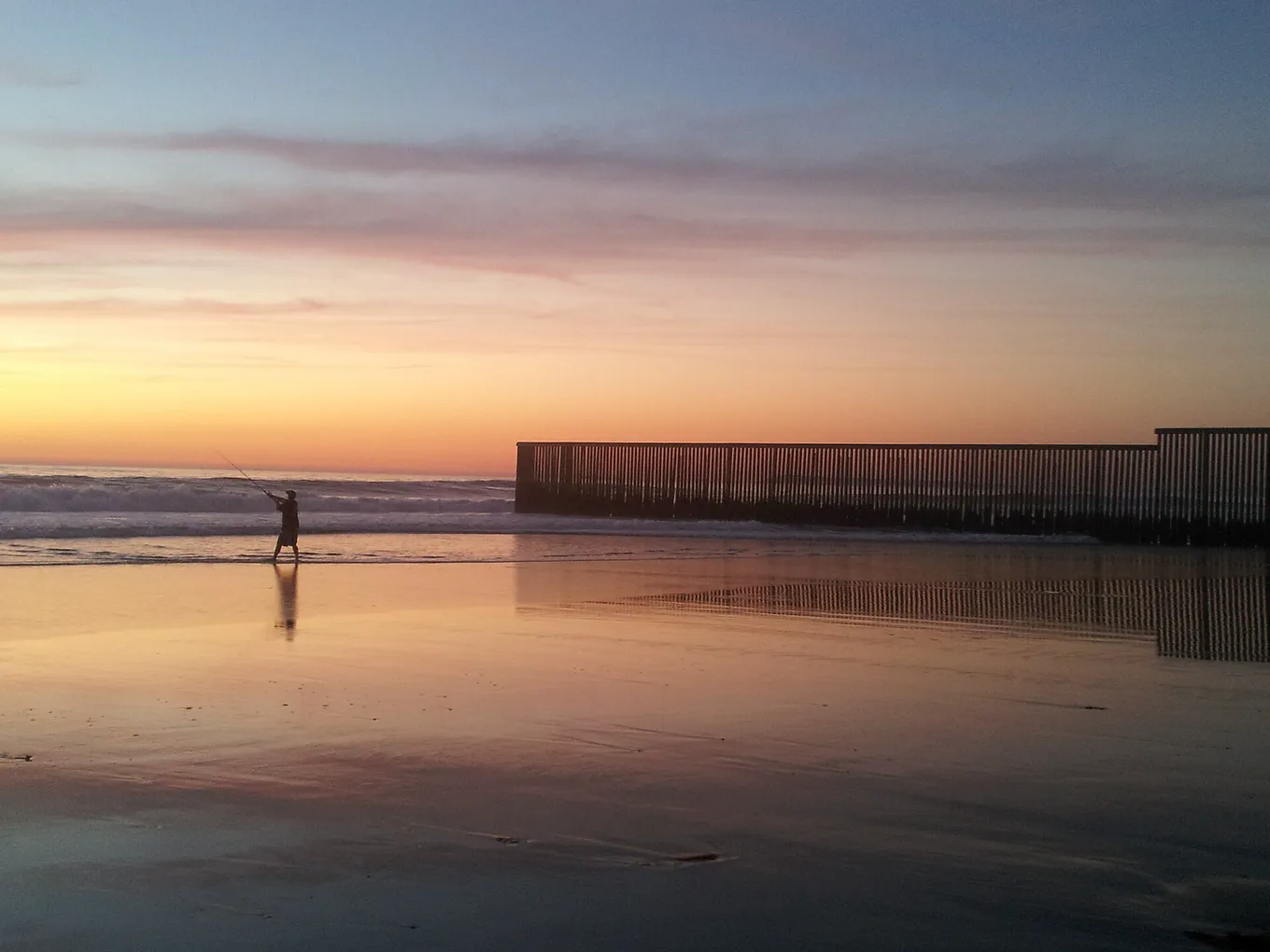
Stand here. The border wall at Playas de Tijuana, painted with murals, by Border Marker 258 on the Mexican side of Friendship Park.
Pat Nixon, the First Lady, came to the border on 18 August 1971 to dedicate Friendship Park. She had a stretch of the barbed-wire fence cut so that she could cross into Mexico, and she strolled into Tijuana shaking hands, signing autographs, and greeting children. “I hope there won’t be a fence too long here,” she said. The barbed wire was later replaced by two fences 20 feet high, and even the smallest touch between the two countries became nearly impossible.
Pack nothing. Leave Friday.
Every Friday, I write a free letter, Journey, that takes us on a trip through places, stories, and ideas.
The Long Goodbye(Raymond Chandler, 1953). A novel. Terry Lennox turns up at Marlowe’s home late one night, in trouble, needing a ride to the airport across the border in Tijuana.
Across the Wire(Luis Alberto Urrea, 1993). A memoir of the refugees hidden just behind Tijuana’s flashy tourist spots.
Tijuana Straits(Kem Nunn, 2004). A novel. Magdalena works for a Tijuana attorney building a case against a US polluter.
Films to watch before you visit Tijuana
Born in East L.A.(Cheech Marin, 1987). A film. In Tijuana, its hero, Rudy, makes friends with Jimmy and Dolores, and filming began in the city itself.
Sleep Dealer(Alex Rivera, 2008). A film. After a tragedy, Memo takes a bus to Tijuana to find work and help his family.
Traffic(Steven Soderbergh, 2000). A film. In Tijuana, under torture, a prisoner gives up the names of cartel members.
Questions
Where was the Caesar salad invented?
At Caesar’s, Caesar Cardini’s restaurant in Tijuana, on 4 July 1924. Caesar’s is now inside the hotel of the same name on Avenida Revolución, where waiters still toss the salad at the table. In 1931, the Cardinis moved to a larger building with hotel rooms, so it isn’t the original kitchen. Cardini’s brother, several of his staff, and a cook’s family have also claimed the salad.
What is left of the Agua Caliente resort where Rita Hayworth danced?
The resort opened in 1928 and drew wealthy Americans and Hollywood stars. It closed in 1935, when gambling was outlawed, and became a state-run school. Its original guest bungalows are still standing.
Was the margarita invented in Tijuana?
One story says so. It credits Carlos “Danny” Herrera, at his restaurant Rancho La Gloria, halfway between Tijuana and Rosarito, in 1938, but the San Diego Reader debunked it in 1992. The strongest claim is that Francisco “Pancho” Morales first mixed it at Tommy’s Place Bar in Juárez on 4 July 1942.