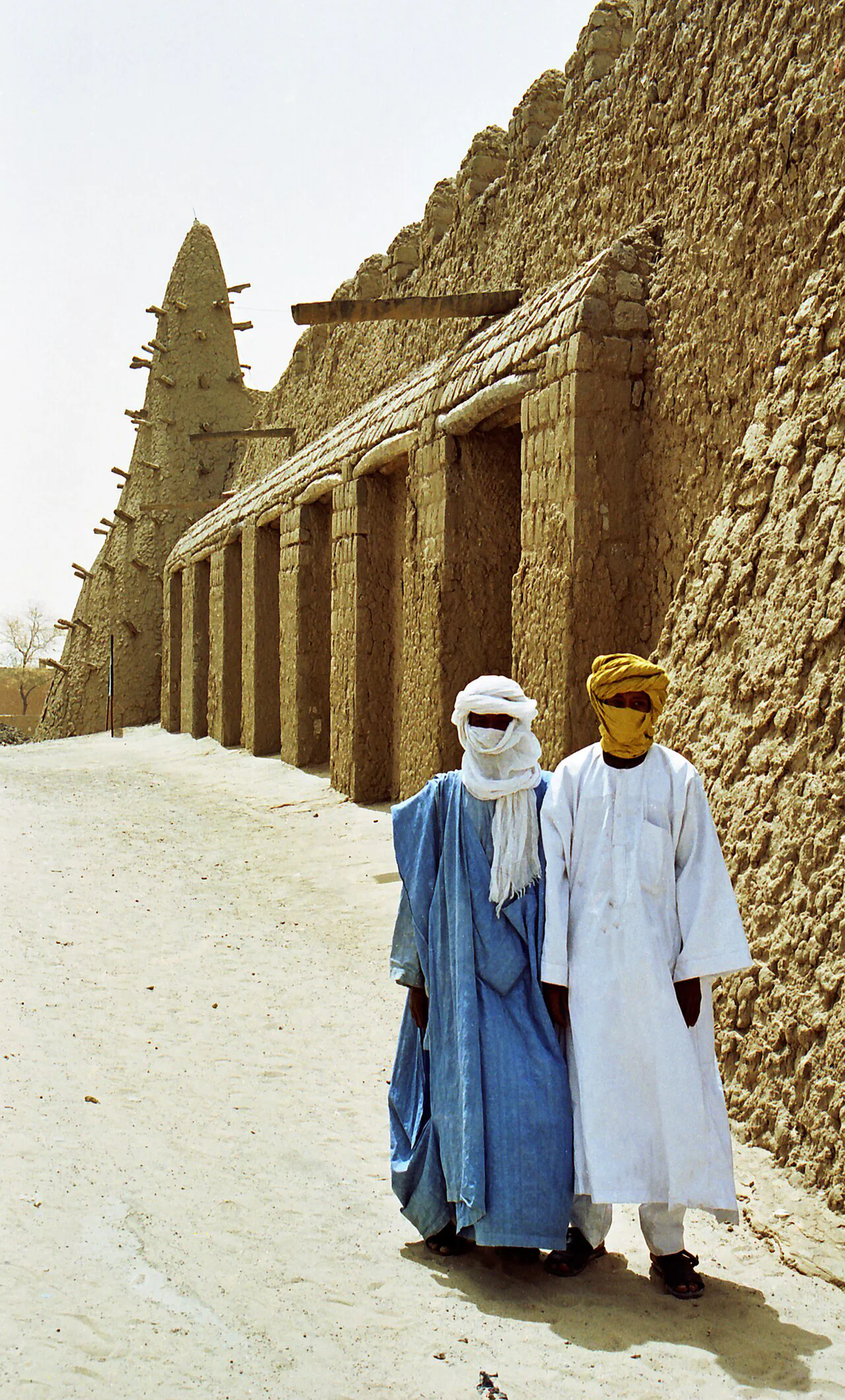
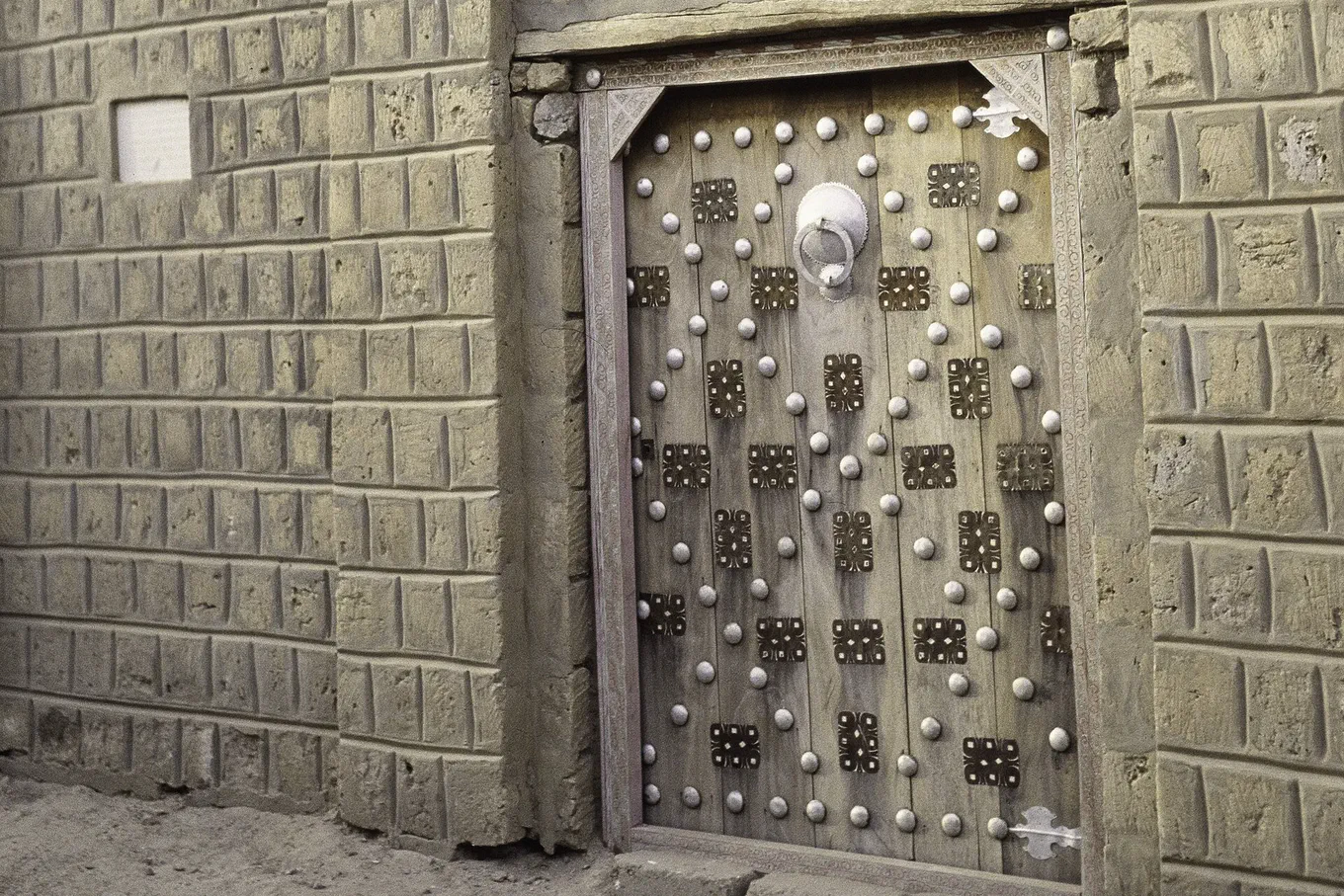
Timbuktu is a city in Mali, 20 kilometres north of the Niger River. It became a permanent settlement early in the 12th century, and its Djinguereber Mosque was inscribed on UNESCO’s World Heritage list in 1988. Its stories here are a poet’s reported fee in gold, a scholar sent into exile, a librarian who smuggled its manuscripts to safety, and two explorers, only one of whom got home.
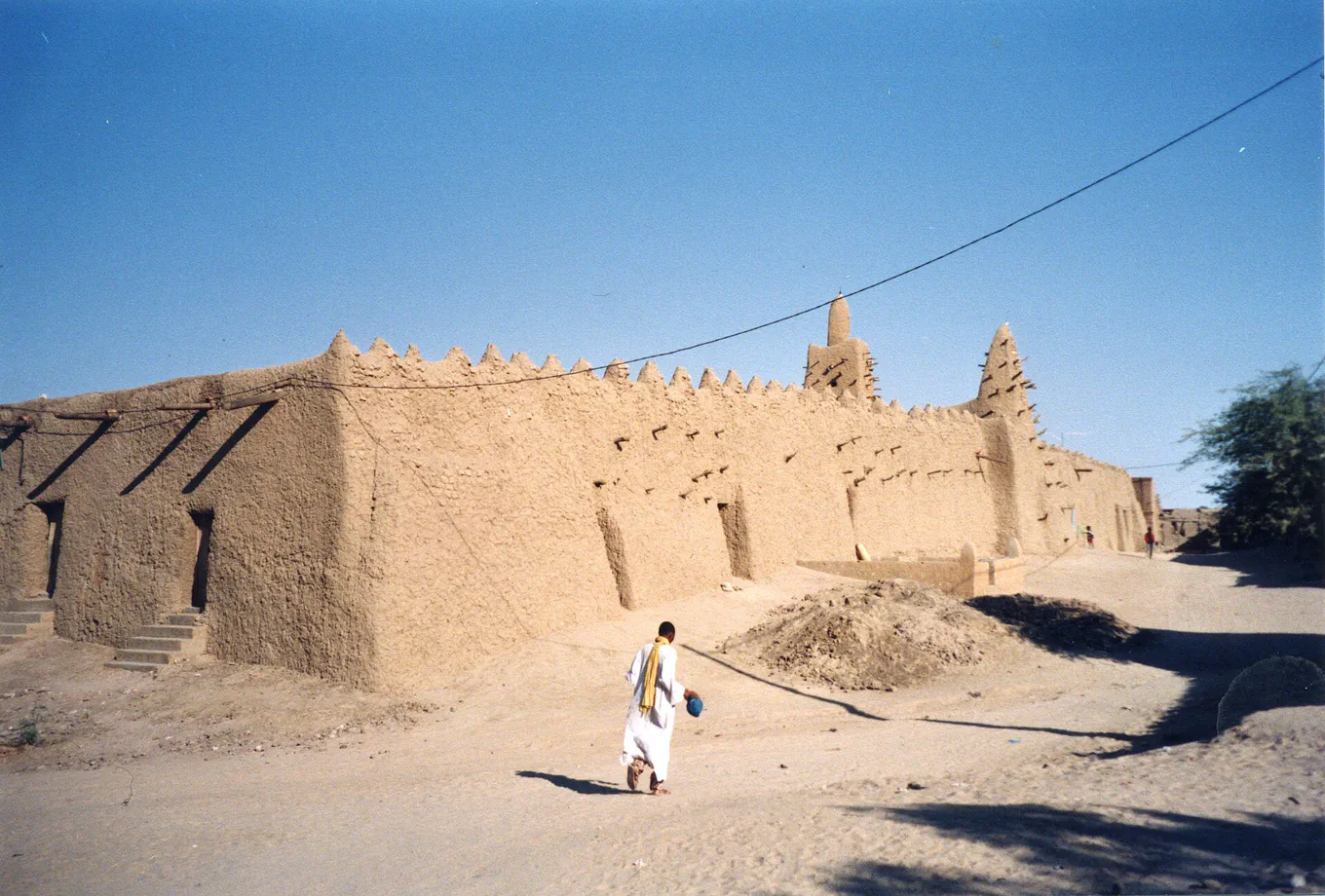
Mansa Musa is often called the richest person who ever lived, though his wealth is impossible to calculate accurately. On pilgrimage to Mecca, the ruler of Mali gave away so much gold that, some Arabic writers said, its value fell in Egypt. He recruited scholars to Mali, among them Abu Ishaq al-Sahili, a poet from Granada. By the traditional account, al-Sahili was paid 12,000 mithqals of gold dust for this mosque, built in 1327. Modern scholars reject him as its architect. The poet, they think, only organised the work.
2 Ahmed Baba, the scholar Morocco took from Timbuktu
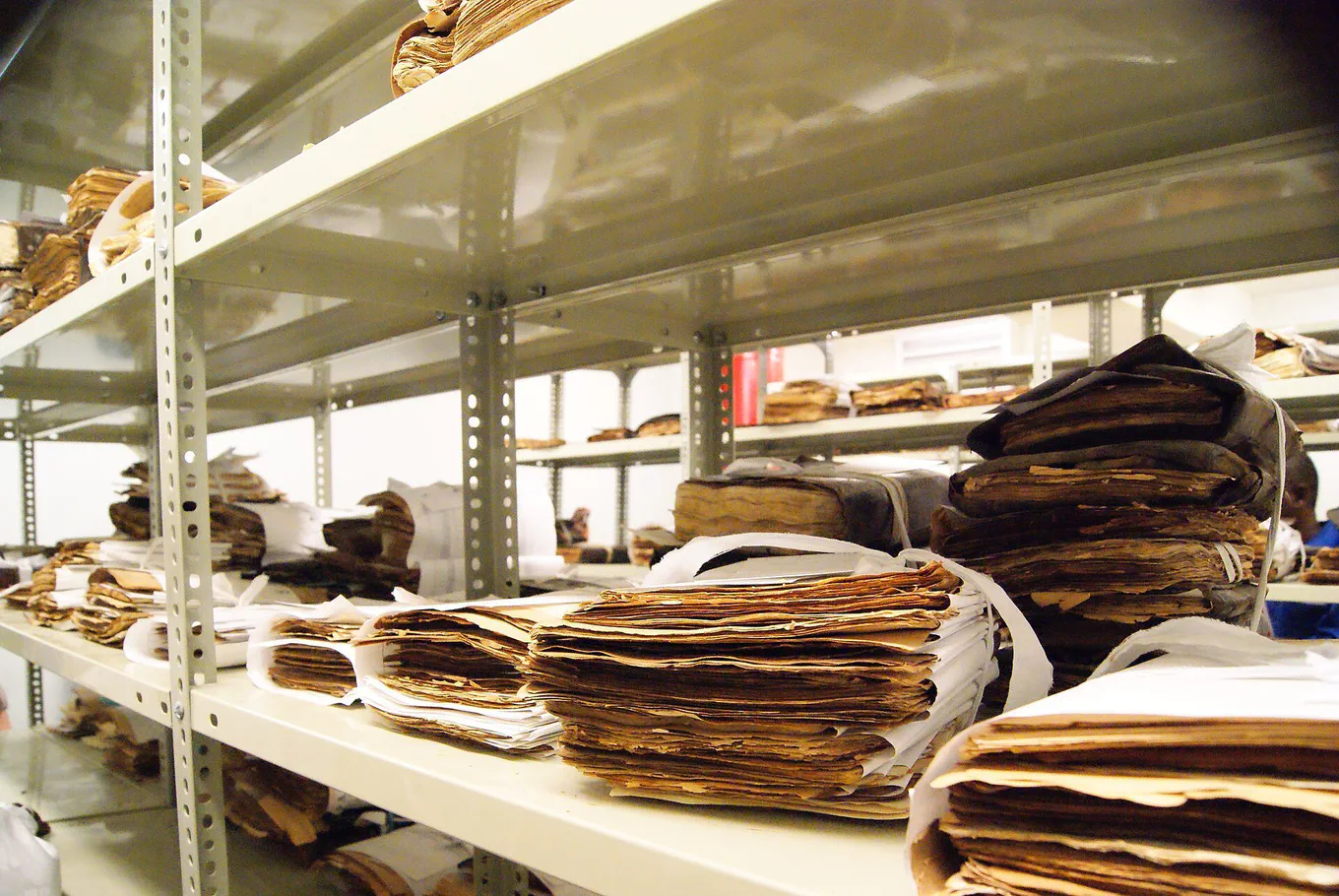
Stand here. The Ahmed Baba Institute, just north of the Sankoré Mosque. Its current building was finished in 2009.
Morocco’s invasion of 1591 ended Timbuktu’s golden age. Ahmed Baba, a scholar who wrote more than 40 books, refused allegiance to the invaders, as other scholars did. Moroccan troops arrested him for sedition and deported him, and his library of some 1,600 books was confiscated. It was reportedly one of the smaller collections in the city. In exile, he was allowed to write and practise law. Years later, he came home. Timbuktu’s public library stands where his house stood, and bears his name.
3 Alexander Gordon Laing, the first European in Timbuktu
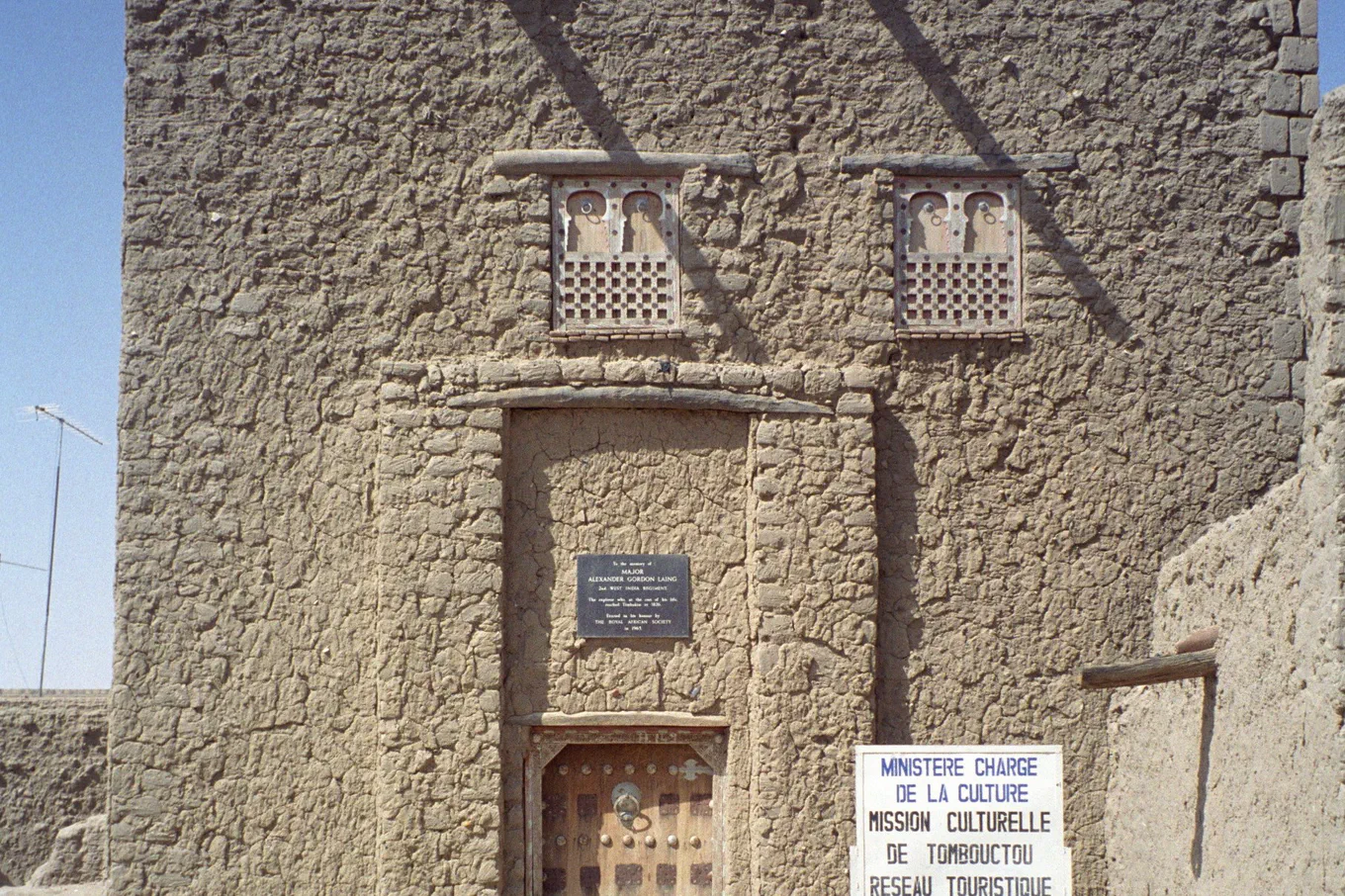
Stand here. Laing’s house, east of the Djinguereber Mosque along the cobbled road. A plaque on it names him.
Two days after marrying the British consul’s daughter in Tripoli, Alexander Gordon Laing, a Scottish explorer born in Edinburgh, left her to cross the Sahara. He would be the first European to reach Timbuktu. He was attacked on the way and wrote of being wounded in 24 places, but on 18 August 1826, he made it. He stayed 38 days. Just after leaving the city, he was murdered by his own escorts. His papers were never found.
4 René Caillié reaches Timbuktu in disguise
Stand here. The house where Caillié stayed, since renovated and named a national heritage site.
English dictionaries use Timbuktu for any faraway place, and René Caillié was the first European to come back from it alive. The French explorer travelled dressed as a Muslim, giving himself out as an Arab from Egypt, and on 20 April 1828, he arrived. Laing had called the city wondrous. At first sight, Caillié saw “nothing but a mass of ill looking houses, built of earth”. He stayed two weeks, then crossed the Sahara with a caravan of 600 camels, home to a prize of 9,000 francs.
5 Abdel Kader Haidara smuggles Timbuktu’s manuscripts to safety
Stand here. The Mamma Haidara Commemorative Library, which Haidara founded in 2000 and named after his father.
Joshua Hammer’s The Bad-Ass Librarians of Timbuktu tells the story of Abdel Kader Haidara, who inherited his family’s centuries-old manuscripts. In 2012, rebels took the city, and Islamist police arrived in pickups draped in black flags. Haidara and his associates bought up “every trunk in Timbuktu”, to pack at night while the rebels slept. Couriers made hundreds of trips south to Bamako, and boats carried manuscripts down the Niger. Just before fleeing, the militants burned about 4,200 manuscripts at the Ahmed Baba Institute. Haidara’s people had saved 350,000.
Pack nothing. Leave Friday.
Every Friday, I write a free letter, Journey, that takes us on a trip through places, stories, and ideas.
The Bad-Ass Librarians of Timbuktu(Joshua Hammer, 2016). A history. Abdel Kader Haidara builds his library, then smuggles the city’s manuscripts south to Bamako in trunks.
Travels through Central Africa to Timbuctoo; and across the Great Desert, to Morocco(René Caillié, 1830). A memoir. Caillié’s own account of his journey, in disguise, to Timbuktu and home across the Sahara.
Travels and Discoveries in North and Central Africa(Heinrich Barth, 1858). A memoir of exploration. Its fourth volume includes Barth’s plan of Timbuktu as he found it in 1853.
Films to watch before you visit Timbuktu
Timbuktu(Abderrahmane Sissako, 2014). A film. Life in Timbuktu under the brief Ansar Dine occupation, shot in Oualata, in Mauritania, and nominated for an Oscar.
Sahara with Michael Palin(2002). A documentary series. Michael Palin makes it to Timbuktu.
Legend of the Lost(Henry Hathaway, 1957). A film starring John Wayne and Sophia Loren, opening in Timbuktu, where Wayne’s guide reluctantly joins a Saharan treasure hunt. Its “Timbuktu” was filmed in Zliten, Libya.
Questions
Where did the first Europeans in Timbuktu stay?
Alexander Gordon Laing stayed in a house east of the Djinguereber Mosque, along the cobbled road. A plaque on it names him. René Caillié’s house has since been renovated and named a national heritage site.
Was the film Timbuktu shot in Timbuktu?
No. Abderrahmane Sissako’s 2014 film is set in Timbuktu during its brief occupation by Ansar Dine, a group tied to al-Qaeda, but it was shot in Oualata, in Mauritania. It was nominated at the 87th Academy Awards.
Where does the name Timbuktu come from?
No one is sure. Europeans have generally read it as “well of Buktu”, but there is no consensus, and the origin of the name remains unclear.