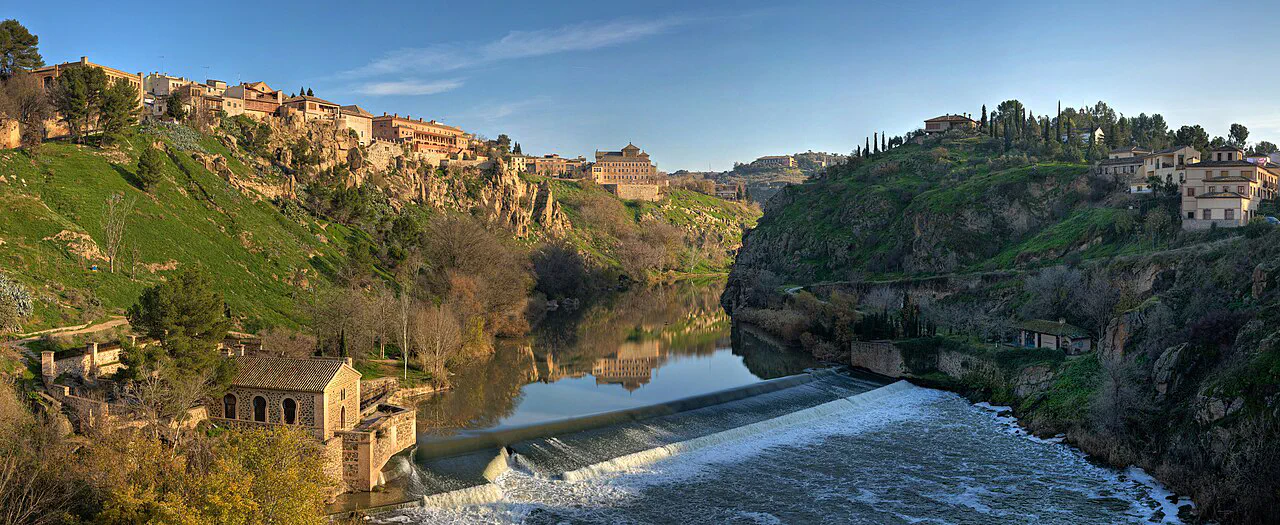
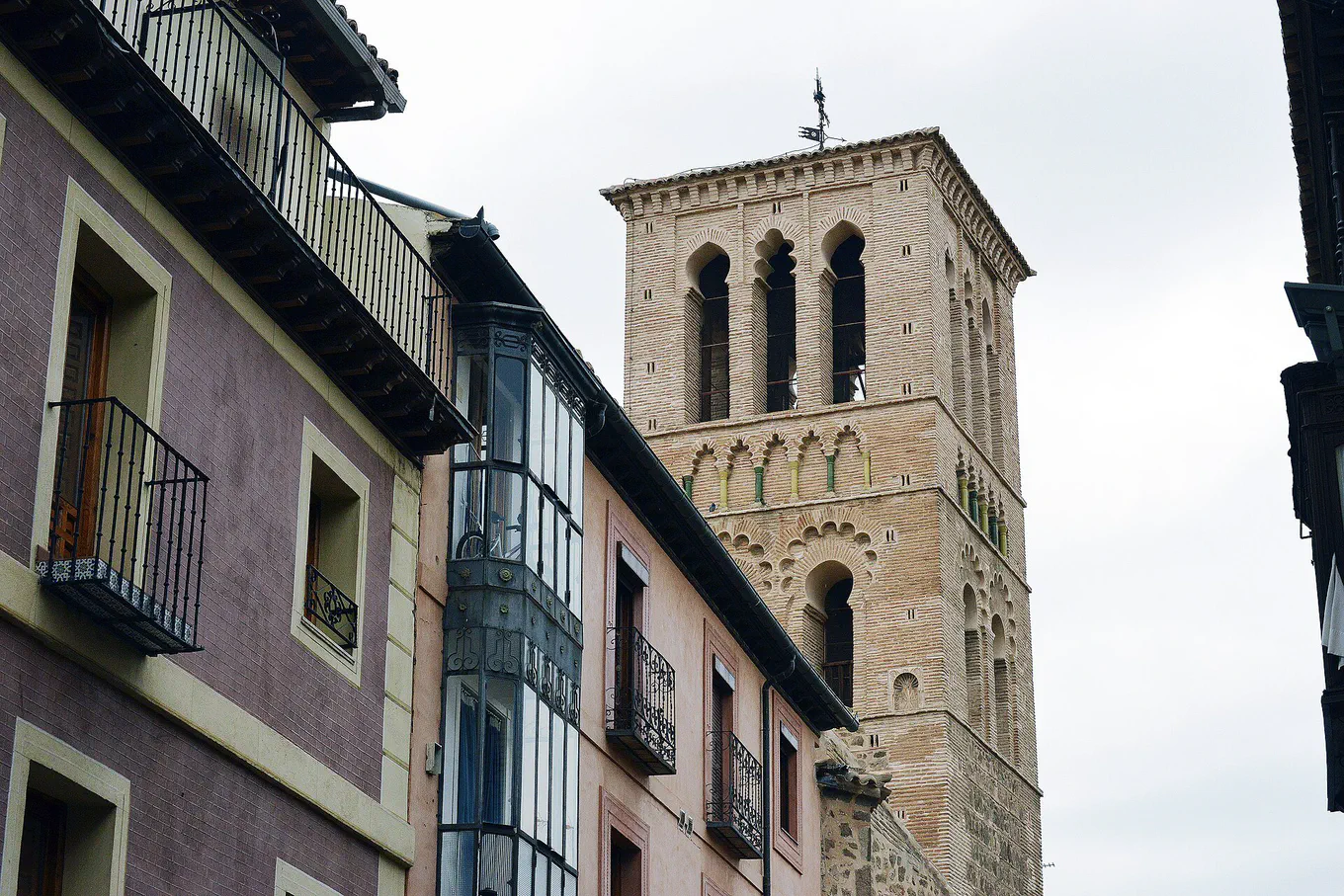
Toledo stands on the north bank of the Tagus, in a bend of the river in central Spain. The Visigoths made it the capital of their kingdom by 546, and for centuries Christians, Muslims, and Jews lived there side by side. Its stories here are a painter whose work the king disliked, a novel’s Arabic manuscript, a treasurer’s synagogue, a widow who held the city, and a colonel’s telephone call.
El Greco, the painter born on Crete, came to Spain in 1577 to win the favour of King Philip II. But the king disliked the altarpiece of St Maurice El Greco painted for him, and the painter had to stay in Toledo. There, for the parish priest of Santo Tomé, he painted The Burial of the Count of Orgaz, two saints coming down from heaven to bury a lord, with El Greco’s young son at the left. Crete gave him life, it was said, and Toledo a better homeland.
2 Don Quixote’s Arabic manuscript, found in Toledo’s Alcaná
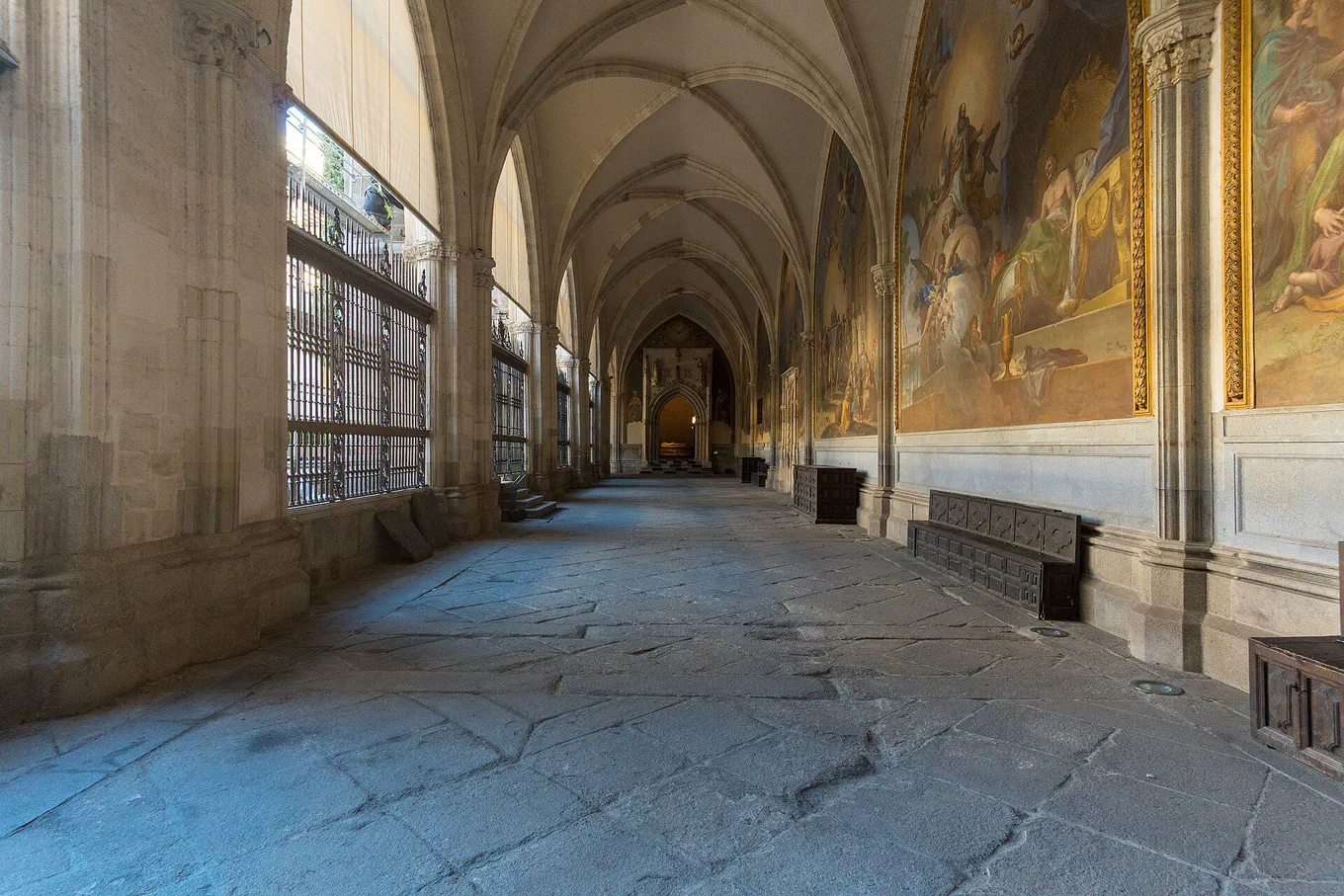
Stand here. The cloister of Toledo Cathedral, where the narrator took his translator. The Alcaná, the old shopping quarter, lay beside the cathedral.
Early in Don Quixote, published in 1605, the story breaks off mid-fight, the knight and his enemy with swords raised, because the narrator’s source runs out. Then, one day in Toledo’s Alcaná, a boy comes to sell old papers to a silk merchant. The narrator sees Arabic letters and finds a Spanish-speaking Morisco to read them. The title is History of Don Quixote of La Mancha, by Cide Hamete Benengeli, Arab historian. The narrator buys every page for half a real. Cide Hamete is Cervantes’s invention. The Alcaná was real.
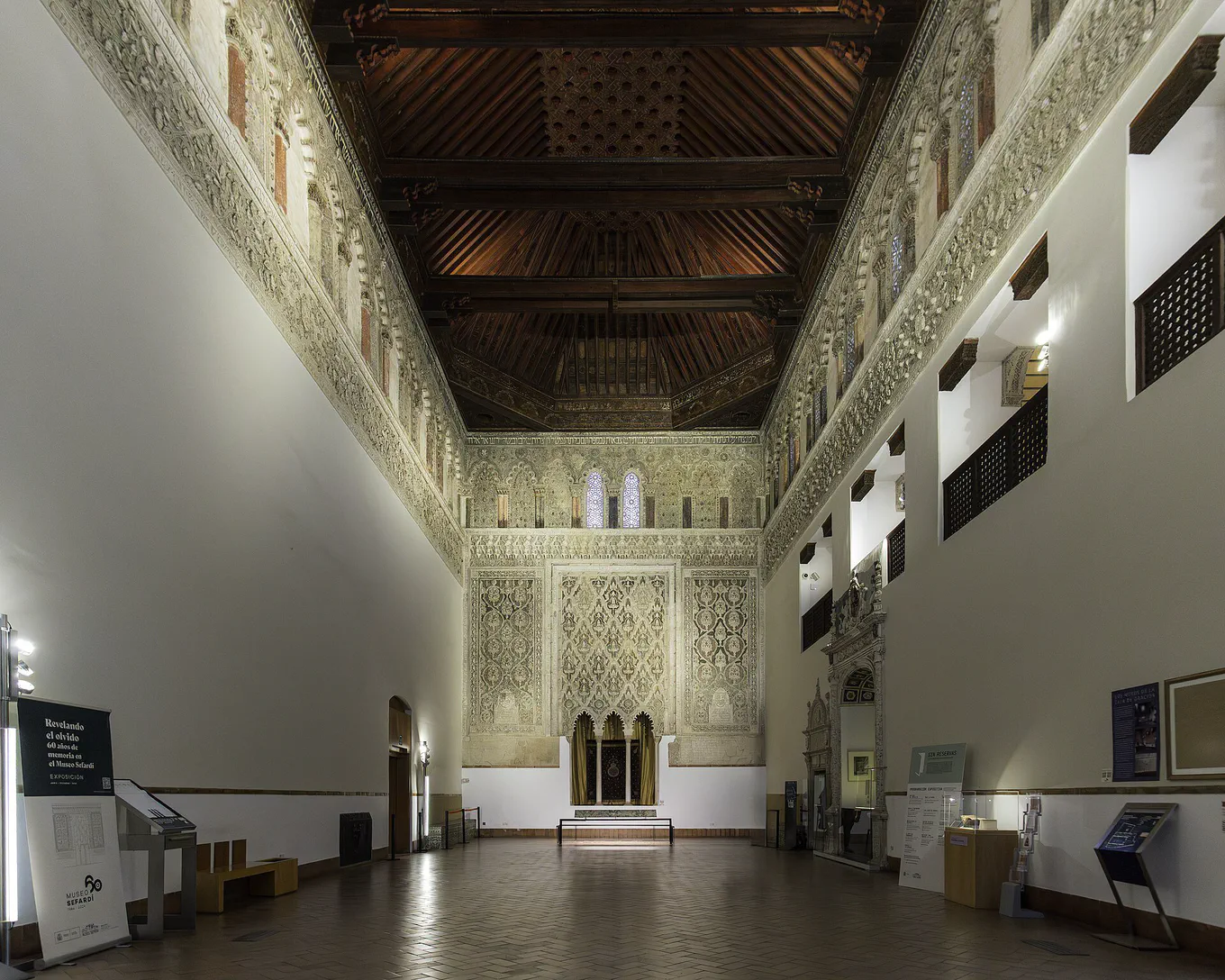
Around 1357, Samuel ha-Levi, treasurer to King Peter of Castile, built a private synagogue onto his palace, and the king approved it to show his thanks. But within a few years Samuel had lost the king’s favour. He was arrested on corruption charges, imprisoned in Seville, and tortured to death. His synagogue outlived him. After the Jews were expelled from Spain in 1492, it became a church, named for the Assumption of the Virgin Mary. Samuel’s synagogue still goes by that church’s name, El Tránsito.
4 María Pacheco, the widow who held Toledo against the crown
Stand here. The plazuela del Horno de los Bizcochos, a small square near the Alcázar, where her statue now stands.
When the rebel leader Juan de Padilla was captured at Villalar and beheaded in April 1521, his widow, María Pacheco, would not give up. She led the rebels’ last resistance, strengthened Toledo’s defences, and held the city against the royal troops for six months. In the end she fled at night, disguised as a village woman, to Portugal. The crown sowed the ground where her houses stood with salt, and raised a column there accusing her. She died in exile in Porto, never able to come home.
5 Colonel Moscardó’s phone call in the Alcázar of Toledo
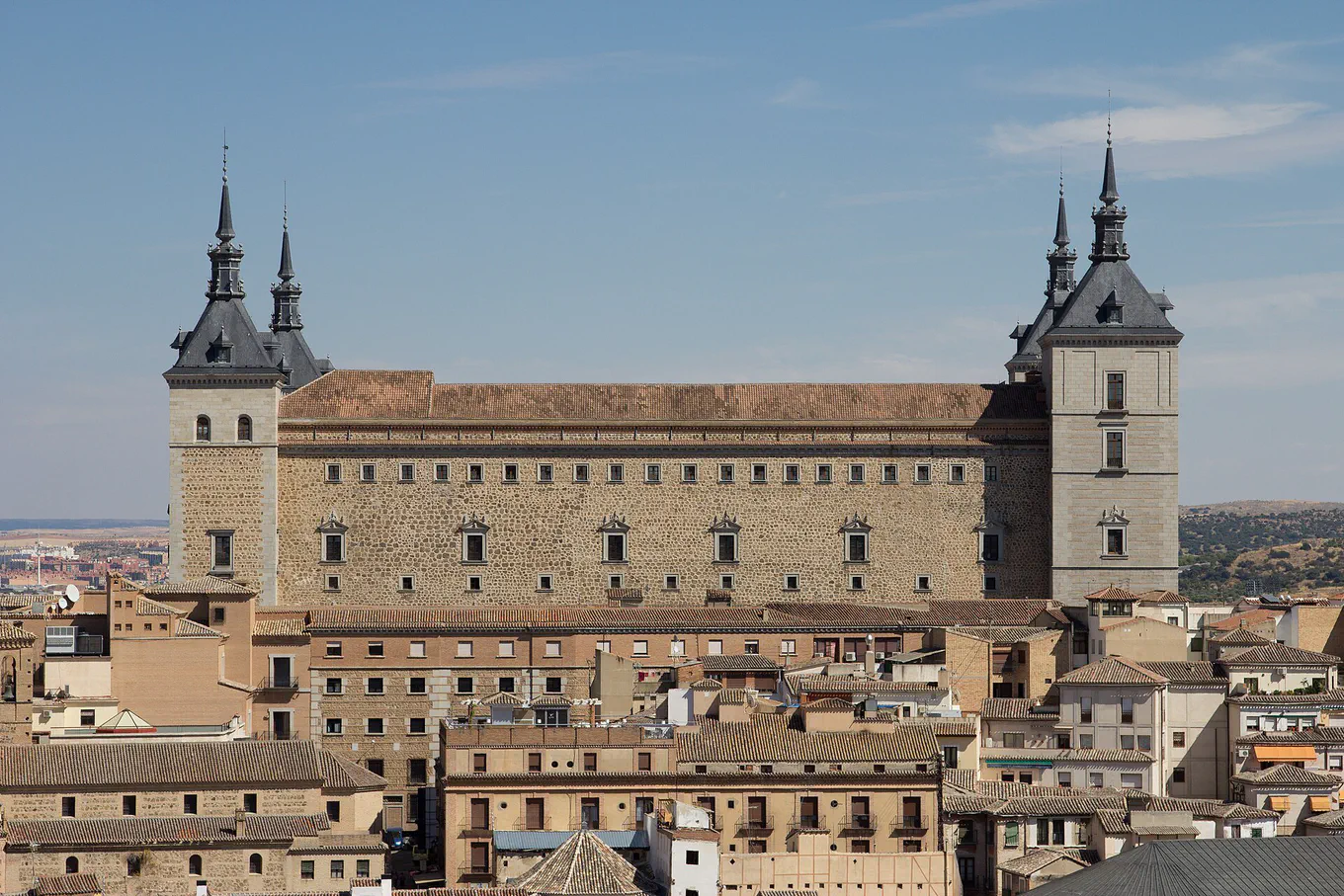
Stand here. The Alcázar of Toledo. It now houses the Army Museum, which moved there from Madrid, and the Castilla-La Mancha Regional Library.
In July 1936, in the Spanish Civil War, Republican militias laid siege to the Alcázar of Toledo. Colonel José Moscardó held the fortress, but the militias had captured his son Luis, 24. Then they telephoned and put Luis on the line to his father. Moscardó told his son to commend his soul to God and die like a patriot. The Alcázar did not surrender, and held until Franco’s army arrived in September. Luis was shot, at once in the usual telling, a month later in others.
Don Quixote(Miguel de Cervantes, 1605). A novel. In Part I, chapter 9, the narrator buys the Arabic manuscript of the story in the Alcaná, beside Toledo Cathedral.
The Golden Bracelet(La ajorca de oro, Gustavo Adolfo Bécquer, 1861). A short story, styled as a legend, about the gold bracelet of the Virgen del Sagrario in Toledo Cathedral.
Lazarillo de Tormes(Anonymous, 1554). A novel. Lázaro becomes town crier thanks to the archpriest of San Salvador, a Toledo church, who offers him a house and the chance to marry one of his maids.
Films to watch before you visit Toledo
Tristana(Luis Buñuel, 1970). A film, shot partly at the Hospital de Tavera in Toledo.
The Siege of the Alcazar(Augusto Genina, 1940). An Italian war film about the 1936 siege of the Alcázar of Toledo.
Take My Eyes (Te doy mis ojos)(Icíar Bollaín, 2003). A film. Pilar flees her home in Toledo and starts work as a receptionist for tourists in the church that holds The Burial of the Count of Orgaz.
Questions
Can you see El Greco’s Burial of the Count of Orgaz in Toledo?
Yes. It hangs in the church of Santo Tomé, in Toledo’s historic centre, the church it was painted for. The parish priest, Andrés Núñez, signed the contract with El Greco in 1586. Afterwards painter and priests argued over the price, and El Greco settled for the lower first estimate, 13,200 reales.
Is the story of Moscardó’s phone call true?
The Spanish Army’s museum tells of the call, but the words vary. One version has Moscardó telling Luis to commend his soul to God and die like a patriot, another to shout “Viva España!” and die like a hero. Accounts also differ on whether Luis was shot at once or a month later, in reprisal for an air raid.
Why is Toledo called the city of three cultures?
Because Christians, Muslims, and Jews lived side by side there for centuries, and each faith left its mark on the city. Built around 1357 for a Jewish treasurer to the King of Castile, the Synagogue of El Tránsito became a church after the Jews were expelled from Spain in 1492.