Toronto’s Hemingway link reminded me of one piece of advice he gave on writing. “All you have to do is find the one true sentence. Write the truest sentence that you know.” Looking back on it now after writing a couple of books, I’m not sure whether it’s profound or profoundly unhelpful. I guess if I’m not sure, it’s the latter.
— Nick
York, a town the British founded in 1793 on the north-western shore of Lake Ontario, became the City of Toronto in 1834. Today it is Canada’s most populous city and the capital of Ontario. A castle its builder lost, the discovery of insulin and Hemingway’s unhappy return to Toronto lead into an arena built in five months and a jazz concert that couldn’t pay its stars.
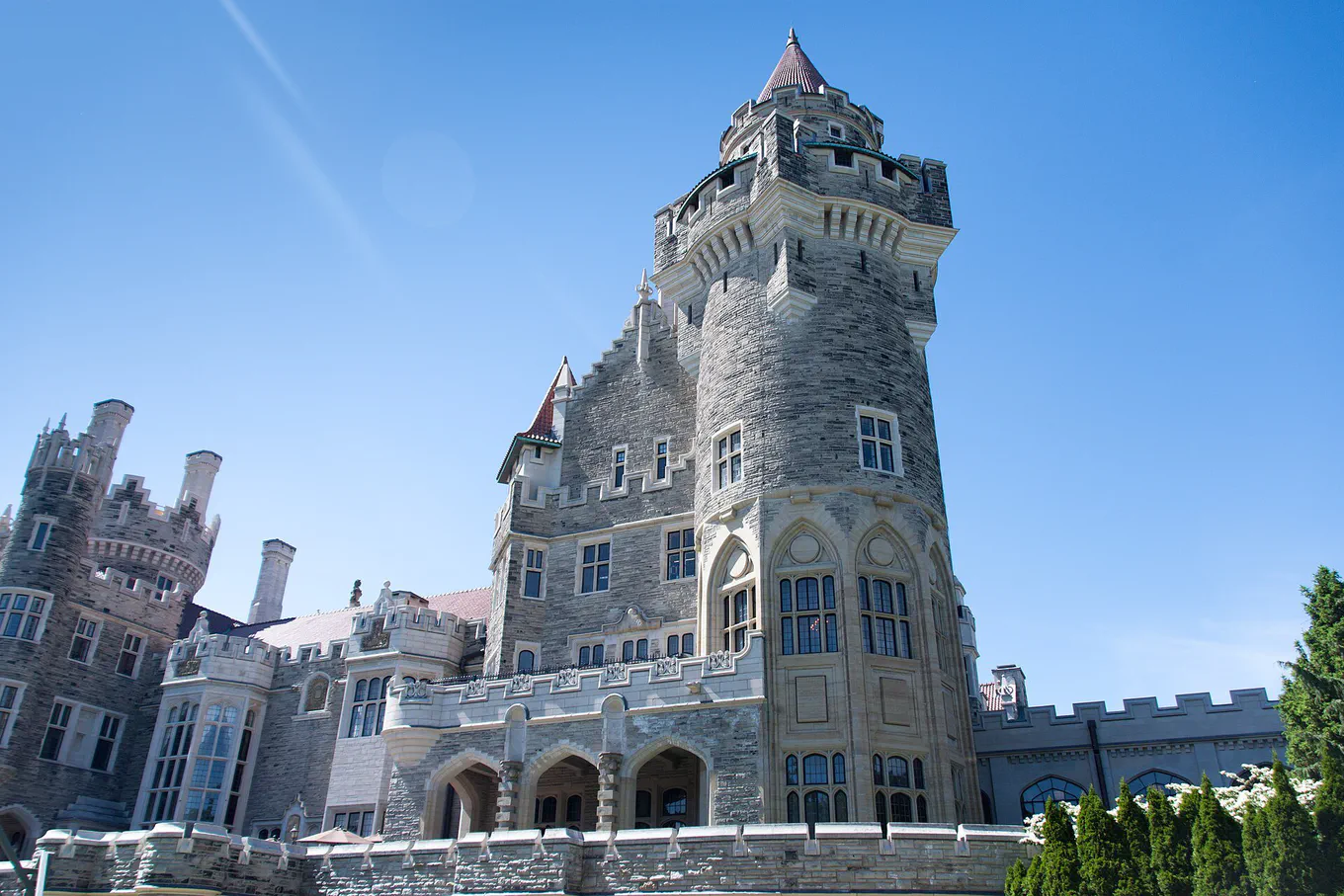
If you’ve seen X-Men, you’ve seen this castle, because it played the X-Mansion. It was built as a home. Sir Henry Pellatt, who had made a fortune from railways and hydro-electric power, gave it 98 rooms, and when it was finished in 1914 it was the largest private house in Canada. About ten years later, near-bankruptcy forced Pellatt and his wife out, and the city seized the castle for unpaid taxes. The man who had built Canada’s largest house died in his chauffeur’s.
2 Banting, Best and the first insulin injection in Toronto
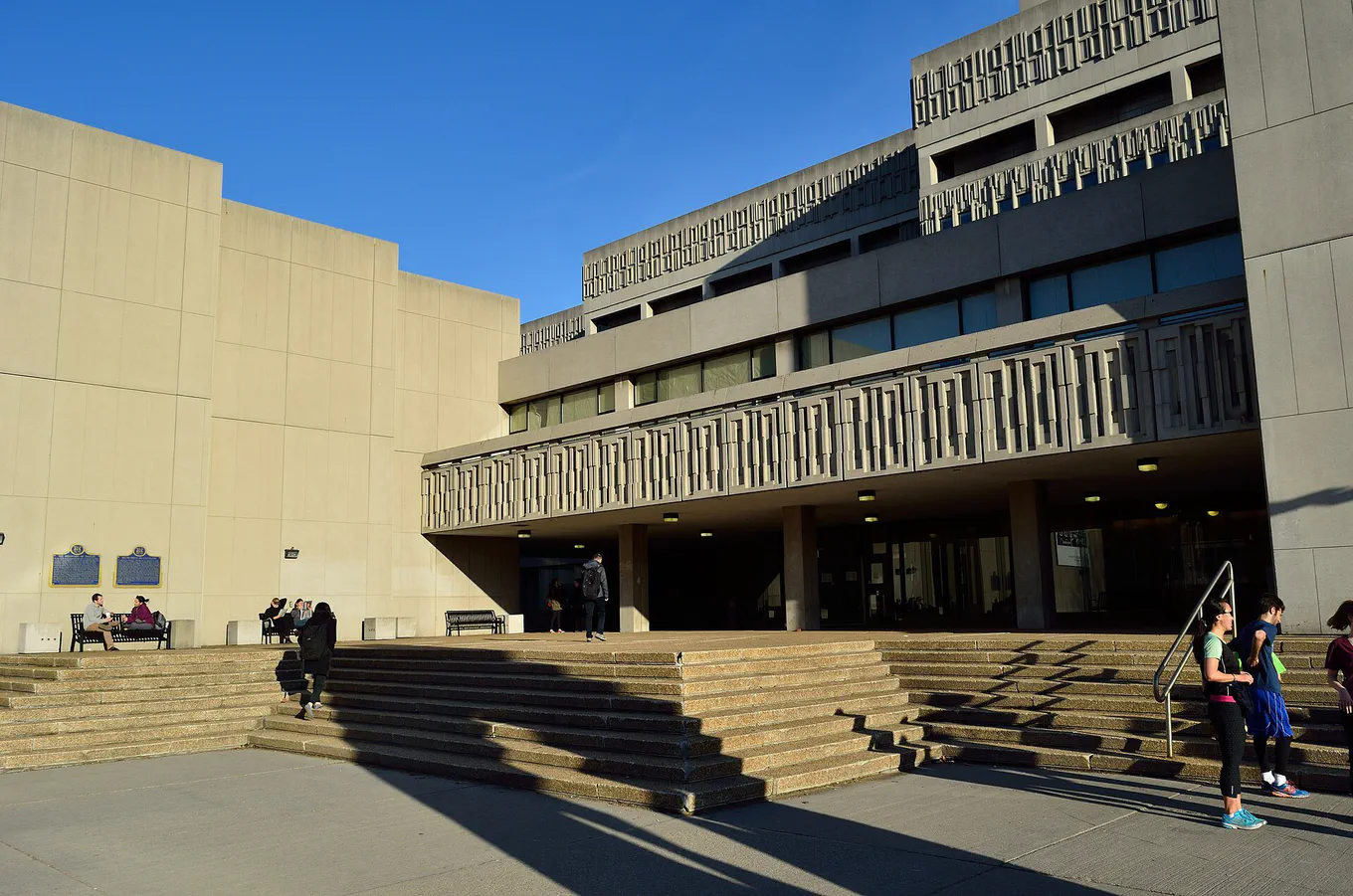
Stand here. King’s College Circle, University of Toronto. The Medical Building is gone, and the Medical Sciences Building on its site has a 1990 plaque outside.
The Medical Sciences Building at the University of Toronto, on the site of the old Medical Building where insulin was discovered.Raysonho / CC0.
Insulin was discovered on the second floor of the old Medical Building. Frederick Banting, a surgeon, had an idea for getting it out of the pancreas, and J.J.R. Macleod gave him a lab and a student assistant, Charles Best. On 11 January 1922, their extract was injected into a teenage boy, Leonard Thompson. It was impure, and he had an allergic reaction. Twelve days later he began daily injections, and his health rapidly improved. Banting shared the Nobel Prize with Macleod, and split his half of the money with Best.
3 Ernest Hemingway’s unhappy return to the Toronto Star
Stand here. 1597–1599 Bathurst Street. The apartment building where the Hemingways lived still stands, now a condominium called The Hemingway, with a plaque.
Ernest Hemingway was a reporter on the Toronto Star in 1923, and wanted to live as a writer, not a journalist. He found Toronto boring and missed Paris. His editor, Harry Hindmarsh, kept handing him humiliating jobs, such as a fluff piece about a white peacock the Star was giving to the zoo. Then the paper sent him to New York, and his wife, Hadley, went into labour while he was on the train home. Their son was born without him. By January 1924, the family was back in Paris.
4 Conn Smythe builds Maple Leaf Gardens in the Depression
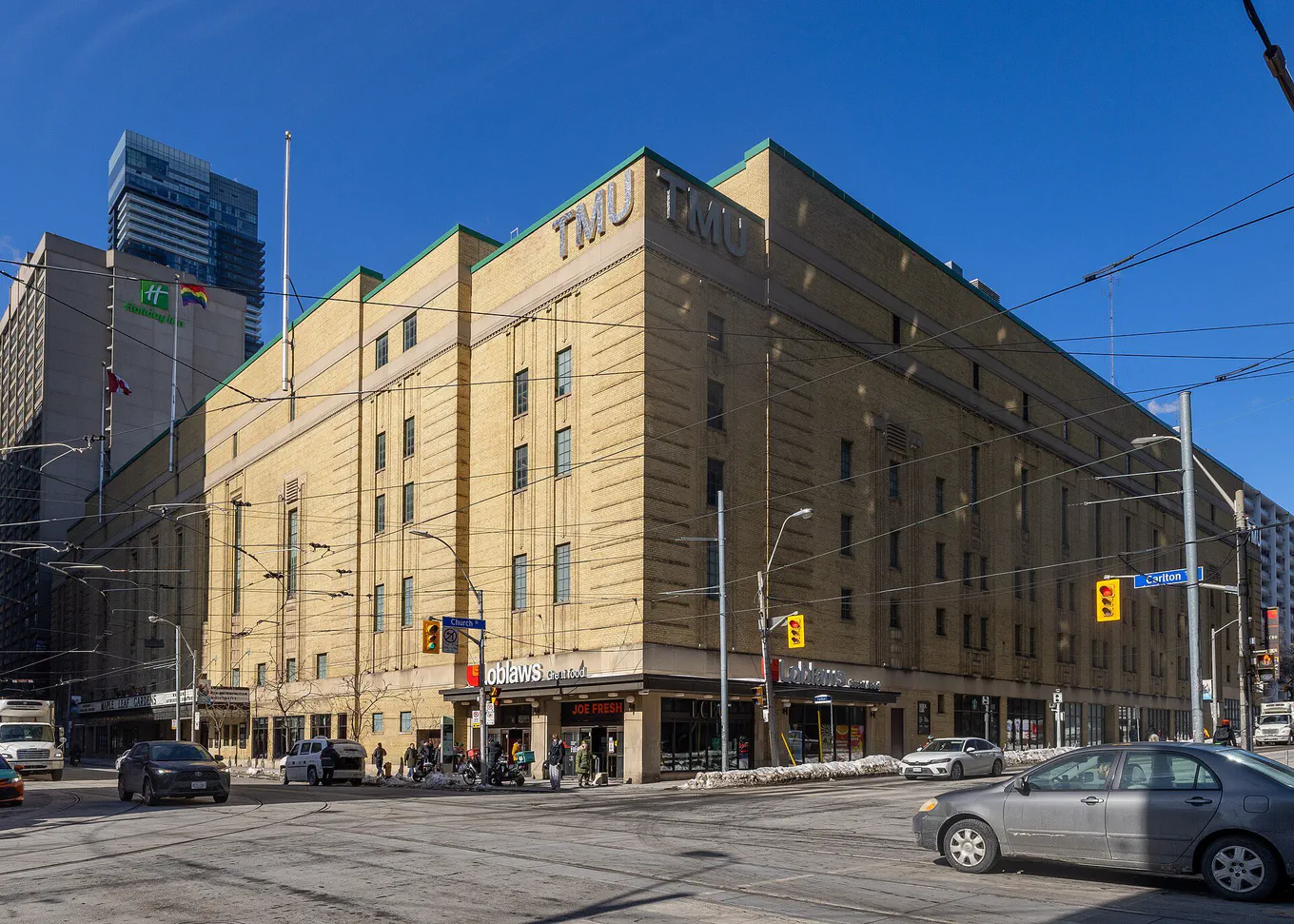
Stand here. Carlton and Church Streets, the north-west corner. The Gardens now hold a Loblaws supermarket below and a university athletic centre above.
The Beatles played Maple Leaf Gardens on all three of their North American tours, but it was built for the Toronto Maple Leafs. Conn Smythe, who ran the team, wanted an arena bigger and grander than their old one, and he set out to build it during the Great Depression. The workers took a fifth of their pay in Gardens stock, and the building went up in five months. When it opened, on 12 November 1931, the Leafs lost 2–1 to Chicago. They stayed for 67 years.
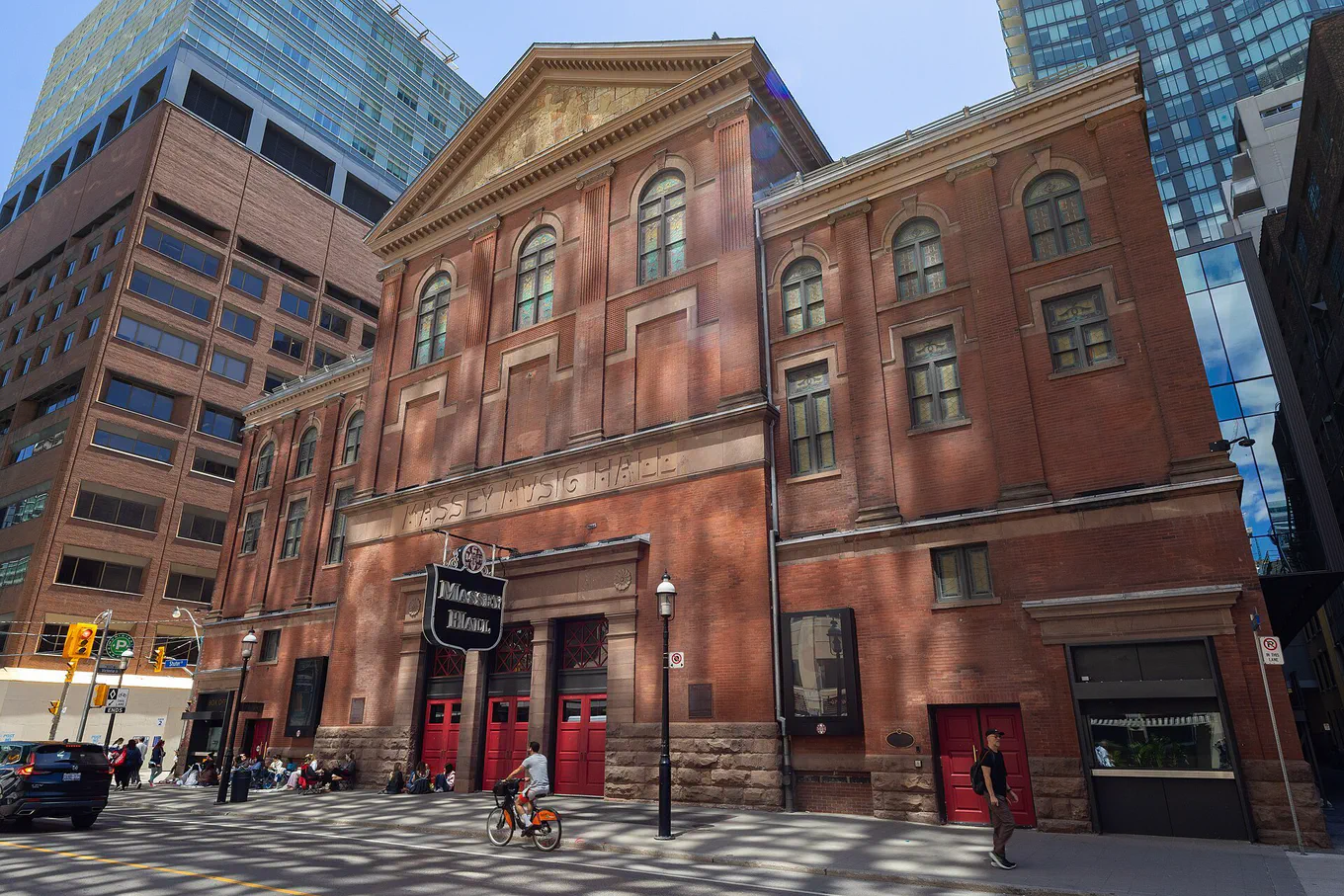
5 Charlie Parker’s plastic saxophone at Massey Hall, 1953
Stand here. Massey Hall, at Shuter and Victoria Streets, just east of Yonge Street. Opened in 1894, it reopened in 2021 after a $184-million renovation.
In May 1953, Charlie Parker, Dizzy Gillespie, Charles Mingus, and two more jazz greats played together, the only time all five ever did. Parker had pawned his saxophone, so he played a cream plastic one. A Toronto jazz society planned to share the profits with them, but a Rocky Marciano fight was on the same night, and the crowd was too small to pay them. Only Parker could cash his cheque. Mingus took the tape to New York. In some countries it was sold as “the greatest jazz concert ever”.
In the Skin of a Lion(Michael Ondaatje, 1987). A novel. It follows the building of the Bloor Street Viaduct and the R. C. Harris Water Treatment Plant.
Station Eleven(Emily St. John Mandel, 2014). A novel. It opens during a production of King Lear at the Elgin Theatre.
The Robber Bride(Margaret Atwood, 1993). A novel. Its Toronto takes in the Toronto Islands and the University of Toronto.
Films to watch before you visit Toronto
Scott Pilgrim vs. the World(Edgar Wright, 2010). A film. Its Toronto locations include Casa Loma and Sonic Boom.
Kim’s Convenience(Ins Choi, 2011). A play. A Korean family runs a convenience store in Toronto’s Regent Park. It opened at the Toronto Fringe Festival.
Questions
Where was insulin discovered, and can you see the spot?
On the second floor of the old Medical Building at the University of Toronto, in 1921 and 1922. The building was demolished to make way for the Medical Sciences Building, at 1 King’s College Circle, and a plaque outside, put up in 1990, acknowledges the work.
How tall is the CN Tower, and can you go up it?
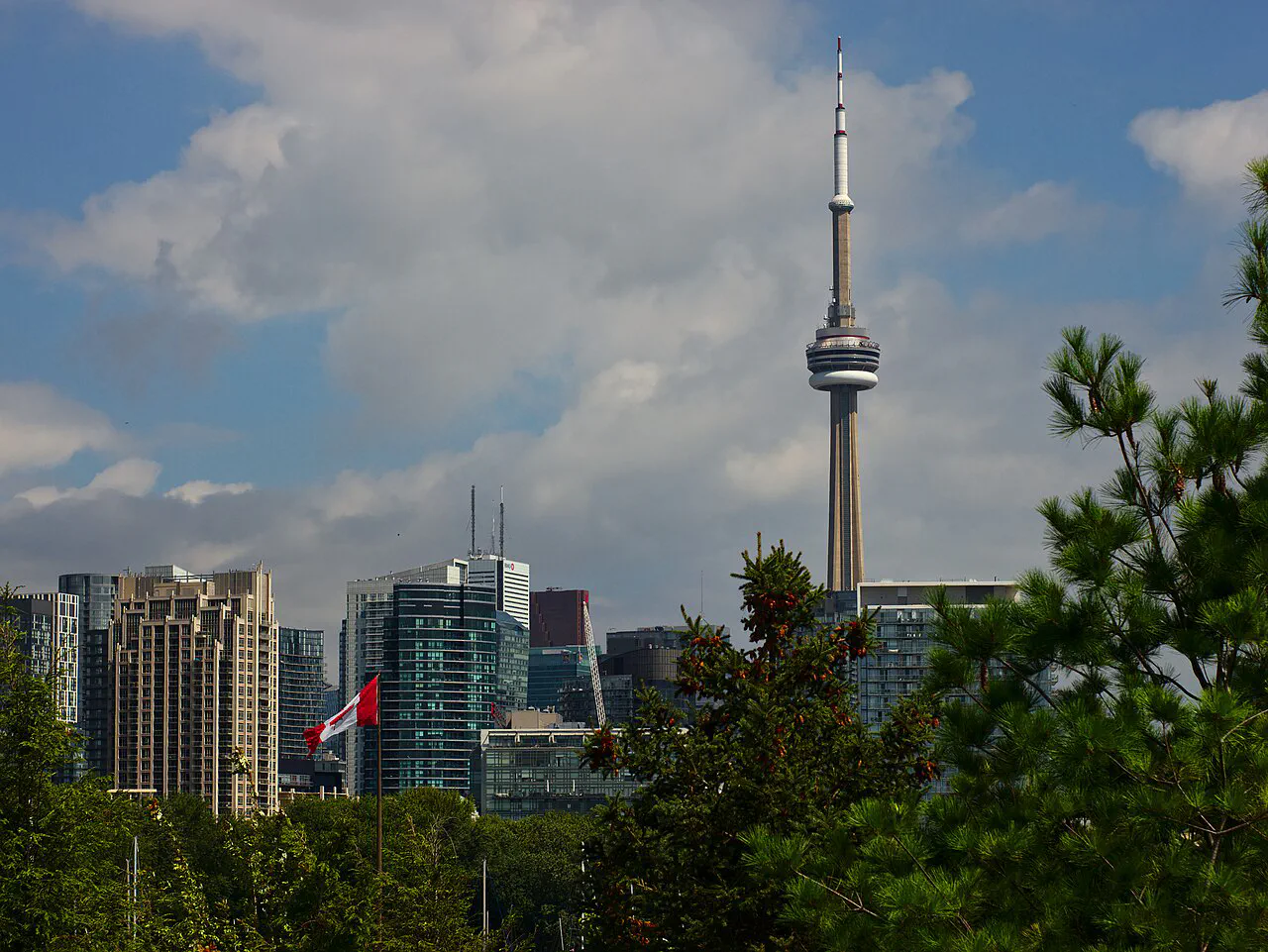
It is 553.3 metres (1,815 feet) tall. Yes, you can go up. The Lower Observation Level, 342 metres up, has a glass floor and an outdoor terrace, and the tower draws more than two million international visitors a year.
Is Toronto the capital of Canada?
No. Ottawa is the capital of Canada. Toronto is the capital of the province of Ontario and the country’s most populous city. It began as the town of York, founded by the British in 1793, and became the City of Toronto in 1834.