Ulan Bator, Ulaanbaatar in Mongolian, is the capital of Mongolia, in a valley on the Tuul River. It began in 1639 as a Buddhist monastery on the move, which shifted 29 times before settling here in 1778. Its stories here are a god-king’s tent of snow leopard skins, a giant statue lost and rebuilt, a Beatles monument, a hunger strike, and a dinosaur that came home.
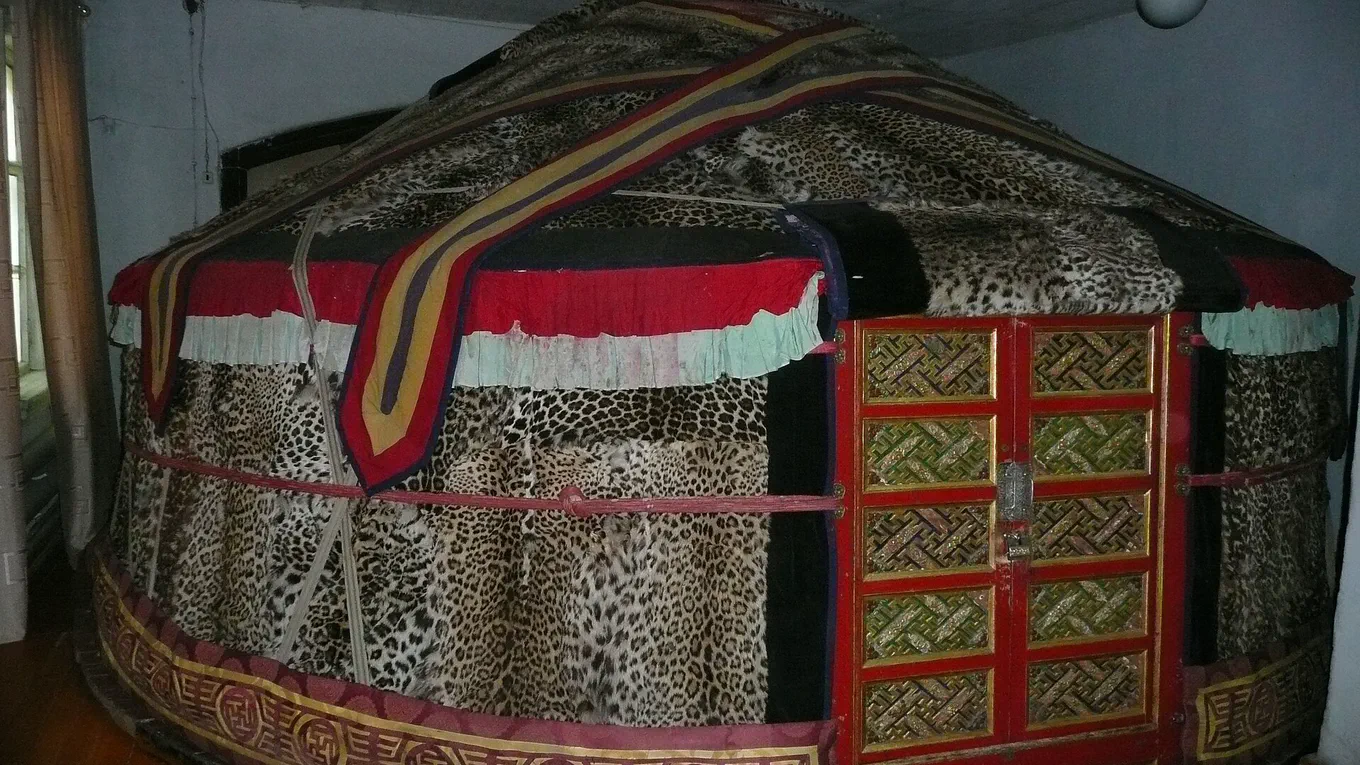
1 The Bogd Khan’s snow leopard ger at the Winter Palace
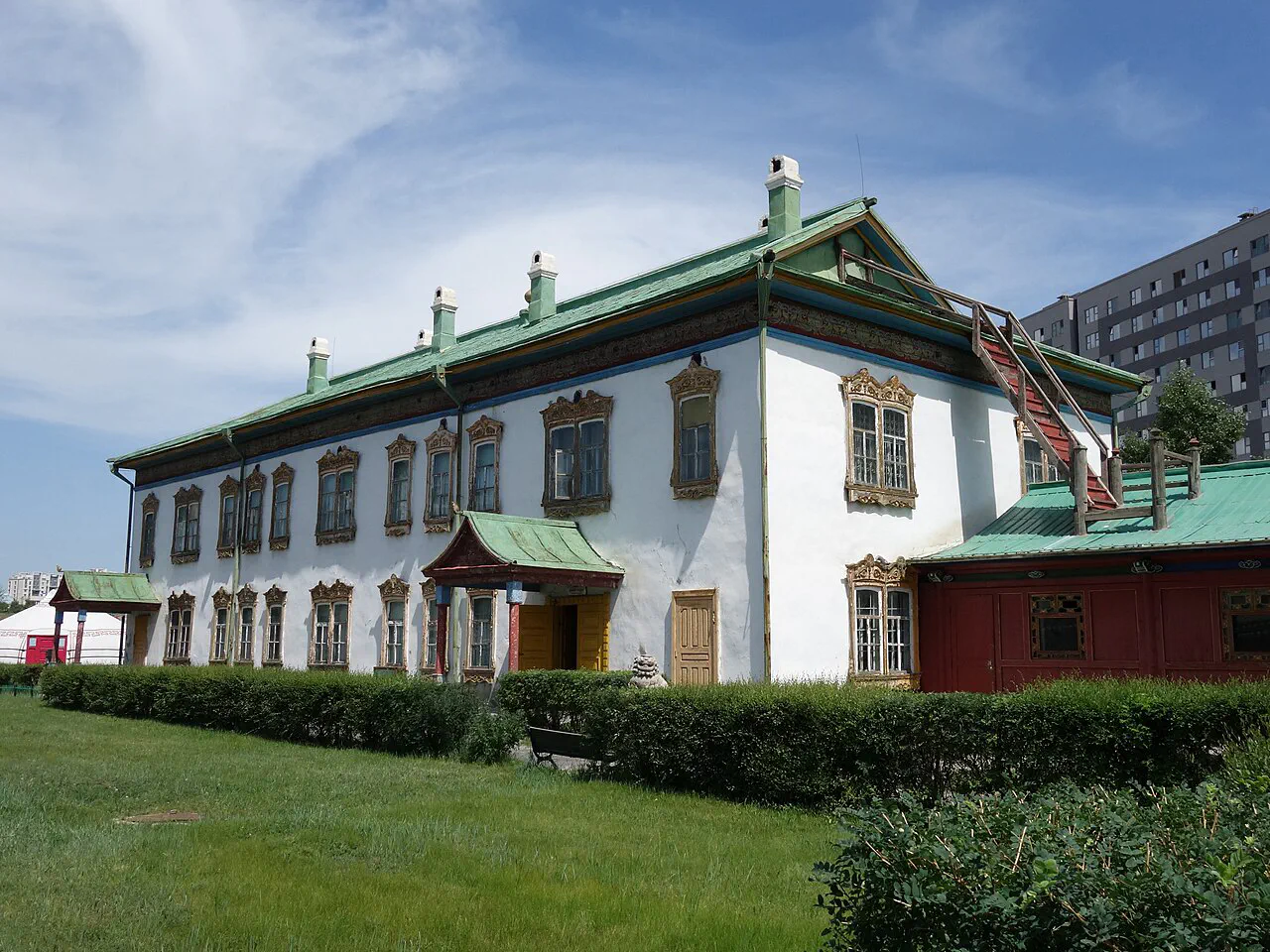
Stand here. The Winter Palace of the Bogd Khan, in Khan Uul District, built between 1893 and 1903 and now a museum.
The Bogd Khan’s ger, covered with snow leopard skins, in the museum at his Winter Palace in Ulaanbaatar.Brücke-Osteuropa / Public domain.
On his 25th birthday, a lama born near Lhasa was given a ger, a Mongolian tent, covered with 150 snow leopard skins. In 1911, he led Mongolia out of Qing rule and was installed as its god-king, the Bogd Khan. He lost the throne to China, won it back through a Russian warlord, and kept it, with lesser powers, until he died. The revolutionary government declared there would be no more reincarnations. Of his four homes, only this palace is left, and his snow leopard ger belongs to its museum.
2 The giant statue lost and rebuilt at Gandan Monastery
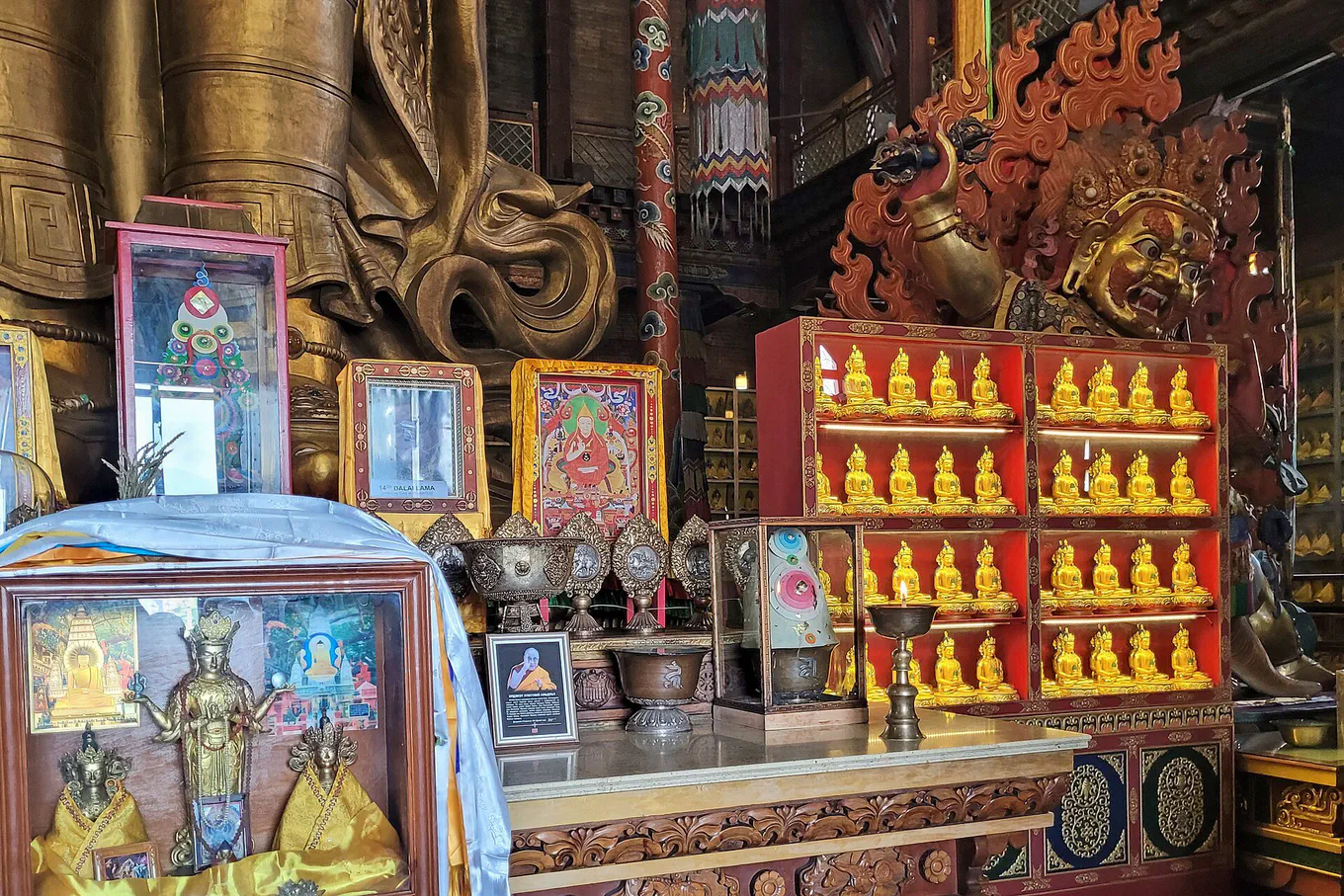
Stand here. The Megzed Janraiseg Temple at Gandan Monastery, in Bayangol District, built in 1913 as Mongolia’s tallest monastery building.
Shrines and rows of small Buddha figures inside the Megzed Janraiseg Temple at Gandan Monastery, Ulaanbaatar.Bernard Gagnon / CC0.
To celebrate Mongolia’s independence from Qing China, the Bogd Khan ordered a temple. Inside it stood a gilded bronze statue of Avalokiteśvara, a Buddhist figure 25.6 metres tall, set with precious stones. In 1937, the statue was broken apart, and it is thought to have been shipped to Moscow and melted down. Mongolian scholars, helped by a few Soviet advisers, saved the temple from demolition. In 1996, a new statue, modelled on the old one, was dedicated. It stands a little taller than the first.
3 The Beatles monument where Mongolians met to hear banned music
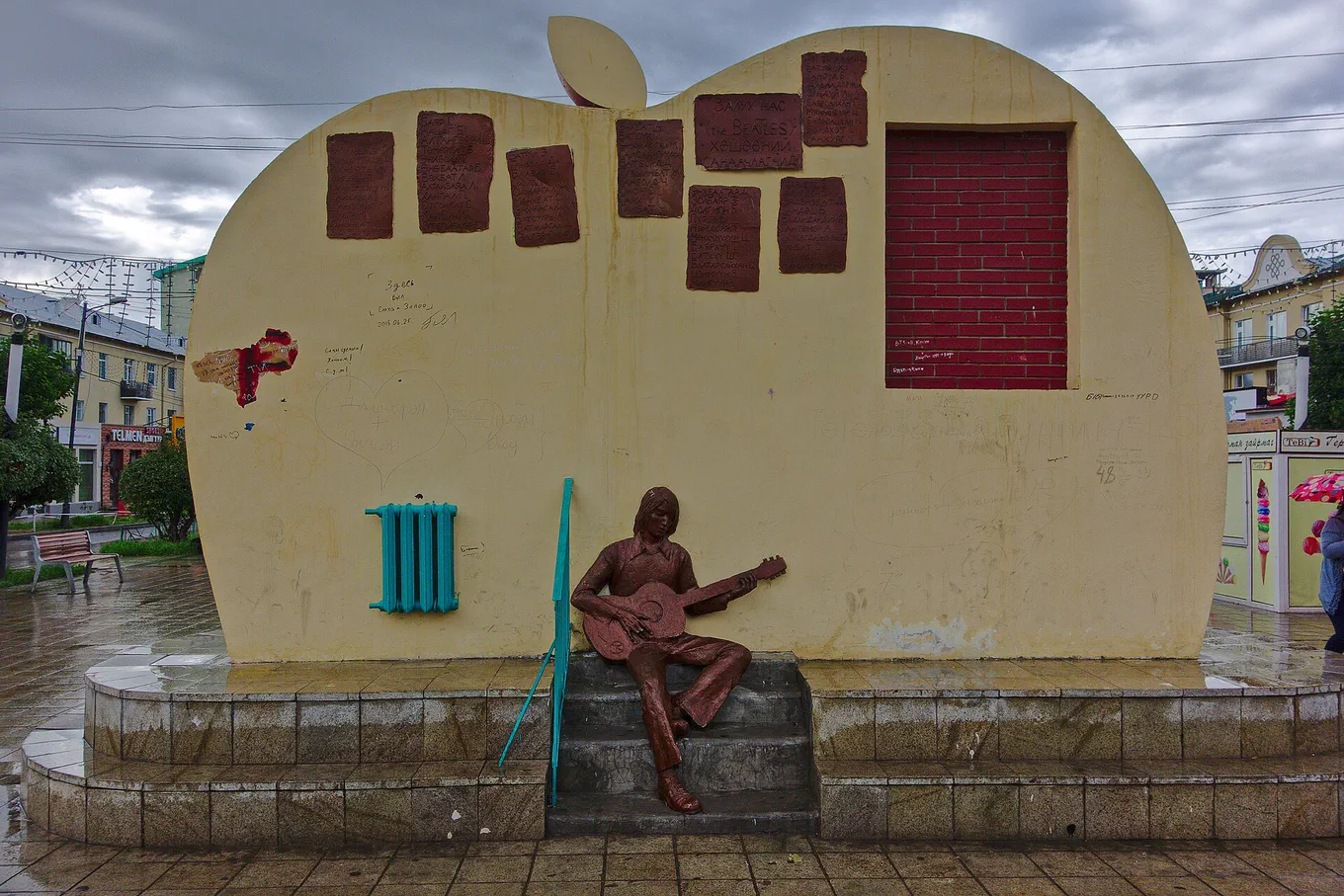
Stand here. Fountain Square, known as Beatles Square, in Sükhbaatar District. The bronze monument is shaped like an apple, for Apple Records.
The Beatles, the four from Liverpool, stand on the south side of this bronze apple, with Paul barefoot. The reason they are in Ulaanbaatar is on the other side. In the 1970s, most Western music was banned in Mongolia, but young people from the Soviet-style flats around here gathered on this spot to listen to it anyway, the Beatles included. In 2008, politicians, businessmen, and artists paid for a monument. On its north side, in tribute to them, a young man sits on some stairs, strumming a guitar.
4 Zorig and the hunger strike on Sükhbaatar Square
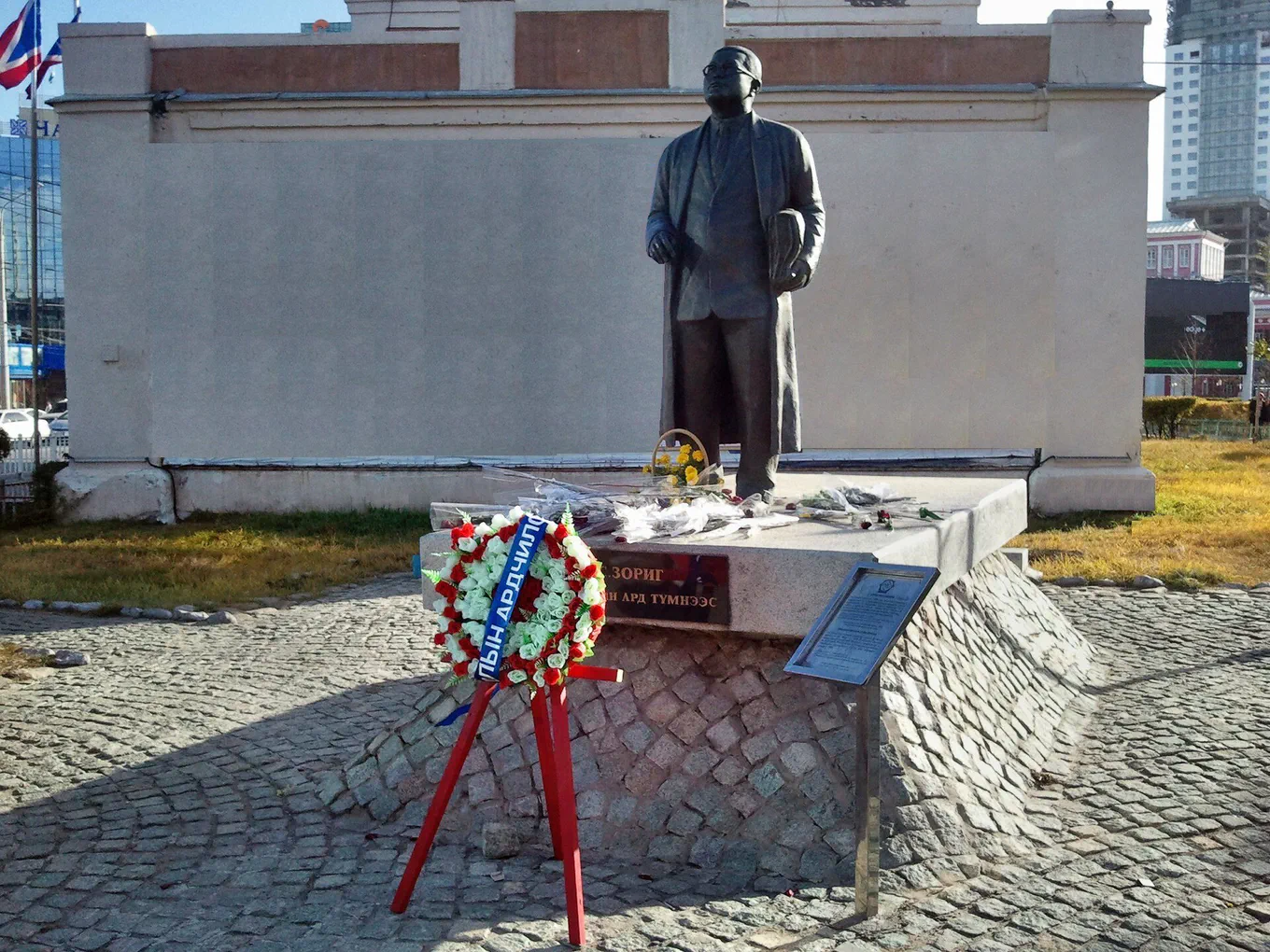
Stand here. Zorig’s statue, across the street from the Central Post Office, faces the Government Palace on the north side of Sükhbaatar Square.
Sanjaasürengiin Zorig lectured in scientific communism, then organised Mongolia’s democracy movement. On 7 March 1990, ten of its members began a hunger strike on this square, demanding the government resign, and thousands joined them. The party leader refused to sign a decree for force. Those present later recalled him saying the Mongols had not yet come to making each other’s noses bleed. On 9 March, the whole Politburo resigned.
5 The smuggled Tarbosaurus that came home to Ulaanbaatar
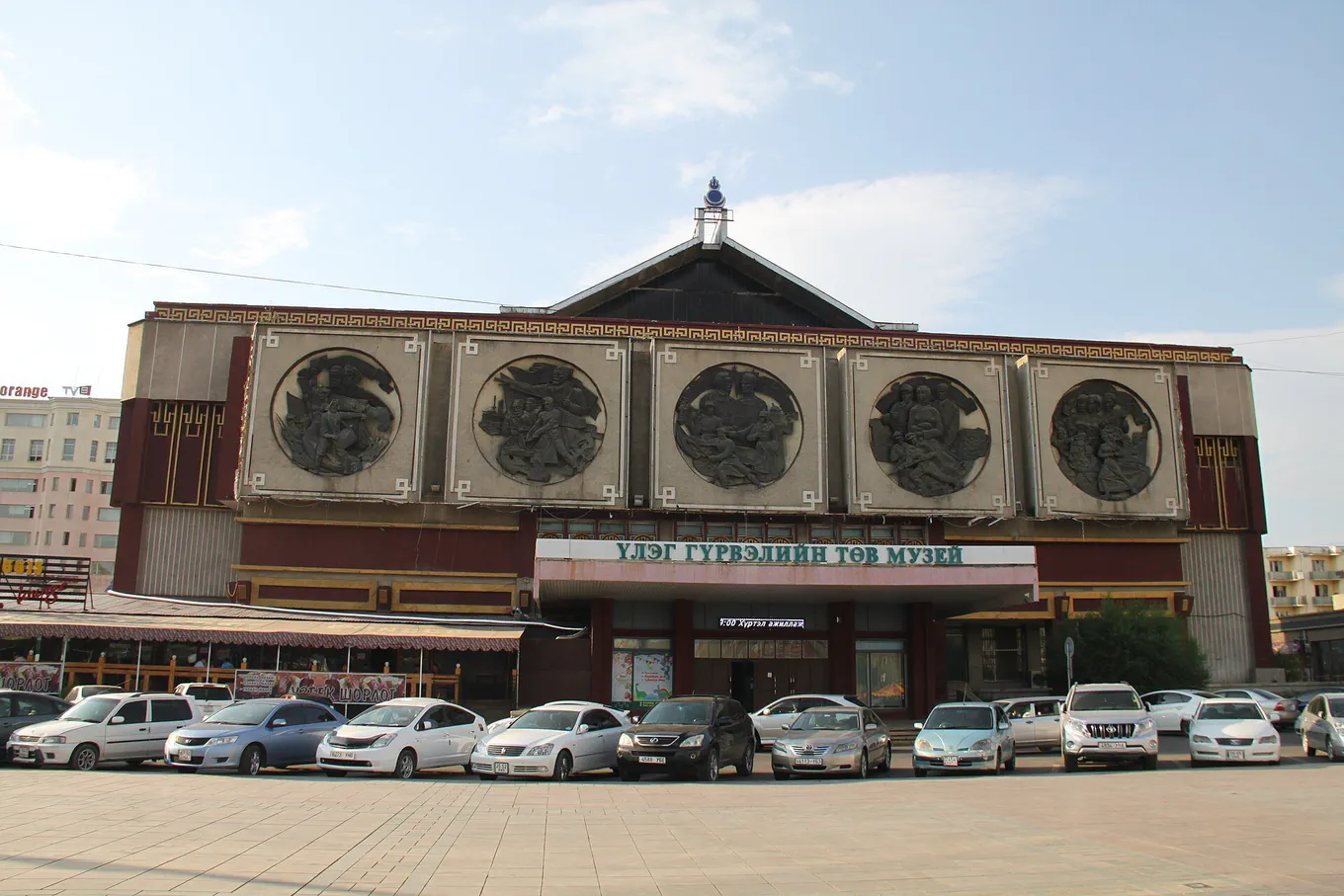
Stand here. The former Lenin Museum on Independence Square, in Chingeltei District, which became a dinosaur museum and, in 2019, passed to the Natural History Museum.
The former Lenin Museum on Independence Square in Ulaanbaatar, which later became a museum of Mongolian dinosaurs.Gary Todd / CC0.
A T. rex-like skeleton, a Tarbosaurus bataar, sold at auction in New York on 20 May 2012 for over $1 million. Its customs form said it came from Great Britain. But the Mongolian palaeontologist Bolortsetseg Minjin recognised it as Mongolian, and Mongolian fossils could not legally leave the country. President Elbegdorj went to an American court, and the sale was never completed. The skeleton came home, and for a few months it stood on Sükhbaatar Square, where Elbegdorj had told the hunger strikers of 1990 that the Politburo had resigned.
Pack nothing. Leave Friday.
Every Friday, I write a free letter, Journey, that takes us on a trip through places, stories, and ideas.
The Shadow Walker(Michael Walters, 2008). A crime novel. Nergui has left serious crimes for a desk job when a headless, handless body turns up on a dark Ulaanbaatar street.
Dateline Mongolia(Michael Kohn, 2006). A memoir. A 24-year-old American arrives by train in a freezing Ulaanbaatar to edit an English-language paper, The Mongol Messenger, in the late 1990s.
Wild East(Jill Lawless, 2000). A journalist’s account. A Canadian reporter joins the new UB Post in Ulaanbaatar, as Mongolia reconnects with the outside world.
Films to watch before you visit Ulan Bator
State of Dogs(Peter Brosens and Dorjkhandyn Turmunkh, 1998). A part-documentary film set in Ulaanbaatar, about a dog, Baasar, shot by a hunter paid to cull the city’s dogs.
If Only I Could Hibernate(Zoljargal Purevdash, 2023). A film. A teenager lives with his family in a yurt on the outskirts of Ulan Bator. It was the first Mongolian film in the Cannes Official Selection.
Out of Paradise(Batbayar Chogsom, 2018). A film, partly set in Ulan Bator, where a traditional couple from the steppe seek a C-section but cannot afford the hospital. Its director was raised there.
Questions
Is it Ulaanbaatar or Ulan Bator?
Both. Ulaanbaatar is the Mongolian name, meaning “Red Hero”, given in 1924 when the city became the capital of the new Mongolian People’s Republic. In the West it was known as Urga until then, and afterwards as Ulan Bator, a spelling related to the Russian form and approved by the Mongolian Post Office.
Where is the Bogd Khan’s snow leopard ger?
It belongs to the Bogd Khan Palace Museum, at the Winter Palace in Khan Uul District, the only one of his four residences left. The ger is covered with 150 snow leopard skins. His friend Beis Tsanligdorj, of Setsen Khan province, gave it to him on his 25th birthday, in 1893.
How tall is the giant statue at Gandan Monastery?
The statue of Avalokiteśvara at Gandan Monastery is 26.5 metres tall and weighs 90 tons. It was dedicated in 1996, after six years’ work, and modelled on a 25.6-metre original. That one was broken apart in 1937, though some accounts say Soviet soldiers did it in 1938 or 1943.