Utrecht is the fourth-largest city in the Netherlands, in the centre of the mainland, and it grew from a Roman fort around 50 CE. In 1579, the Union of Utrecht was signed here, laying the foundations of the Dutch Republic. Its stories are a pope who never lived in his house, a scholar behind a curtain, a vanished village, a house without walls, and a rabbit called Miffy.
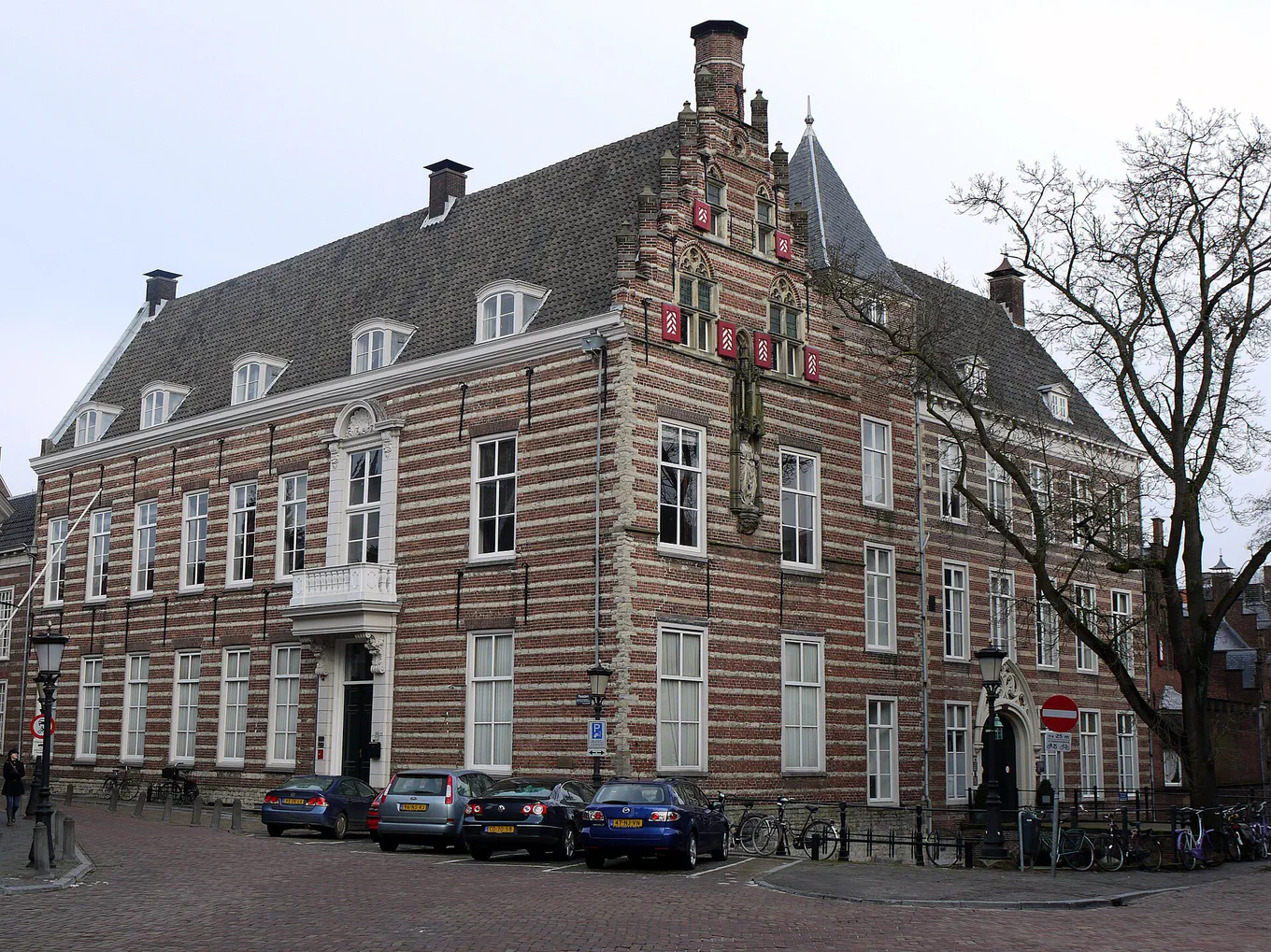
The only Dutchman to become pope, Adrian VI, was born in Utrecht. He tutored the future Emperor Charles V, and while serving at Charles’s court in Spain, he had a house built back home, hoping to return one day. But in 1522, with the cardinals deadlocked, they elected him pope in his absence. He went to Rome, where the Romans were sure to despise him as a “barbarian”, and died a year later. He never lived in his house. It bears his title still, Paushuize, the Papal House.
2 Anna Maria van Schurman, the student behind a curtain
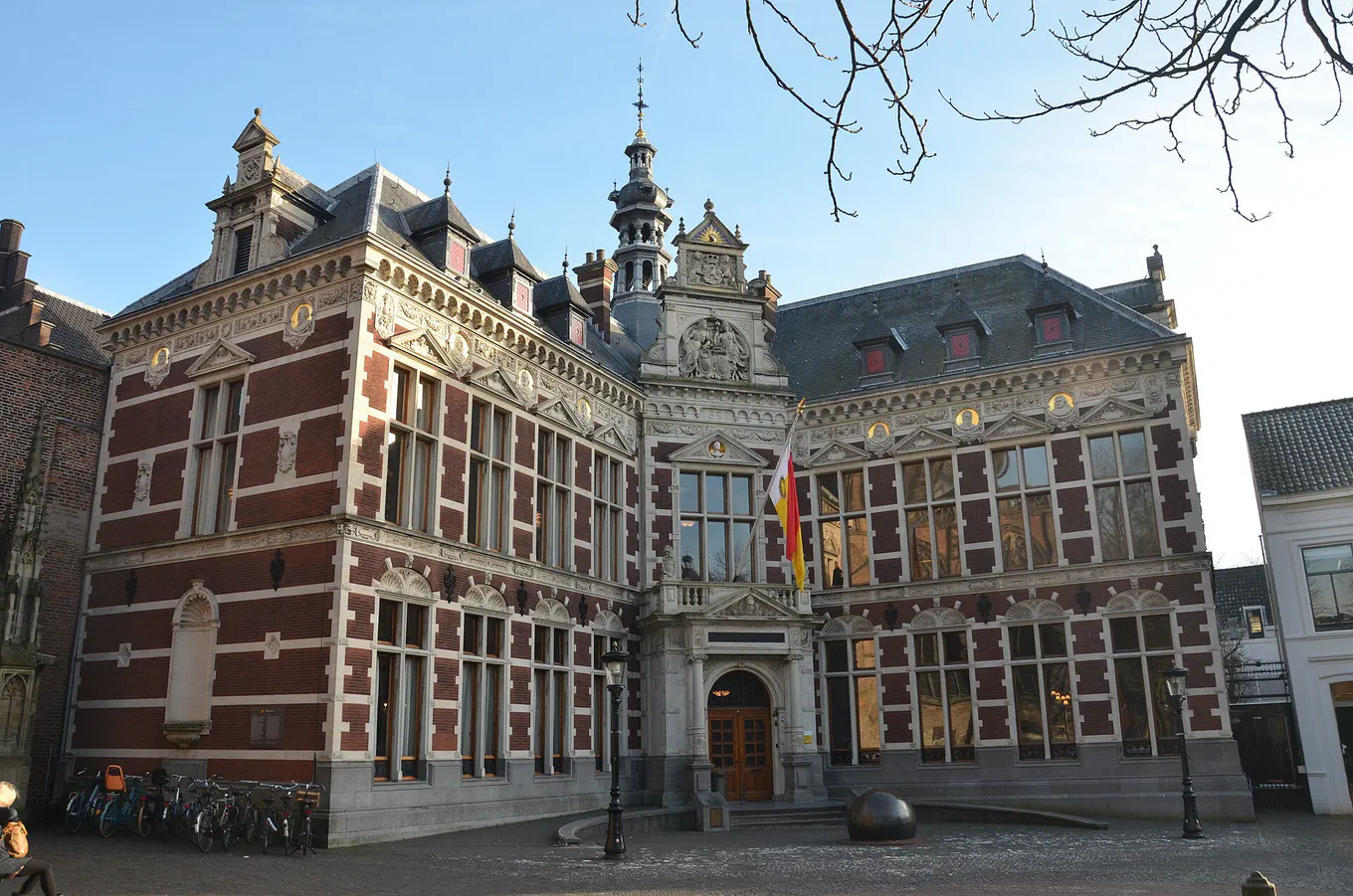
Stand here. The Academiegebouw on Domplein, Utrecht University’s main building. A bell named Anna Maria, after her, hangs in the turret above the entrance.
In 1636, Anna Maria van Schurman, the “Star of Utrecht”, was asked to write a Latin poem for the opening of the city’s new university, because her Latin was so fine. She praised the university, and then pointed out that for women this sanctuary remained closed. That same year, she became the first woman student at any Dutch university. But when she went to lectures, she sat behind a curtain, in a booth beside the hall, so that the male students could not see her.
3 Baron van Zuylen and the village moved for Castle De Haar
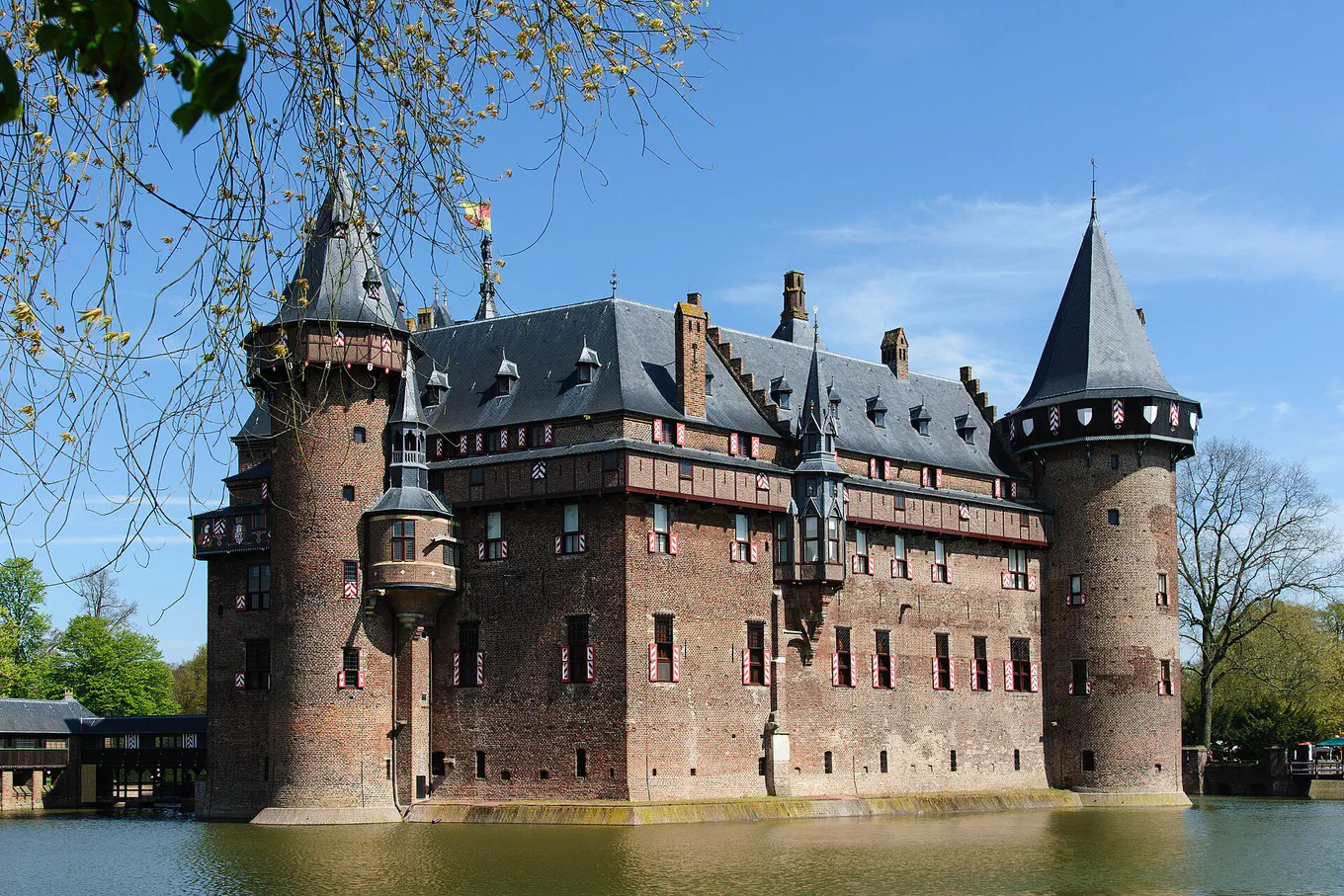
Stand here. Castle De Haar, in Haarzuilens, west of the city. It is the largest castle in the Netherlands.
Rothschild money rebuilt Castle De Haar. Baron Etienne van Zuylen inherited the ruin in 1890, and the family of his wife, Hélène de Rothschild, paid for everything, while Pierre Cuypers, architect of Amsterdam’s Rijksmuseum, spent twenty years on it. But to decorate the park, the village of Haarzuilens, all but its church, was demolished. One account says a fire destroyed the old village instead. Its people were moved a kilometre away, to a new village built to look medieval, where they lived as the baron’s tenants.
4 Truus Schröder and Rietveld’s house without walls
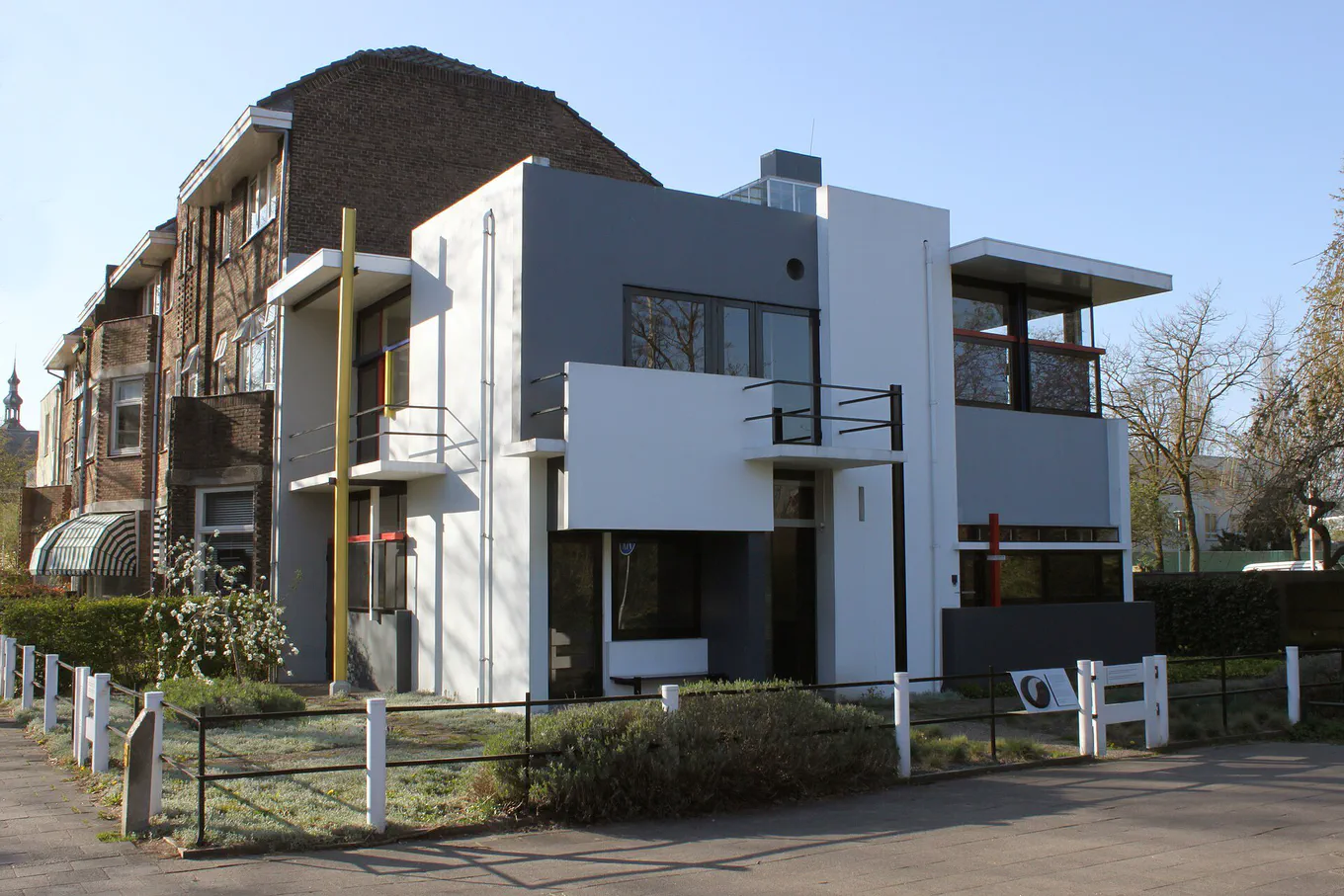
Stand here. The Rietveld Schröder House, on Prins Hendriklaan. A UNESCO World Heritage Site since 2000, it is now a museum.
Gerrit Rietveld had designed the Red and Blue Chair, but never a house, when Truus Schröder, a widow with three children, asked him for one in 1924. She wanted it preferably without walls. He meant to leave the upper floor open, but she felt it should work both ways, so sliding panels made it one room by day and three by night. In the 1960s, a motorway crossed the front lawn, and Rietveld said the house might as well be torn down. She stayed until her death.
5 Dick Bruna, the publisher’s son who drew Miffy
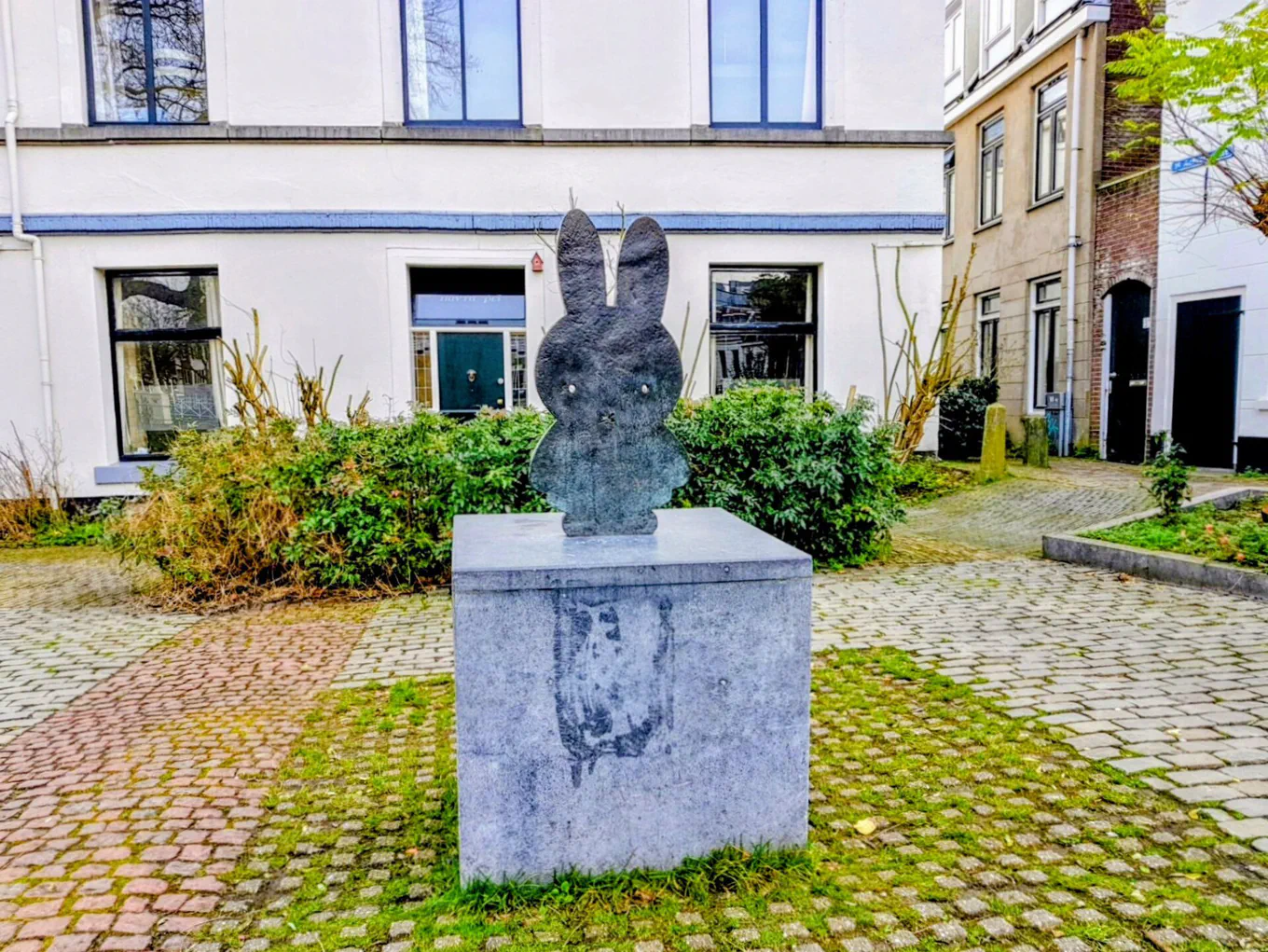
Stand here. Nijntjepleintje, the little square named after Miffy, whose Dutch name is Nijntje. A statue of her stands there.
Before there was Miffy, there was a publisher who meant his Utrecht-born son, Dick Bruna, to take over the family firm. But Bruna wanted to be an artist. He designed book covers and posters for the firm. Then, on holiday at Egmond aan Zee, he and his one-year-old son saw a little rabbit in the dunes, and Bruna began telling the boy stories about it. In 1955, that rabbit became Miffy, and the publisher’s son was an artist after all.
Pack nothing. Leave Friday.
Every Friday, I write a free letter, Journey, that takes us on a trip through places, stories, and ideas.
De val van de Vredeborch(Thea Beckman, 1988). A children’s book set in Utrecht at the start of the Eighty Years’ War, as citizens besiege the Vredeborch, the city’s fortress.
Stad in de storm(Thea Beckman, 1979). A children’s book set in Utrecht from 1672 to 1674, following a printer’s son, Hans Ortelius, during the French occupation of the city.
Alle tijd(Ronald Giphart, 2019). A novel about six men who start a brewery in a wharf cellar in Utrecht in the early 1990s, becoming business partners as well as friends.
Films to watch before you visit Utrecht
Skam NL(Bobbie Koek, 2018). A TV series. A Dutch teen drama, based on the Norwegian series Skam, following the daily life of students at St-Gregorius College in Utrecht.
Utrecht – Mooi Nederland(Willy Mullens, 1918). A short documentary. Willy Mullens climbed the Dom Tower, put his camera on a tram, and filmed a trip around the city’s canals.
Amsterdamned(Dick Maas, 1988). A Dutch thriller slasher film starring Huub Stapel. Parts of its speedboat chase were filmed in the Oudegracht of Utrecht.
Questions
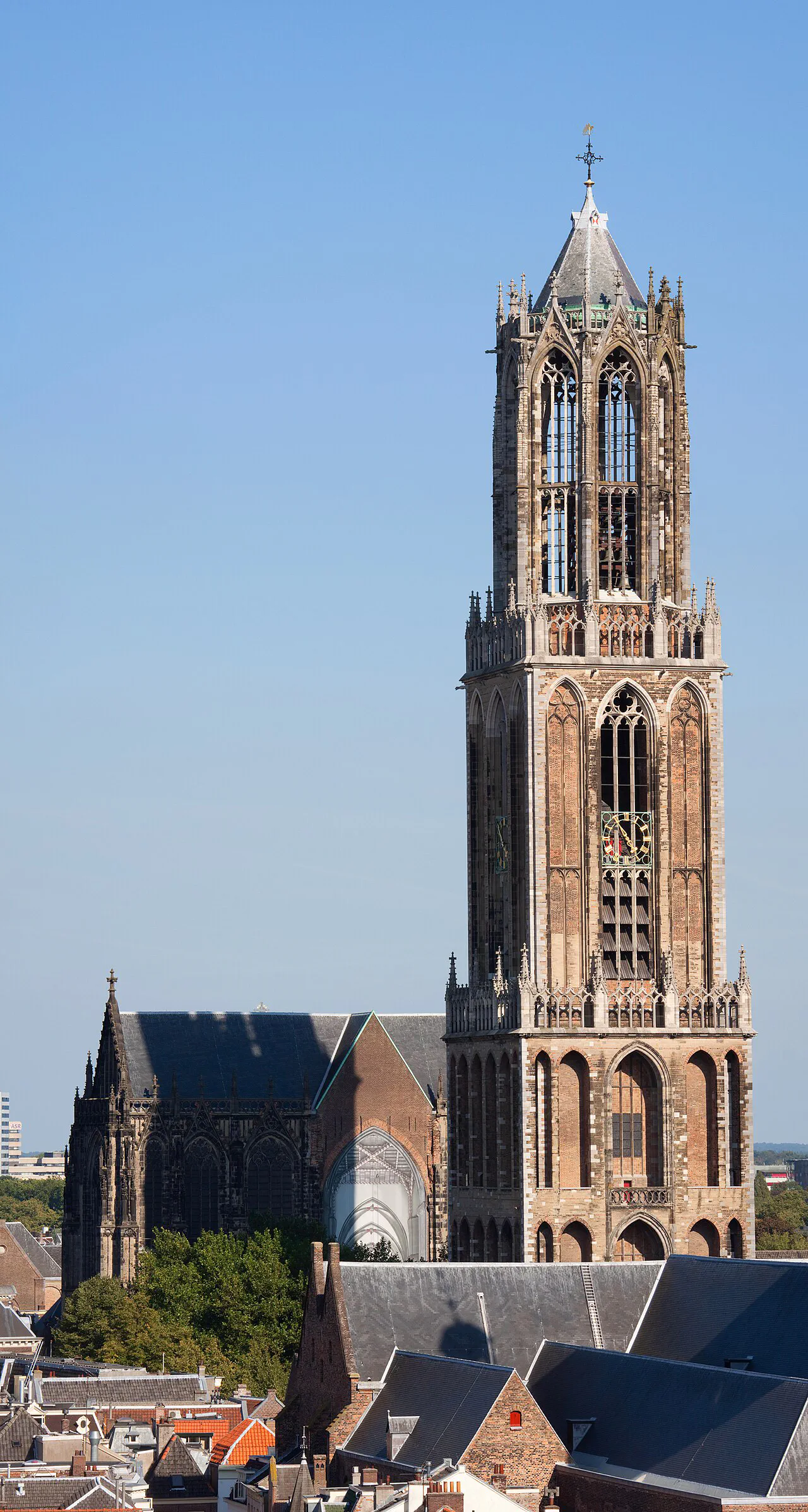
Why does the Dom Tower stand apart from its church?
At about 112 metres, the Dom Tower is the tallest church tower in the Netherlands. On the night of 1 August 1674, a storm destroyed the nave of the cathedral beside it, but the tower was undamaged. The tower and what was left of the church were never reconnected, and the square, Domplein, now lies between them.
Where was the Union of Utrecht signed?
In the chapter house of the Dom church, on 23 January 1579. That room is now the Aula, the hall of the Academiegebouw, Utrecht University’s main building on Domplein, where Anna Maria van Schurman heard lectures from behind a curtain. The Union is regarded as the foundation of the Dutch Republic.
Is Castle De Haar in Utrecht?
Yes. It stands in Haarzuilens, a village that is part of the municipality of Utrecht, about 12 kilometres west of the city centre. The old village was cleared to make the castle park, though one account says a fire destroyed it. In 2000, the family passed the castle to a foundation.