Valencia stands on the River Turia, on the Mediterranean coast of Spain. Founded as a Roman colony in 138 BC, it is now the country’s third most populous city and the capital of the Valencian Community. Its stories here are a cleaner hiding the city’s Holy Grail, El Cid’s widow losing his city, a painter’s beach of sick children, a novelist’s coffin coming home, and an opera house shedding its tiles.
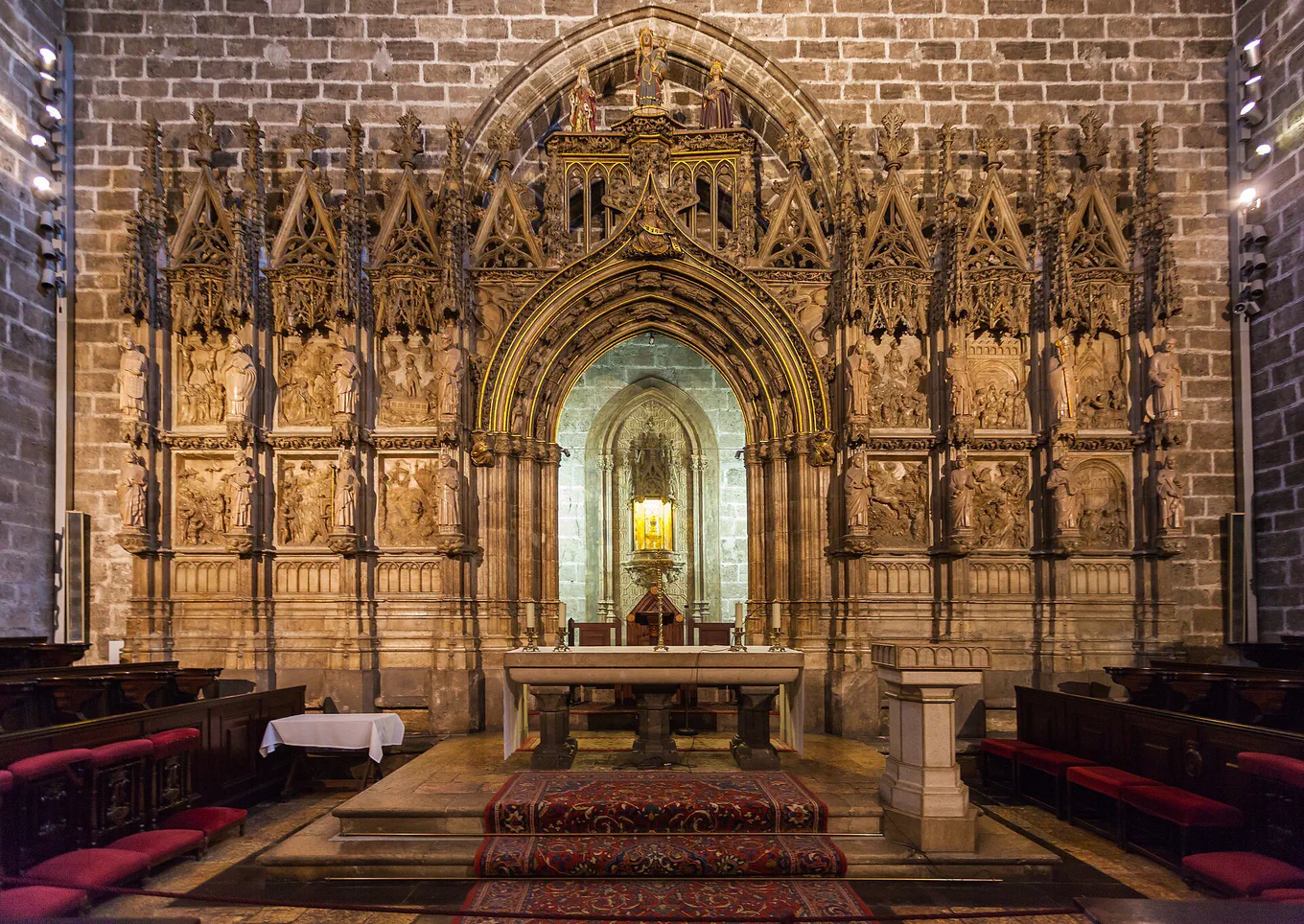
This chapel keeps the agate cup most often named as the Holy Grail. On 21 July 1936, shortly before militias stormed and burned the cathedral, a canon decided to rescue the cup. Sabina Suey, who cleaned it, took it to her mother’s house. It was later hidden in the springs of an old sofa, behind new kitchen masonry, and in a window niche in Carlet, plastered and painted to match the wall. In March 1939, she handed it back. The street where it hid is now Holy Chalice Street.
2 El Cid and Jimena, the rulers who lost Valencia
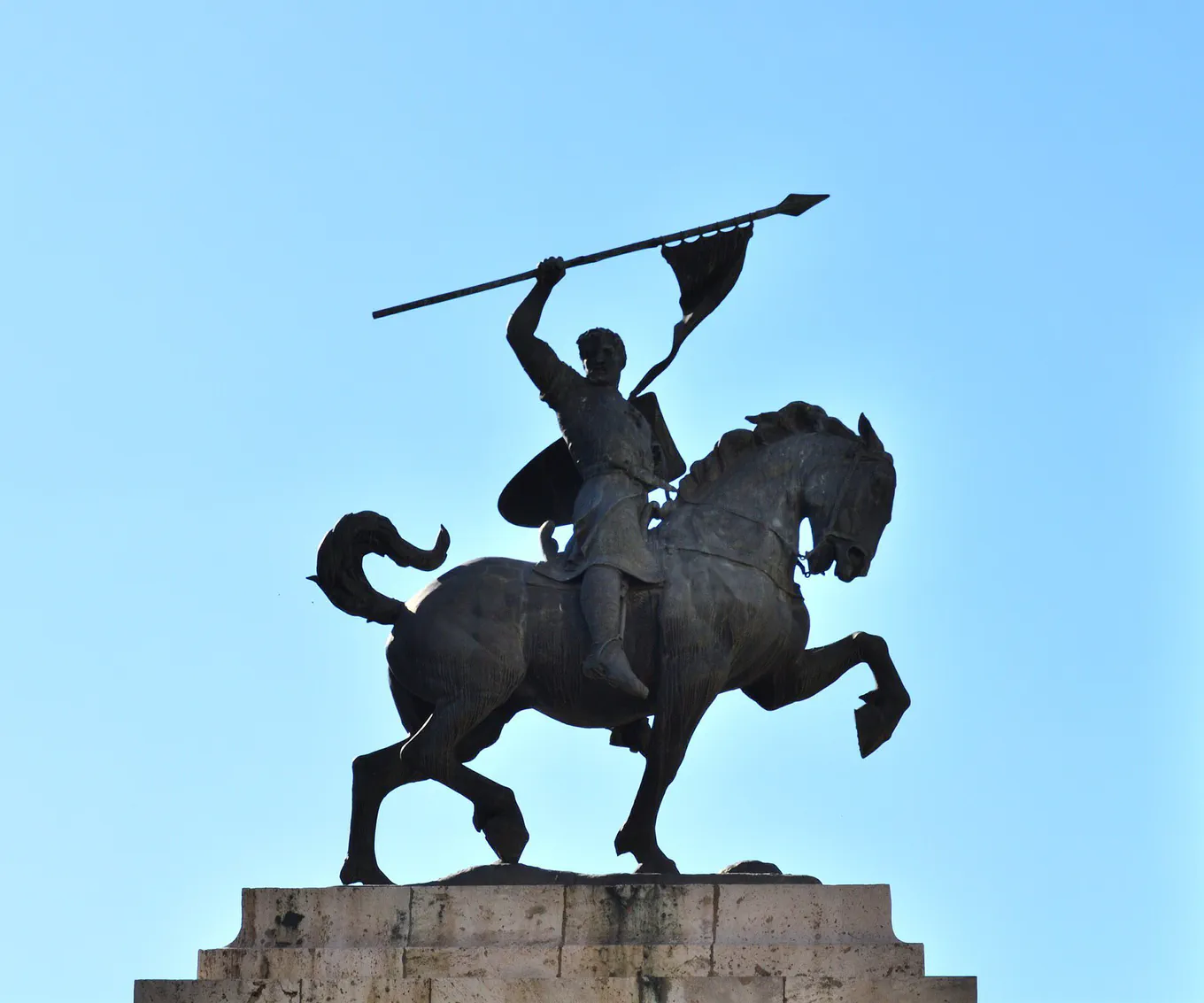
Stand here. The El Cid statue by the American sculptor Anna Hyatt Huntington, at the start of Gran Via de Ramón y Cajal, beside Plaza de España. It arrived in 1964.
Anthony Mann’s film El Cid ends with Charlton Heston’s dead hero strapped to his horse, leading a last charge. The real Rodrigo Díaz de Vivar took the city after a siege and ruled it until he died there in 1099. His wife, Jimena, held it three more years. Then King Alfonso VI judged Valencia impossible to defend, set it on fire, and abandoned it. Jimena rode back to Castile with her husband’s body. That ride is probably where the legend of the dead man on his horse began.
3 Joaquín Sorolla and the sick children on Valencia’s beach
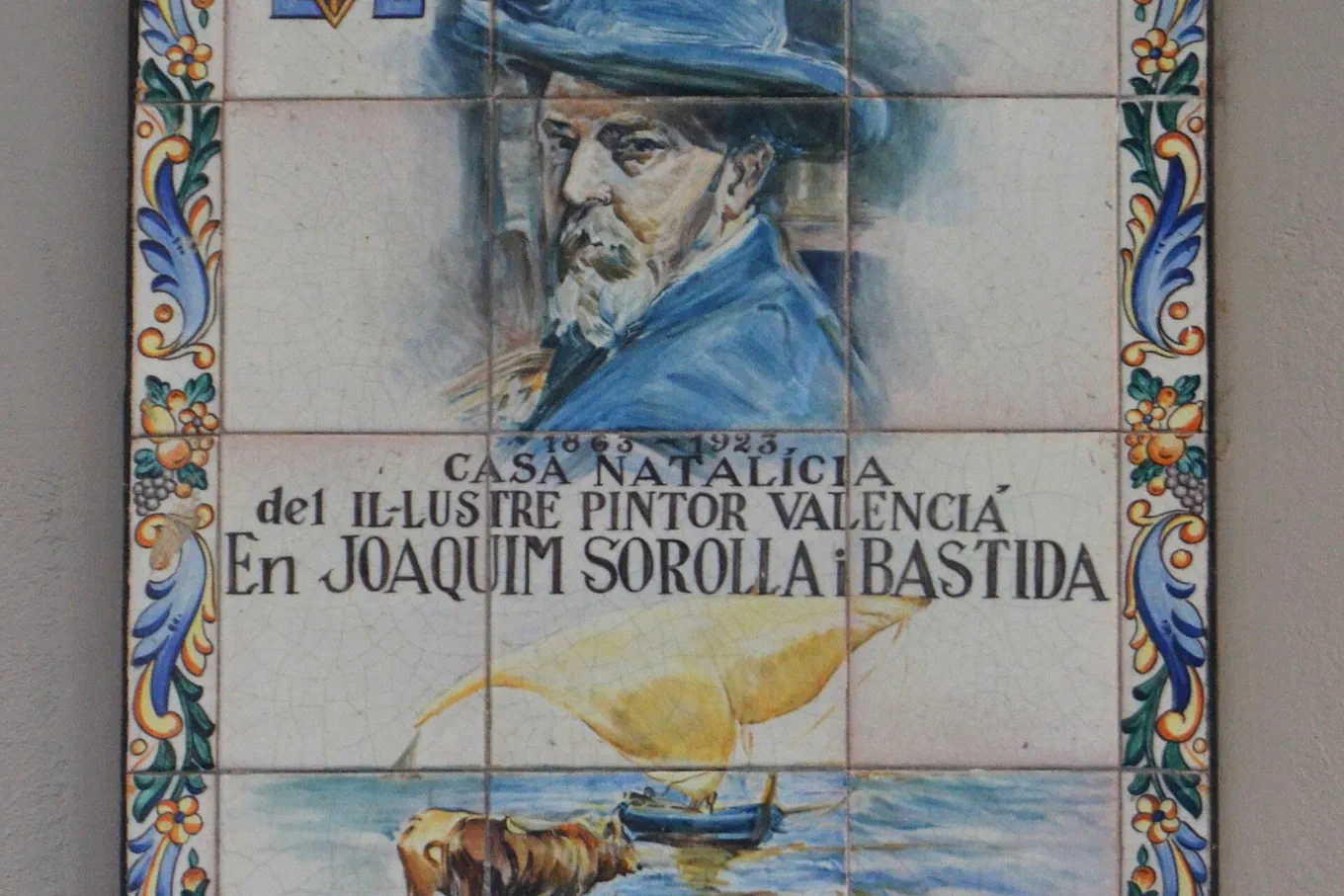
Stand here. Number 8, Calle de las Mantas. Sorolla’s birth house is gone, and a ceramic plaque marks the spot.
Joaquín Sorolla was born here, and at two he lost both parents to cholera. An aunt and uncle raised him. He grew up to paint Valencia’s beaches, the setting for many of his pictures. But his painting Sad Inheritance! shows sick and disabled children, naked, some on crutches because of polio, brought to the Malvarrosa beach by a monk in black from the hospital of San Juan de Dios. In 1900, he won the Grand Prix at the Universal Exhibition in Paris.
4 Blasco Ibáñez, the novelist whose coffin came home by battleship
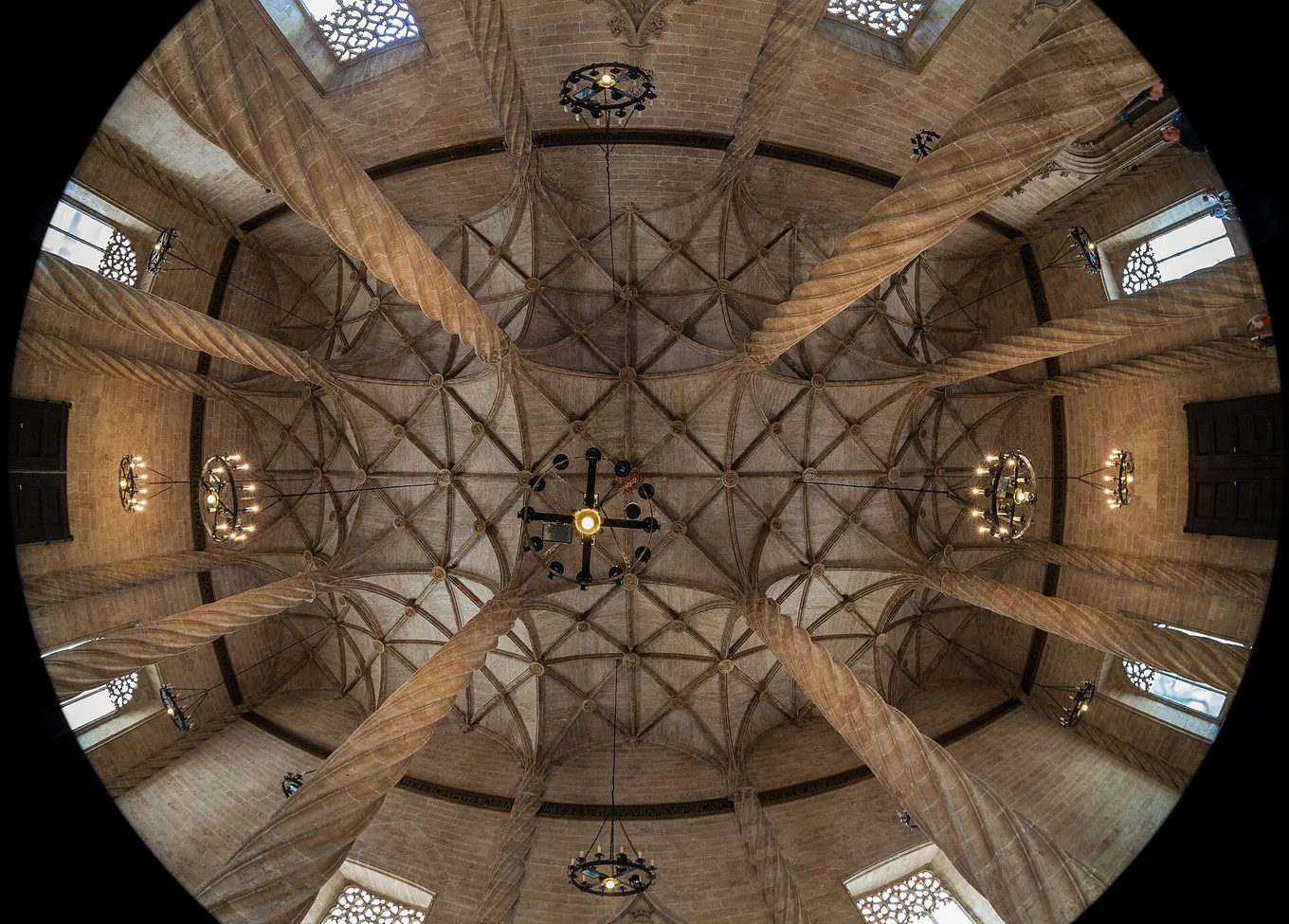
Stand here. La Lonja de la Seda, the Silk Exchange, built between 1482 and 1533, now a World Heritage Site. His coffin lay here for several days.
Rudolph Valentino became a star in the 1921 film of The Four Horsemen of the Apocalypse, a novel by Vicente Blasco Ibáñez. Blasco Ibáñez was born in Valencia, and he asked that his body come back when Spain became a republic. But in 1928, he died at his house in Menton, in France, and his coffin waited five years. In October 1933, the battleship Jaime I brought his coffin home, and fishermen helped carry it here. More than 300,000 people turned out for him.
5 Santiago Calatrava’s opera house and the tiles that blew away
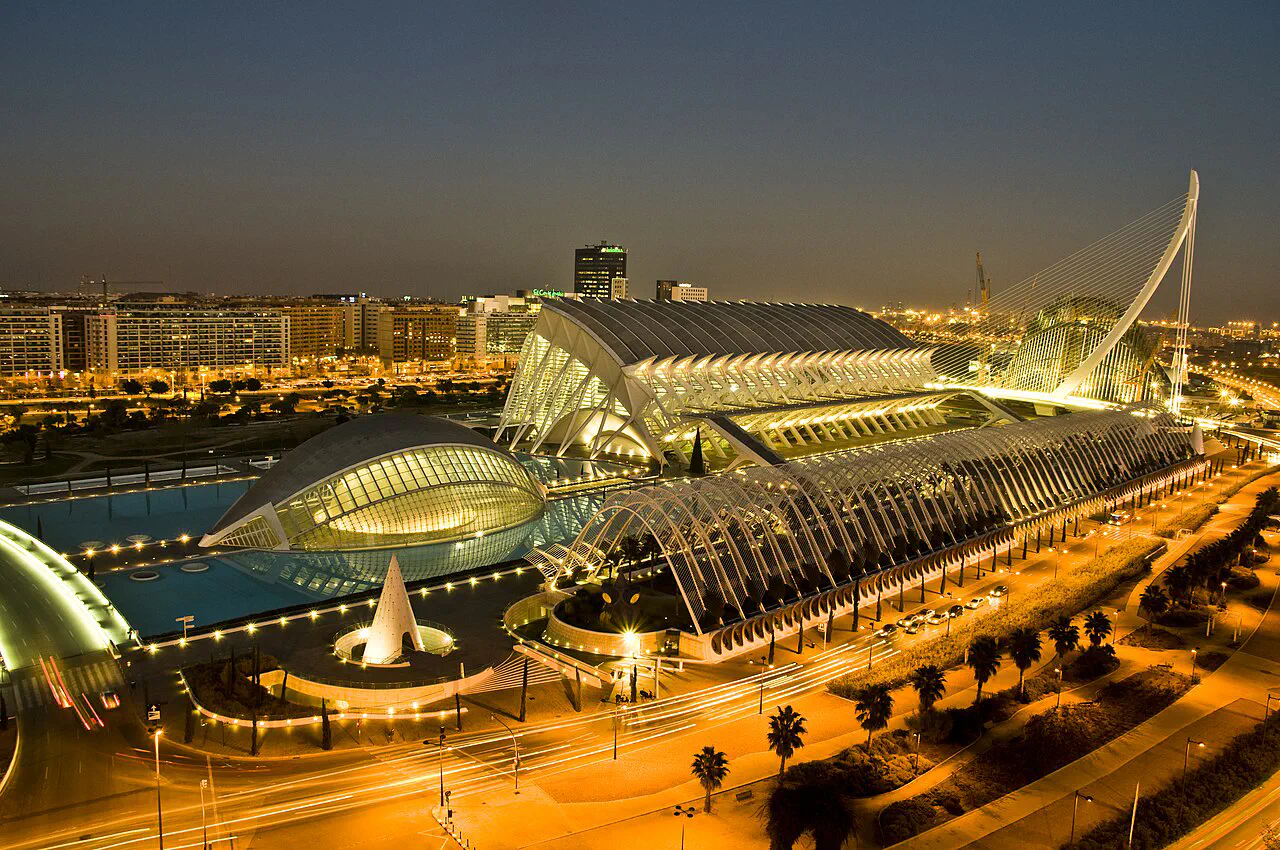
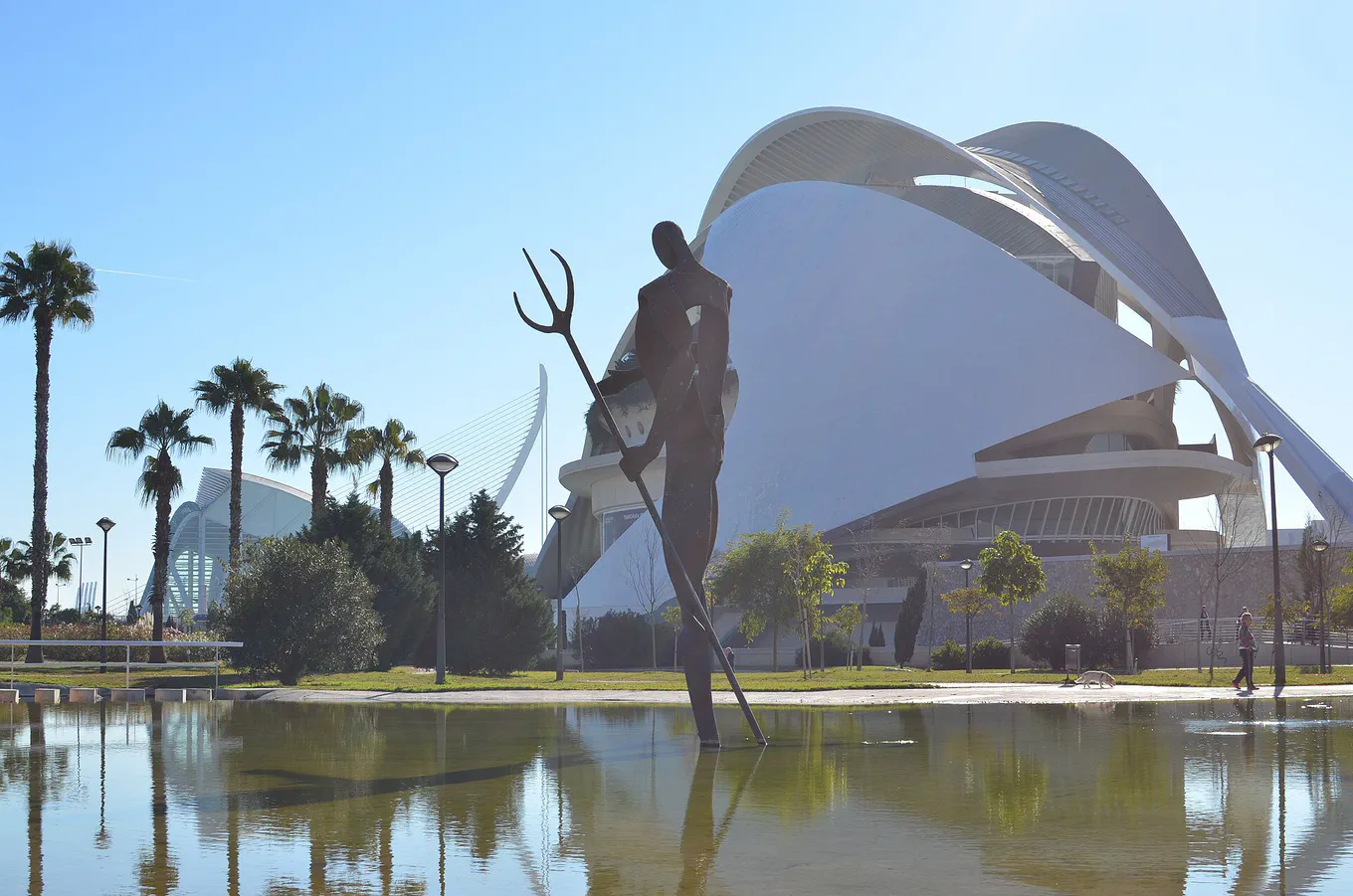
Stand here. The Palau de les Arts Reina Sofía, the opera house of the City of Arts and Sciences, in the old Turia riverbed.
Part of Brad Bird’s Tomorrowland, with George Clooney, was filmed in this complex, co-designed by Santiago Calatrava, born in Benimàmet, now part of Valencia. For the opera house, Calatrava insisted on trencadís, a mosaic of some 20,000 irregular glazed tiles. In the last week of December 2013, the first strong storm brought part of it down. The public was shut out and scheduled events were cancelled indefinitely. The tiles were back by October 2015, and the citizens paid nothing. Calatrava and the builders did.
Pack nothing. Leave Friday.
Every Friday, I write a free letter, Journey, that takes us on a trip through places, stories, and ideas.
La barraca(Vicente Blasco Ibáñez, 1898). A novel. Uncle Barret, who can’t pay his rent, has to stop working the huerta, the irrigated farmland around Valencia.
Cañas y barro(Vicente Blasco Ibáñez, 1902). A novel about life among the fishermen-peasants of the Albufera marshes in Valencia, by a writer born in the city.
Or the Bull Kills You(Jason Webster, 2011). A crime novel set in the world of bullfighting, and the first in a series of detective stories set in Valencia around Chief Inspector Max Cámara.
Films to watch before you visit Valencia
El Cid(Anthony Mann, 1961). A film. Charlton Heston as the knight who ruled Valencia, with Sophia Loren as Jimena. Its battle for the city was shot at Peñíscola.
Tomorrowland(Brad Bird, 2015). A film. George Clooney stars, and the Science Museum at the City of Arts and Sciences is one of its backdrops.
Westworld, season 3 (HBO). A TV series. Some of its filming took place at the City of Arts and Sciences, in the old Turia riverbed.
Questions
Can you see the Holy Grail in Valencia Cathedral?
Yes. The Holy Chalice, an agate cup that is the object most often named as the Grail, is kept in a chapel consecrated to it, the old chapter house of 1356–1369, where pilgrims still come. The cup itself probably dates from between the 2nd century BC and the 1st century AD.
Why is there a park where Valencia’s river used to be?
After the Turia flooded the city on 14 October 1957, killing at least 81 people, the river was diverted south. A plan to run a motorway down the old bed was dropped after a campaign whose slogan was “The Turia riverbed is ours, and we want it green”. The park opened in 1986.
When are the Fallas in Valencia?
The main days are 15 to 19 March. Around midnight on 19 March, the falles are burnt as huge bonfires, in what is called La Cremà, the Burning. Each year one ninot, or figure, is spared by popular vote and goes to the Museo Fallero. UNESCO added the festival to its intangible heritage list in 2016.