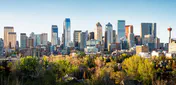
Vancouver, Canada, British Columbia, North America
One-time cultural phenomenon, The X-Files, was shot here. Amazing, but my favourite thing from here is Suzanne Simard, whose groundbreaking research showed that trees communicate and share things through their roots. Her work is kind of fictionalised in one of the strands of Richard Powers’s book, The Overstory… which is just extraordinary.
— Nick
Squamish, Musqueam and Tsleil-Waututh peoples settled on the Burrard Peninsula, between Burrard Inlet and the Fraser River, more than 10,000 years ago; Vancouver was incorporated there in 1886. It is now the largest city in British Columbia, in Western Canada. A talkative barkeeper, Jimi Hendrix’s grandmother, a fishing boat against a bomb, a steam clock that runs on electricity and a leaked superhero film fill the pages that follow.
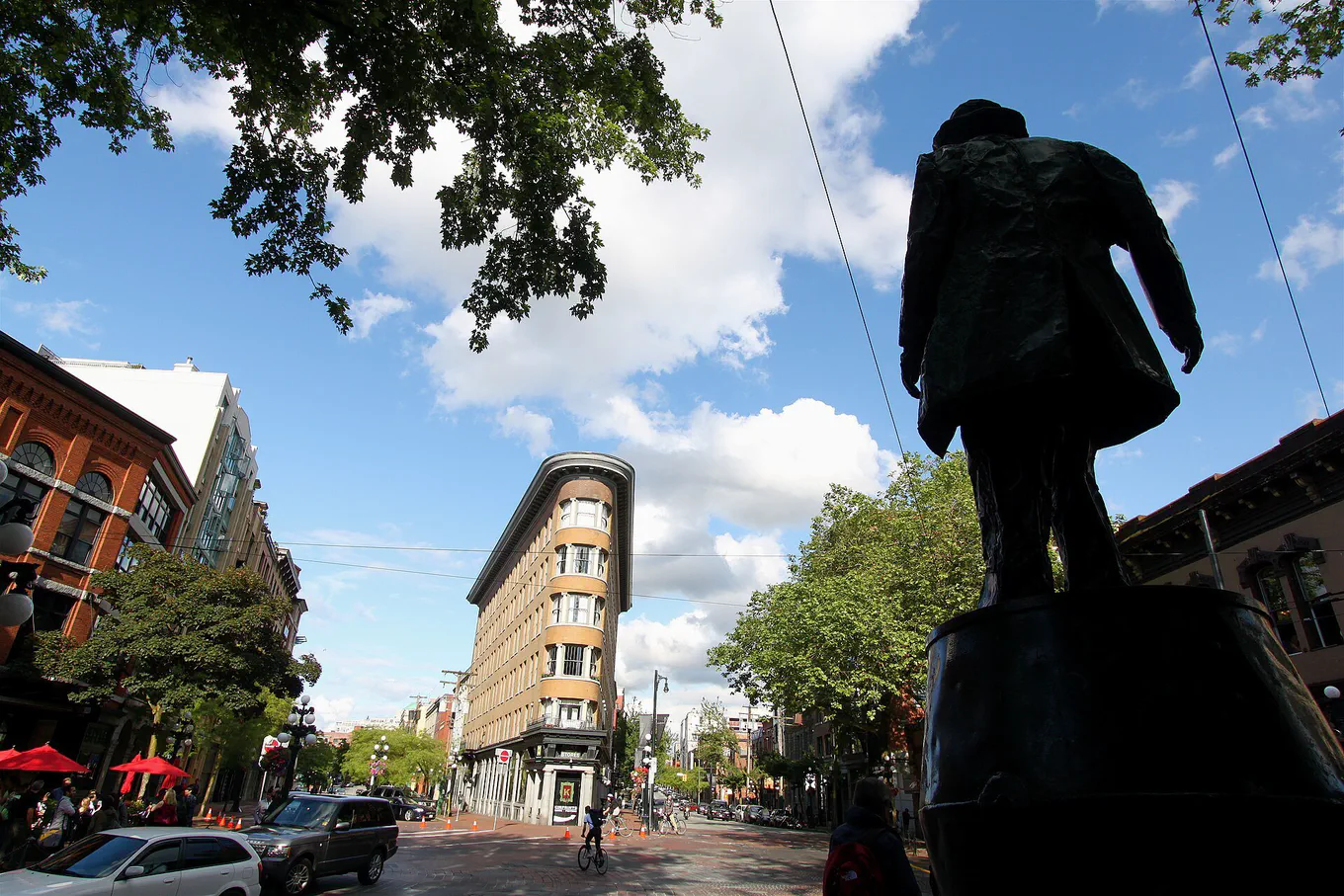
Gastown is named after John Deighton, a steamboat captain called Gassy Jack because he loved to talk. In 1867, he arrived on Burrard Inlet with about $6, his Indigenous wife, and a yellow dog. Sawmill workers built him a saloon for all the whisky they could drink in one sitting, and the place became Gassy’s town. In 2022, protesters at a march for Missing and Murdered Indigenous Women and Girls toppled his statue. They cited his marriage in 1870 to Quahail-ya, a Squamish girl of “about 12”.
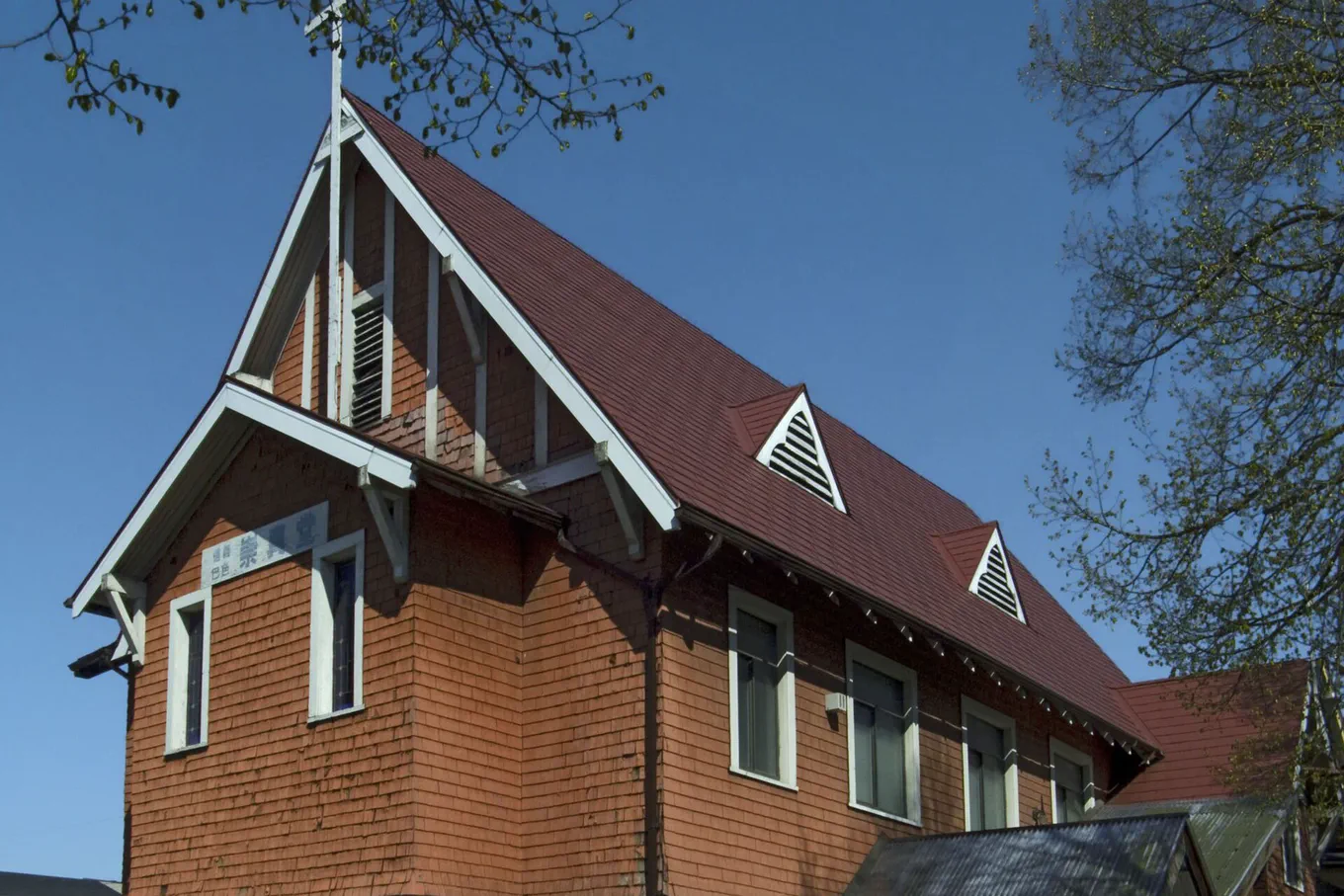
2 Jimi Hendrix’s grandmother and the last church of Hogan’s Alley
Stand here. Fountain Chapel, at the northwest corner of Jackson and Prior Streets in Strathcona. It’s a private home now, so look from the street.
The former Fountain Chapel, at Jackson Avenue and Prior Street in Strathcona, Vancouver.Bobanny / Public domain.
Jimi Hendrix’s grandmother, Nora, had toured the United States as a vaudeville singer and dancer before settling in Vancouver. Hogan’s Alley was the first and last Vancouver neighbourhood with a large Black community. In 1918, Nora was the driving force behind buying the community a church, the city’s first Black-owned one, raising money with entertainments, bazaars, and suppers. Jimi sometimes stayed with her. But at the end of the 1960s, most of Hogan’s Alley was razed for two viaducts. Her chapel is the last building of that community still standing.
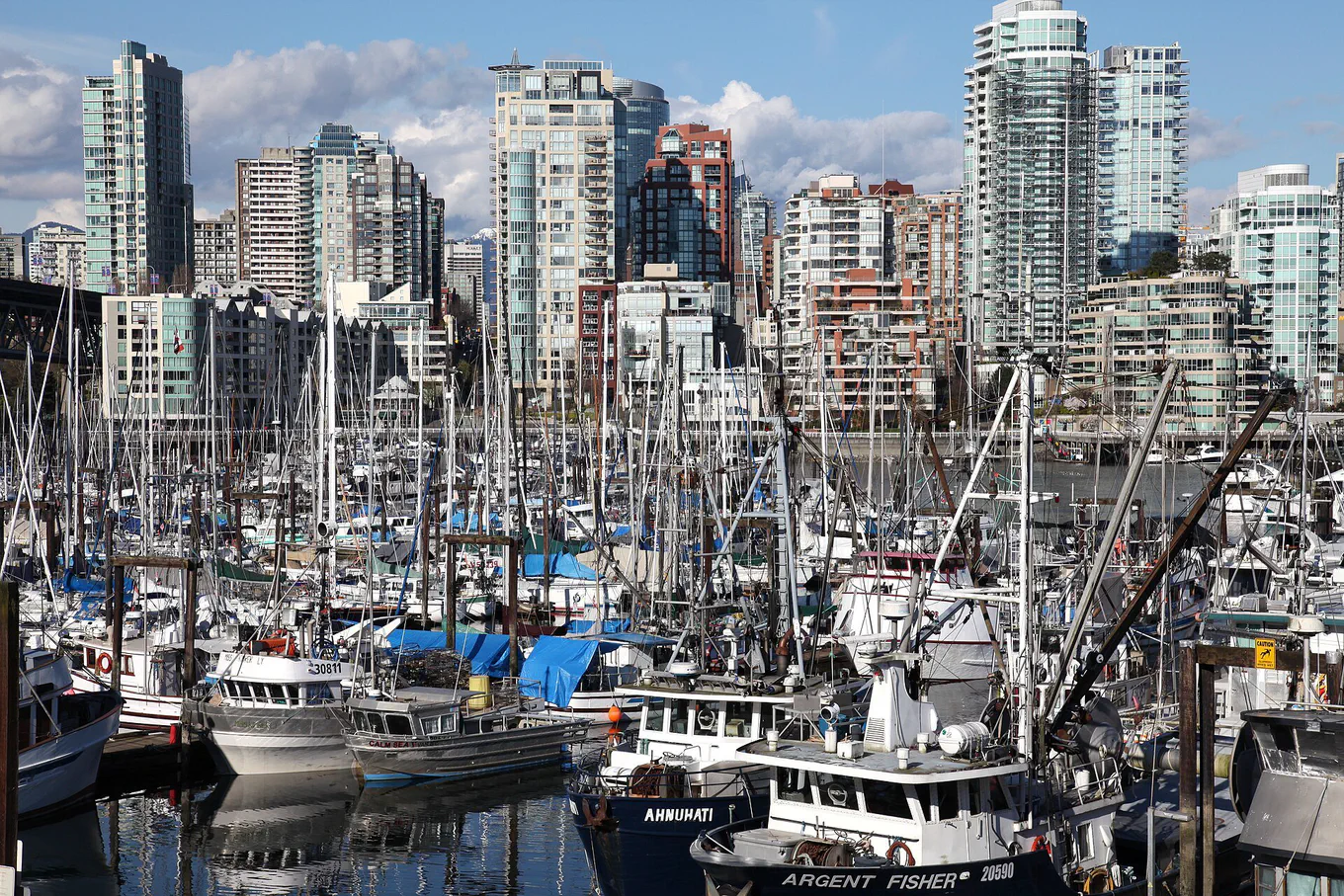
Greenpeace grew out of Vancouver’s Don’t Make a Wave Committee, which planned to sail into an American nuclear test zone at Amchitka, off Alaska. A benefit concert paid to charter a halibut boat, renamed Greenpeace, and on 15 September 1971 it left False Creek at dusk. It was intercepted and turned back, and the bomb went off. But five months later, the United States stopped the Amchitka test programme. “It is amazing,” Dorothy Stowe, of the committee, said later, “what a few people sitting around their kitchen table can achieve.”
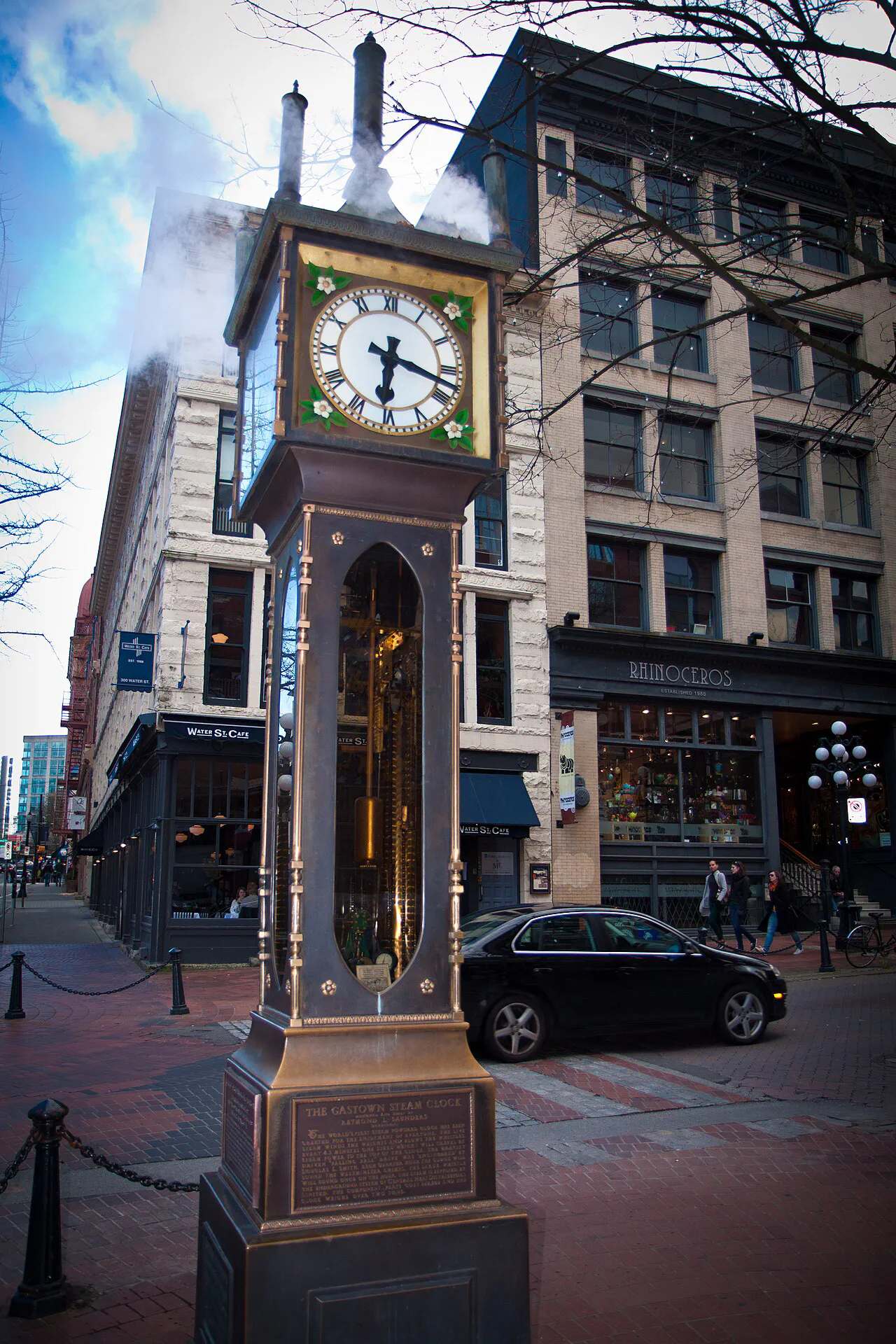
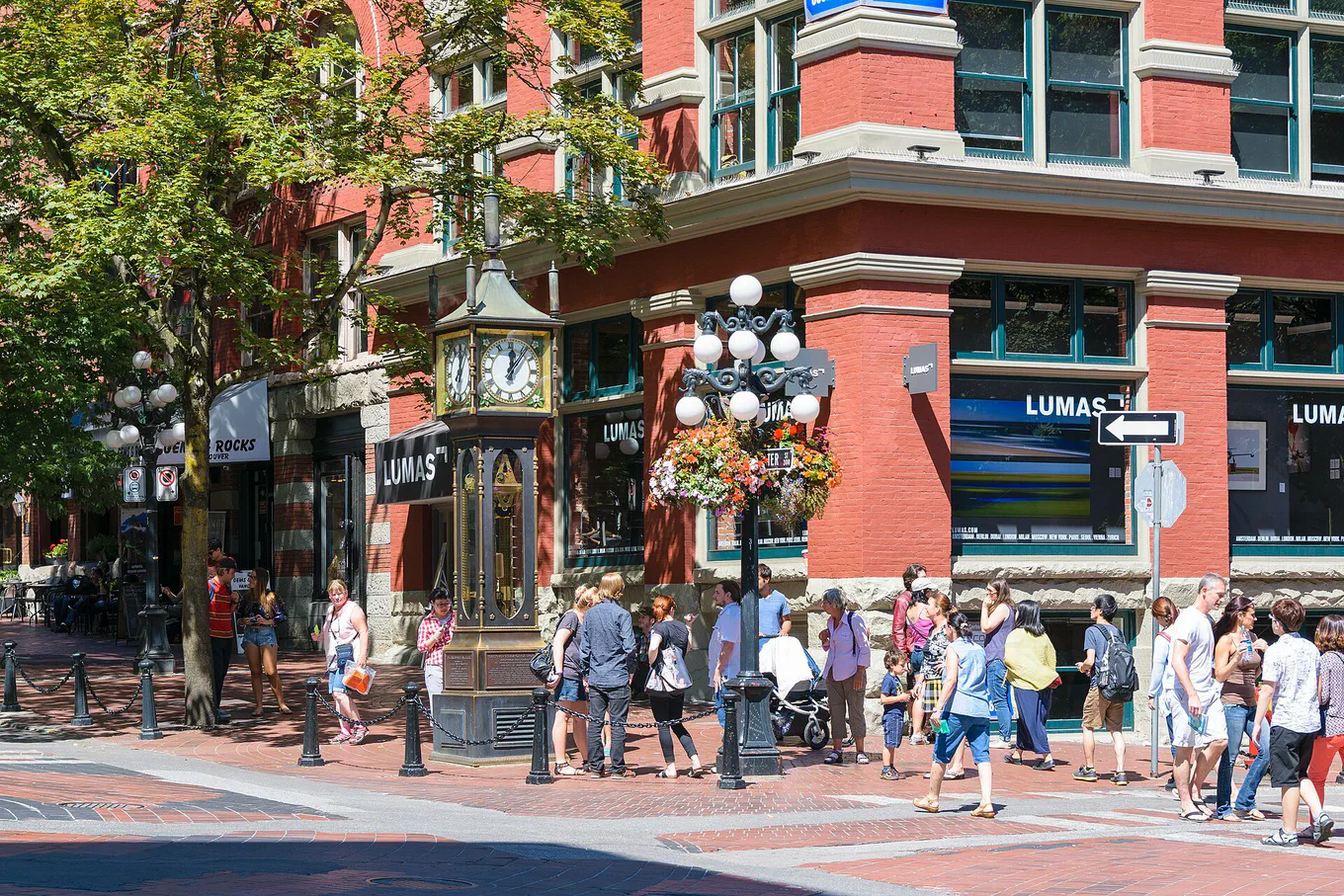
4 The Gastown steam clock that runs on electricity
Stand here. The corner of Cambie and Water Streets, in Gastown. The clock still stands, and its original steam engine shows through the glass sides.
Raymond Saunders, a Canadian clockmaker, built Gastown’s steam clock in 1977 over a pavement vent of the city’s steam heating system. Local merchants, property owners, and donors paid about $58,000 to hide the vent and put the steam to work. The clock whistles the Westminster Quarters every quarter hour. But the steam engine was too loud and kept poor time. Since 1986, the clock has run on an electric motor meant only as a back-up. The steam just blows the whistles.
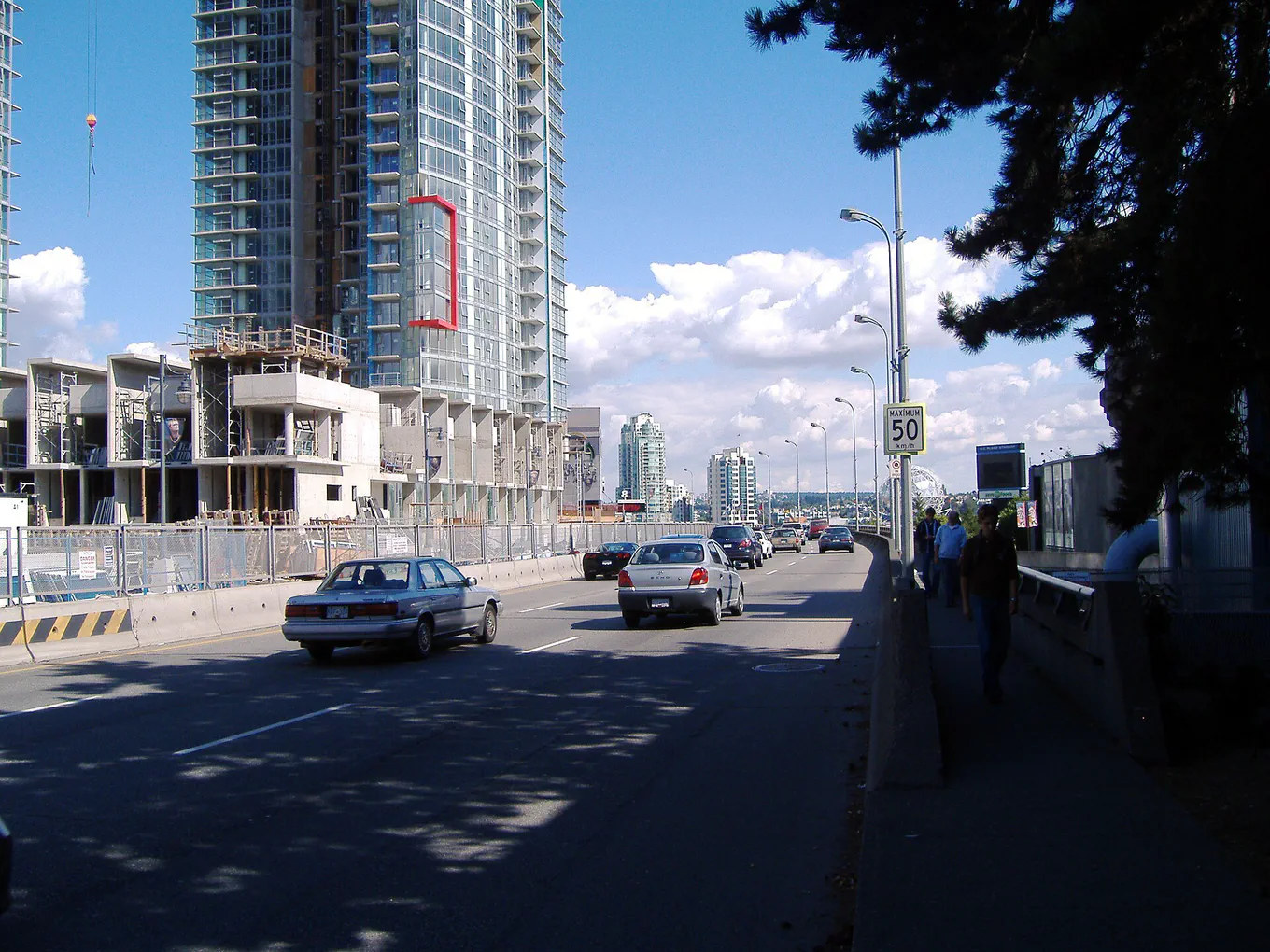
5 Ryan Reynolds, Deadpool, and the Georgia Viaduct
Stand here. The Georgia Viaduct, built where Hogan’s Alley was bulldozed. The city voted to pull it down in 2015, but that has been put off indefinitely.
Ryan Reynolds had been working on a Deadpool film since 2004. Fox, wary of its R rating, wasn’t won over even by test footage of Reynolds voicing the hero. Then, in July 2014, the footage leaked online, fans loved it, and Fox gave the film a release date. The production shot in Vancouver, Reynolds’s home city, and had the Georgia Viaduct for two weeks, filming stunts rain or shine. The film became the highest-grossing R-rated film of its day. In 2025, he admitted he had leaked the footage himself.
Pack nothing. Leave Friday.
Every Friday, I write a free letter, Journey, that takes us on a trip through places, stories, and ideas.
The Jade Peony(Wayson Choy, 1995). A novel set in Vancouver’s Chinatown in the 1930s and 1940s.
Disappearing Moon Cafe(Sky Lee, 1990). A novel whose characters’ lives revolve around the Disappearing Moon Cafe, the largest restaurant in Chinatown, run by an overbearing matriarch.
Stanley Park(Timothy Taylor, 2001). A novel. An anthropologist studying homelessness in Stanley Park draws its hero into investigating the deaths of two children there.
City of Glass(Douglas Coupland, 2000). Short essays and photographs of Coupland’s home town, each on a different aspect of the city, such as the glass towers that dominate the skyline.
Films to watch before you visit Vancouver
Da Vinci’s Inquest(Chris Haddock, 1998). A TV series. A crime drama set and filmed in Vancouver, loosely based on the real-life experiences of Larry Campbell, the city’s former chief coroner and later its mayor.
Deadpool(Tim Miller, 2016). A film. The Marvel superhero film was shot in Vancouver in 2015, at North Shore Studios and around the city, with two weeks’ use of the Georgia Viaduct.
Luk’Luk’I(Wayne Wapeemukwa, 2017). A film set in the Downtown Eastside of Vancouver during the 2010 Winter Olympics, centred on five residents. Its title refers to the Coast Salish name for the area.
Questions
Where was Hogan’s Alley, and what is left of it?
Hogan’s Alley ran through the southwest corner of Strathcona and was the first and last Vancouver neighbourhood with a large Black community. Most of it was razed at the end of the 1960s for the Georgia and Dunsmuir Viaducts. The Fountain Chapel, at Jackson and Prior Streets, is the last building left of that community.
Is the Gastown steam clock really powered by steam?
Partly. The clock at Cambie and Water Streets uses steam from the city’s heating system to blow its whistles, which play the Westminster Quarters. But since 1986, an electric motor, first meant only as a back-up, has driven it, because the steam engine was loud and kept poor time.
Is Vancouver the capital of British Columbia?
No. The capital is Victoria. Vancouver is the province’s largest city, and together with its suburbs it makes up the third-largest metropolitan area in Canada, with 2.6 million people in Metro Vancouver at the 2021 census.