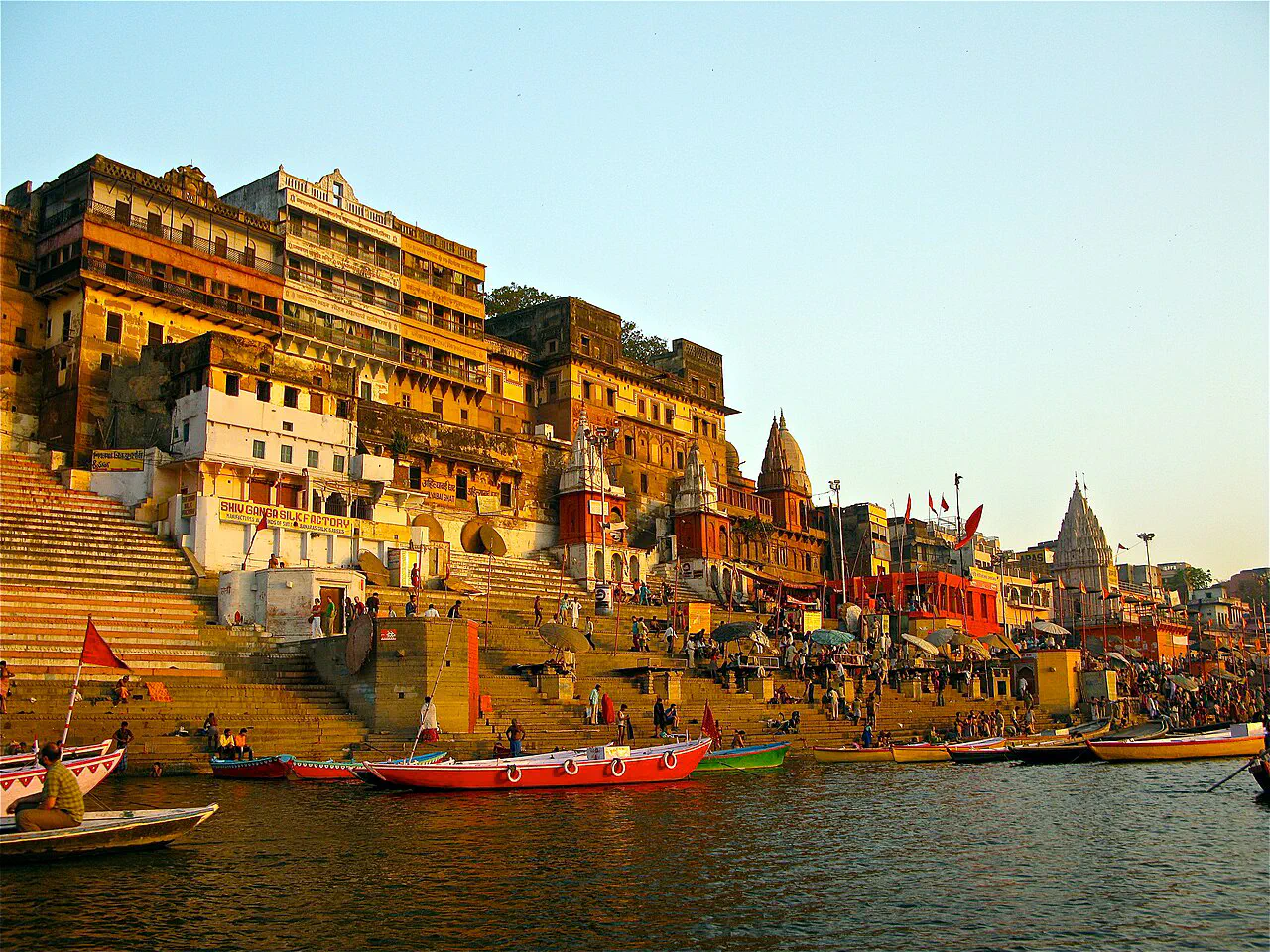
Varanasi, also called Benares, Banaras, and Kashi, is a city on the Ganges in Uttar Pradesh, northern India, and one of the world’s oldest continually inhabited cities. Its stories here are the Buddha’s first sermon, a poet who left the city to die, a governor-general on the run, a shehnai player who wouldn’t leave the river, and a love story at the burning ghats, the riverside cremation grounds.
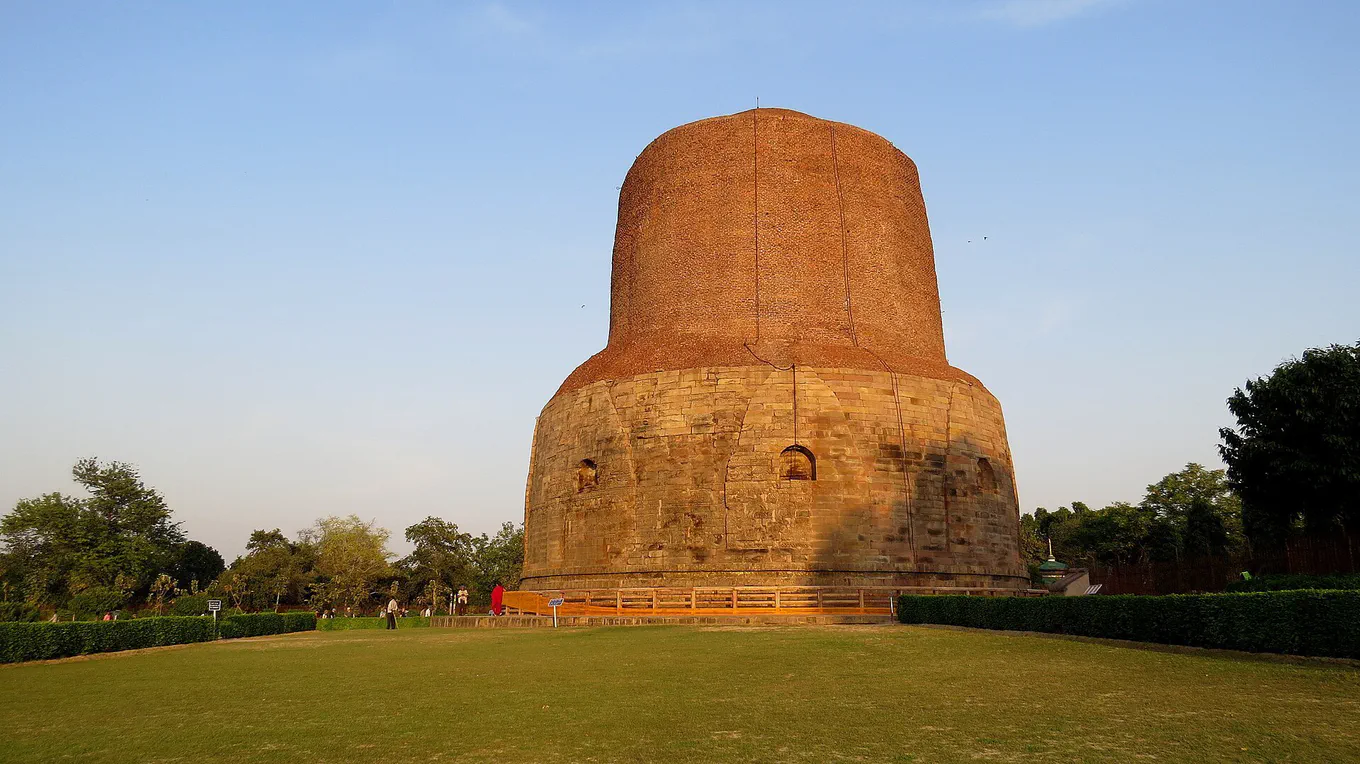
Some 2,500 years ago, the Buddha gave his first sermon in this deer park. He had just reached enlightenment at Bodh Gaya, and here he met five ascetics, holy men sworn to self-denial, who had shared six years of hardship with him. But his old companions were suspicious. When he gave up their ascetic ways, they decided he had abandoned the search for truth. He talked them into listening. The first of them to understand was Kondañña, and the man who had doubted him became his first awakened disciple.
2 Kabir, the poet who left Varanasi to die
Stand here. The Kabir Math, which celebrates his life, in the back lanes of Kabir Chaura, where his family is believed to have lived.
Kabir, the 15th-century mystic poet, spent his life in Kashi, as Varanasi is also known. People then believed that dying in Kashi sent you to heaven, and dying in Maghar sent you to hell. But as death drew near, it is said, Kabir moved to Maghar, to break the myth. When he died, Hindus and Muslims both claimed him. The story goes that his body vanished and left fragrant flowers, which they divided between them. At Maghar, his Muslim tomb and his Hindu memorial still stand side by side.
3 Warren Hastings and his escape from Benares, 1781
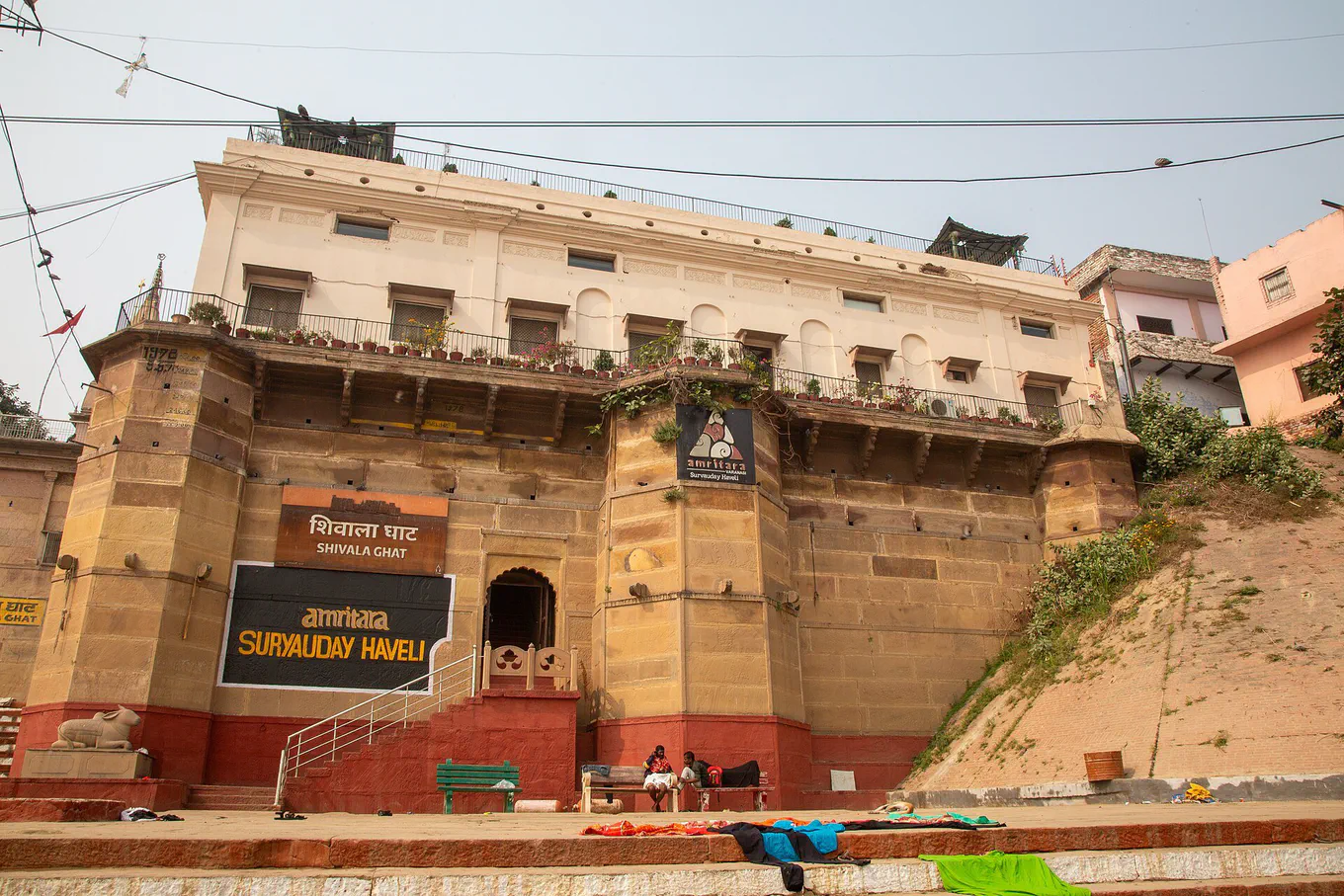
Stand here. Shivala Ghat, on the Ganges, built by the raja’s father. The ghat still stands. Chait Singh’s palaces along it were confiscated after the rising.
In August 1781, Warren Hastings, the first governor-general of British India, came to Benares to squeeze money out of its raja, Chait Singh, who had failed to send the cavalry Hastings demanded. The East India Company tried to put the raja under house arrest. But his men rose up, and Hastings barely escaped with his life. Chait Singh was defeated, and died in exile in Gwalior. Yet Benares kept the better story. Local tradition says the governor-general fled disguised as a woman, and a rhyme was made to mock him.
4 Bismillah Khan, the shehnai and the Ganges
Stand here. His family house in the thin lanes of Sarai Harha, where nearly 50 of his descendants still lived in 2023.
When India’s flag was unfurled at the Red Fort in Delhi at independence, on 15 August 1947, Bismillah Khan played the shehnai, a reeded woodwind. He practised by the Ganges every day. On an American tour, a wealthy admirer asked him to move to America. By his own account, he asked the man first to make him a Banaras in America, a place where the Ganga flows and Siva is worshipped. Others set it in California or Europe. In every version, he asks for the river.
5 Masaan, a love story at Varanasi’s burning ghats
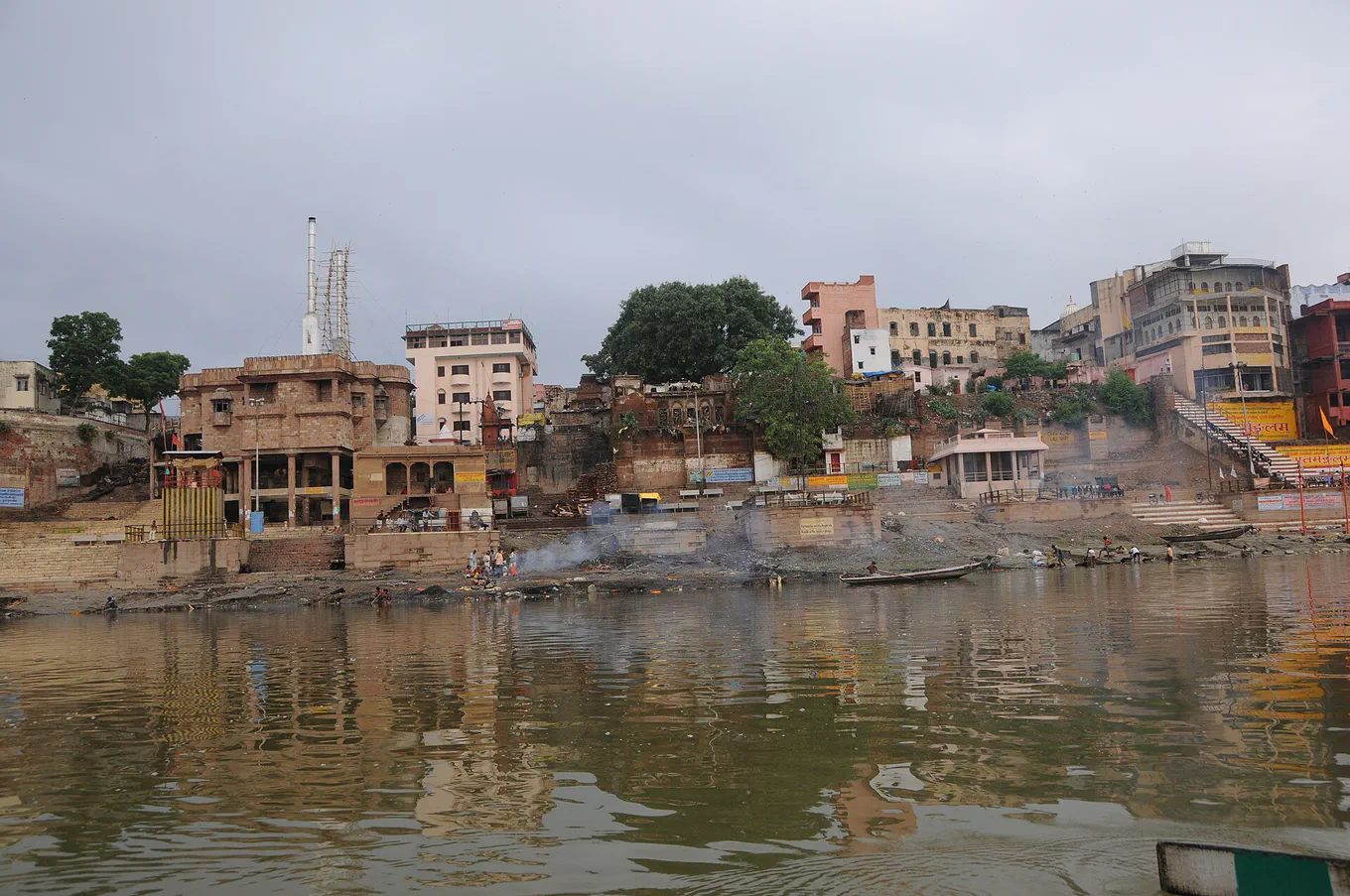
Stand here. Harishchandra Ghat which, with Manikarnika, is the city’s principal cremation ground. The film’s crew rebuilt it at an abandoned ghat.
Vicky Kaushal’s first Hindi film, Masaan, won two awards at Cannes in 2015 with a love story set at Varanasi’s cremation ghats. Its hero, Deepak, comes from the marginalised Dom caste, and his family has raked the coals over bodies at the city’s cremation grounds for centuries. He falls deeply in love with Shaalu, a high-caste Hindu girl. Then her family goes on a pilgrimage, and their bus crashes, killing her at once. Her body is brought to Deepak’s own cremation ghat.
Pack nothing. Leave Friday.
Every Friday, I write a free letter, Journey, that takes us on a trip through places, stories, and ideas.
Jeff in Venice, Death in Varanasi(Geoff Dyer, 2009). A novel. In Varanasi, an unnamed journalist joins thousands of pilgrims on the banks of the Ganges.
Ramcharitmanas(Tulsidas, 1574–1577). An epic poem retelling the Sanskrit Ramayana in everyday Awadhi. Tulsi Ghat is named after the poet, who lived there while he wrote it.
Banaras: City of Light(Diana L. Eck, 1982). A history. Diana L. Eck’s local history of Varanasi, which a scholarly review called an introduction to the city and to Hindu religious tradition.
Films to watch before you visit Varanasi
Masaan(Neeraj Ghaywan, 2015). A film. A young man from a Dom family of cremation workers falls for a high-caste girl. Its ghats were rebuilt for the shoot.
Joi Baba Felunath(Satyajit Ray, 1979). A film. Satyajit Ray’s Feluda mystery, set in Varanasi during the Durga Puja, where the arrival of a saint called ‘Machhli Baba’ rouses the excitement of local people.
Mohalla Assi(Chandraprakash Dwivedi, 2018). A film. A satirical drama, starring Sunny Deol, set in the historical locality by Assi Ghat as Varanasi changes in the late 1980s and early 1990s.
Questions
Where did the Buddha give his first sermon?
In the Deer Park at Sarnath, 8 km north-east of Varanasi, near where the Ganges and the Varuna meet. The Dhamek Stupa, whose present form dates from the 5th–6th century CE, marks the spot. Sarnath’s Archaeological Museum holds the Lion Capital of Ashoka, raised there in 250 BCE and now the State Emblem of India.
What happens at Manikarnika Ghat?
Manikarnika is one of the oldest sacred ghats on the Ganges and, with Harishchandra Ghat, Varanasi’s principal cremation ground. Hindus believe a soul cremated here attains moksha, or liberation. A Dom funeral attendant hands each chief mourner the ghat’s never-extinguished fire to light the pyre. The pyres never cool, because bodies keep arriving.
How old is Varanasi?
It is one of the world’s oldest continually inhabited cities, and excavations in 2014 found artefacts dating back to 800 BCE. Mark Twain put it another way. He wrote that Benares is “older than history, older than tradition, older even than legend”.