An English teacher once told me my relationship with English was Shakespearean, but not in the good way. (I can’t spell.) Shakespeare set two plays in Verona and, as far as anyone knows, never went. That makes me feel a lot better about this website.
— Nick
Verona is the largest city in Italy’s Veneto region. It became a Roman colony in 89 BC, was ruled by the della Scala family in the 13th and 14th centuries, and is the setting for three of Shakespeare’s plays. Its stories here are a balcony built for Juliet, a tomb guardian who answered her letters, Dante’s poisoned patron, Maria Callas’s Italian debut, and Mussolini’s son-in-law on trial.
1 The museum director who gave Juliet her balcony in Verona
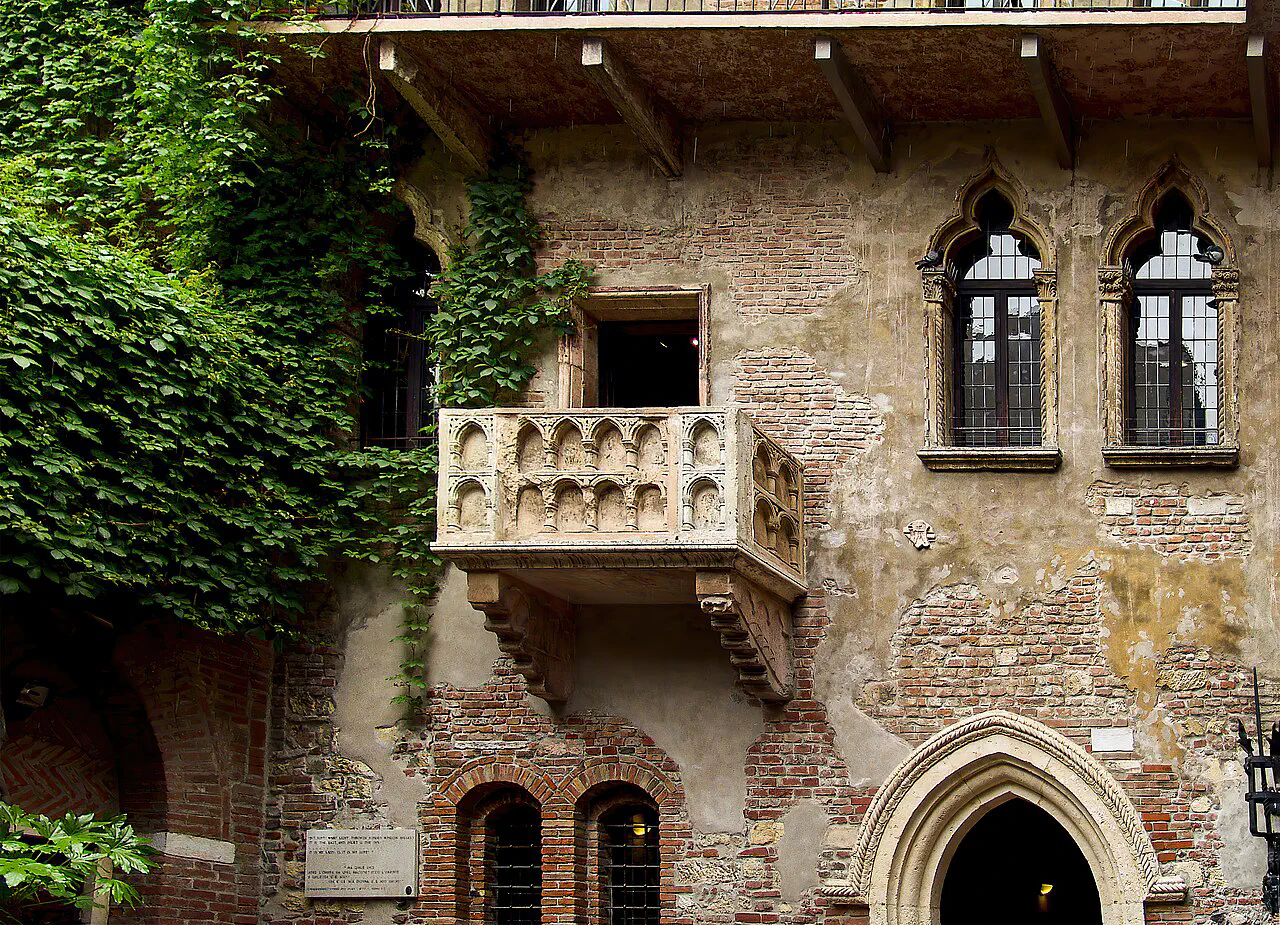
Stand here. Juliet’s House, at Via Cappello 23, now a house museum. The bronze Juliet below the balcony is a copy.
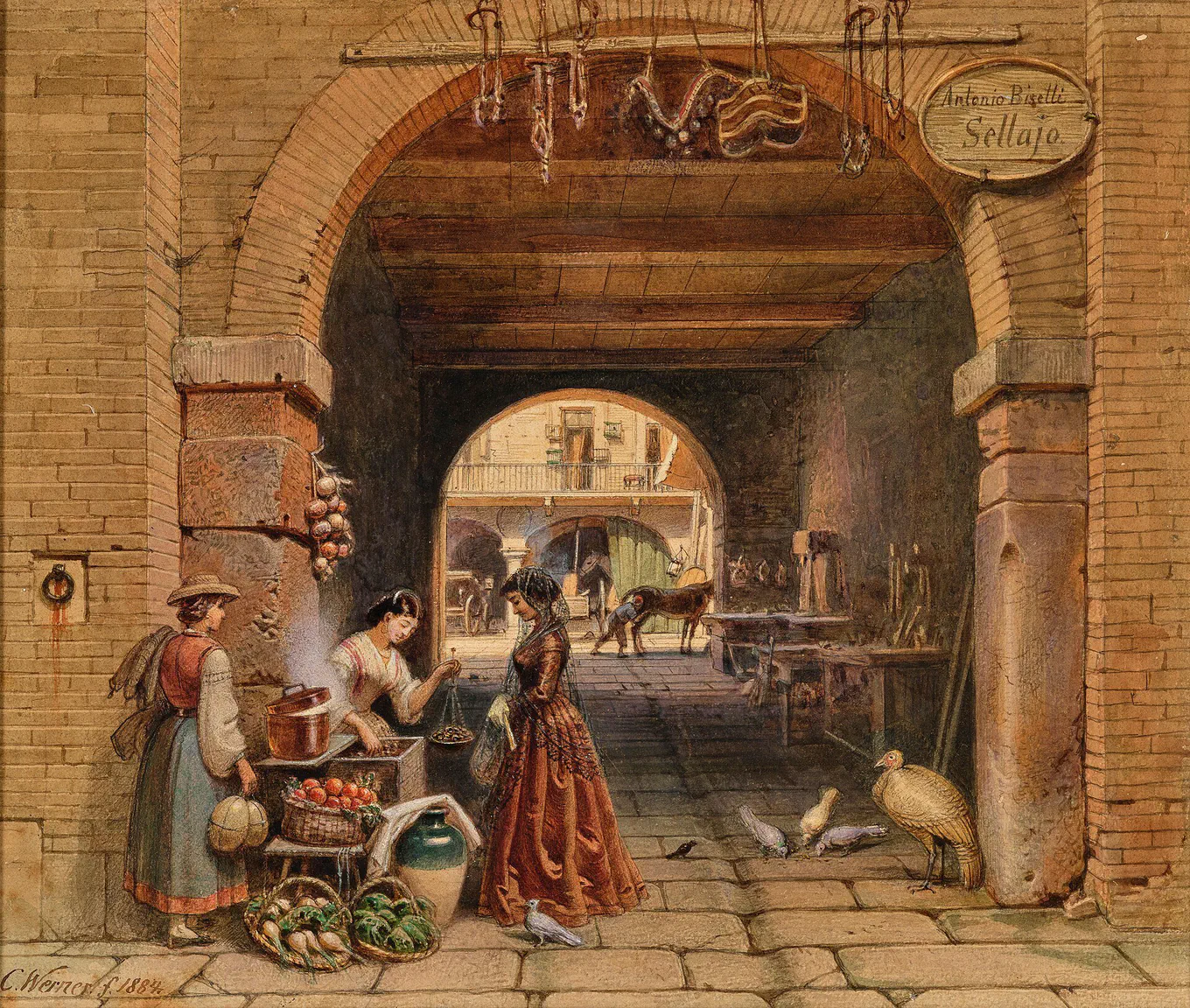
Carl Werner’s 1884 watercolour of a market stall in Via Cappello, at the passage into the house later called Juliet’s House.Carl Werner / Public domain.
Millions a year come to this courtyard to look up at Juliet’s balcony, from Shakespeare’s Romeo and Juliet. The house belonged to the Cappello family, who had nothing to do with the Capulets, but the names sounded alike, and by the end of the 18th century it was called Juliet’s home. It had no balcony. In 1939, Antonio Avena, director of the city’s museums, treated the courtyard as a stage set and had one built from 14th-century marble. At once, everyone took it for the balcony Juliet looked out from.
2 Ettore Solimani and the letters left at Juliet’s Tomb
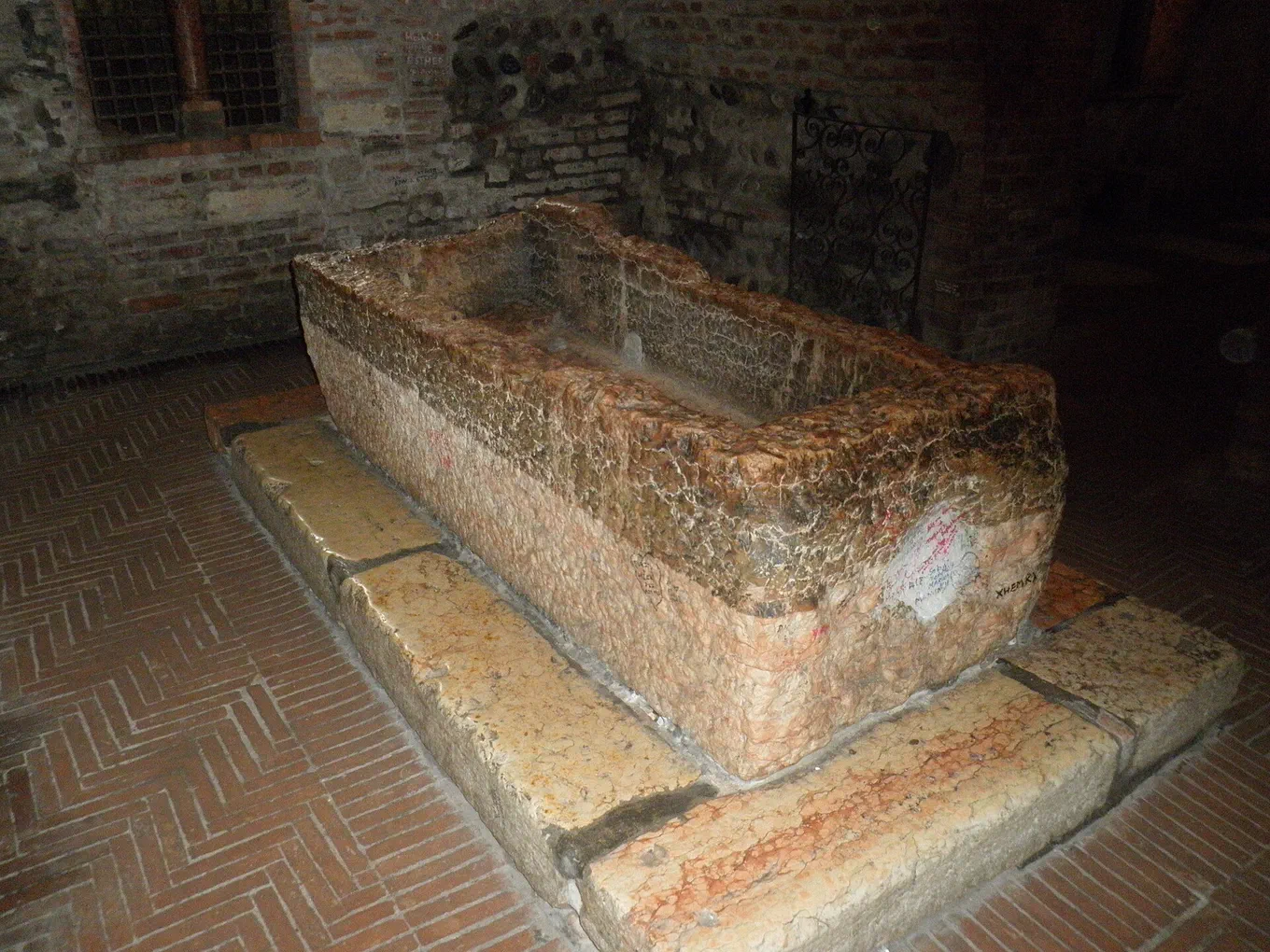
Stand here. Juliet’s Tomb, an empty marble sarcophagus (a stone coffin) in a crypt at Via Luigi da Porto 5, now in the Museum of Frescoes.
In the 2010 film Letters to Juliet, Amanda Seyfried’s character asks to join the “Secretaries of Juliet”, who answer letters left for Shakespeare’s heroine in Verona. The first secretary was real. In the 1930s, Ettore Solimani, guardian of Juliet’s Tomb, began gathering the letters people left at the empty grave. Moved, he started writing back himself. Decades later, with nobody replying, the mayor asked a man named Giulio Tamassia to start answering them. His Juliet Club still answers letters addressed to “Juliet, Verona”, 50,000 a year by its own count.
3 Cangrande della Scala, Verona’s lord and Dante’s patron, poisoned
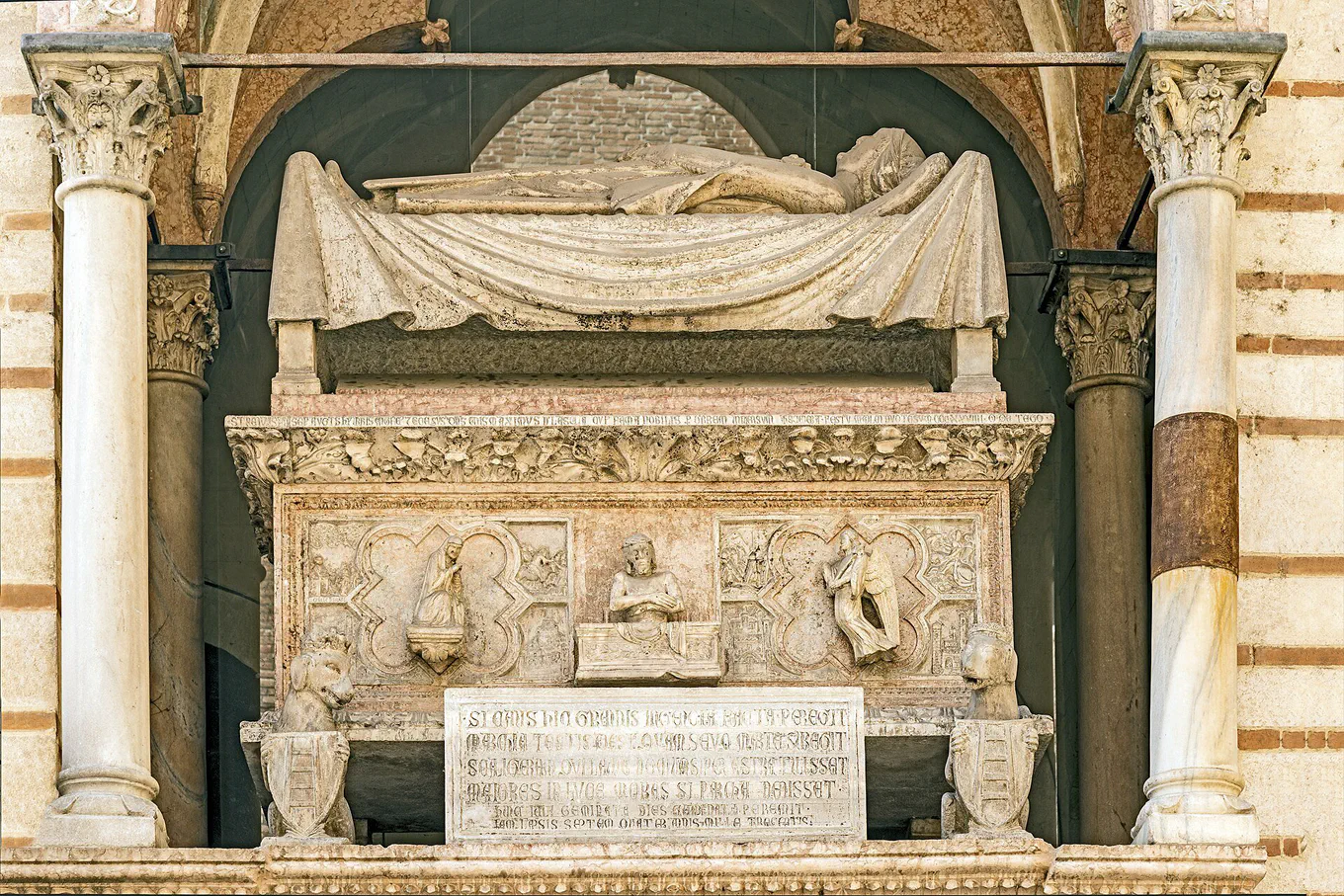
Stand here. The Scaliger Tombs, outside Santa Maria Antica. Cangrande’s is over the church door, topped by a copy of his statue, smiling on horseback.
Dante, exiled from Florence, found a patron in Verona and praised him in Canto XVII of the Paradiso. He was Cangrande della Scala, lord of the city since the age of twenty. In July 1329, Cangrande laid siege to Treviso, and on the 18th he entered it in state. Four days later he was dead. In 2004, his body was taken from its tomb for tests, which found lethal amounts of digitalis, a drug from foxglove. The evidence leans towards murder.
4 Maria Callas’s Italian debut in the Verona Arena
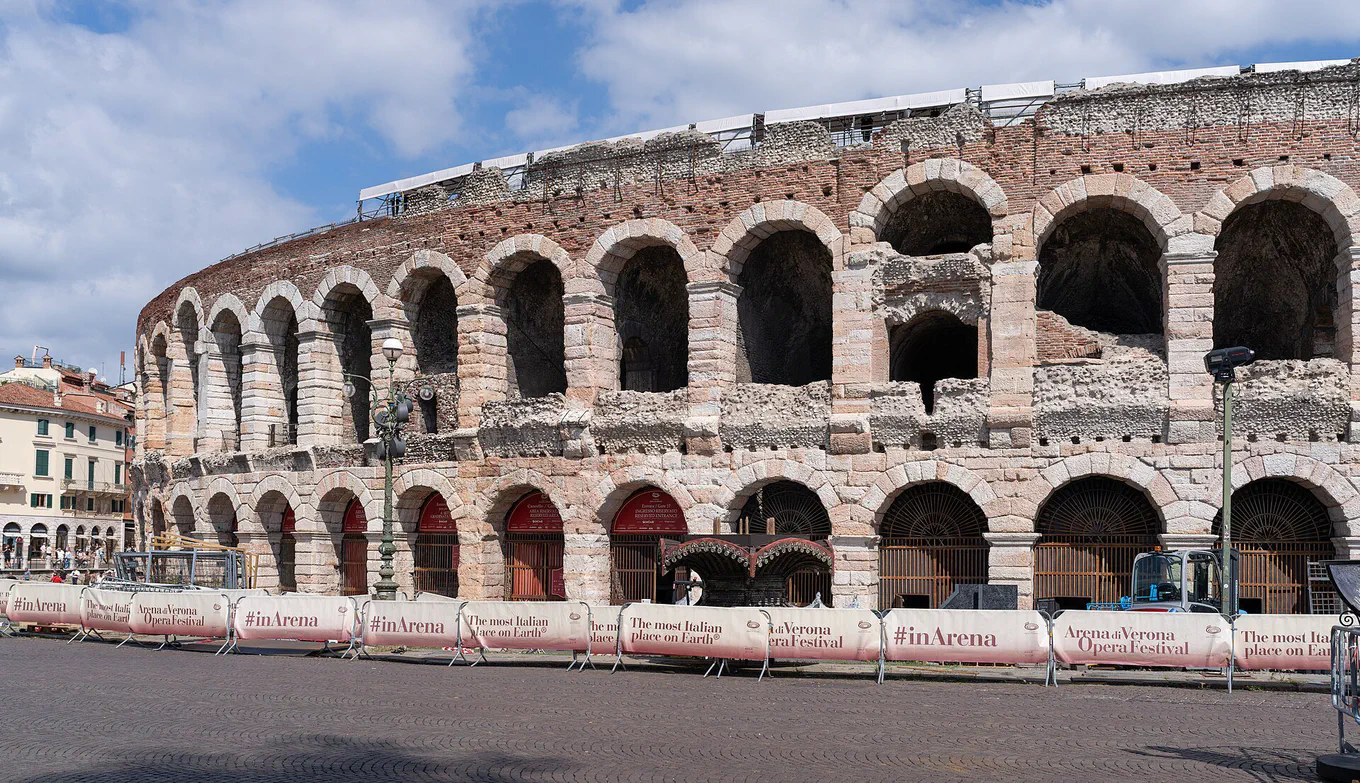
Stand here. The Arena, the Roman amphitheatre on Piazza Bra. It still stages opera every summer, and the audience lights small candles at dusk.
Maria Callas made her Italian debut here in 1947, as La Gioconda. At her audition, the retired tenor listening was so excited that he jumped up and sang the fourth-act duet with her. After La Gioconda, no offers came. What Verona gave her instead was Giovanni Battista Meneghini, an older, wealthy industrialist who had met her on arrival and courted her. They married in Verona in 1949, and that night she sailed for Argentina to sing in Buenos Aires.
5 Galeazzo Ciano, Mussolini’s son-in-law, on trial at Castelvecchio
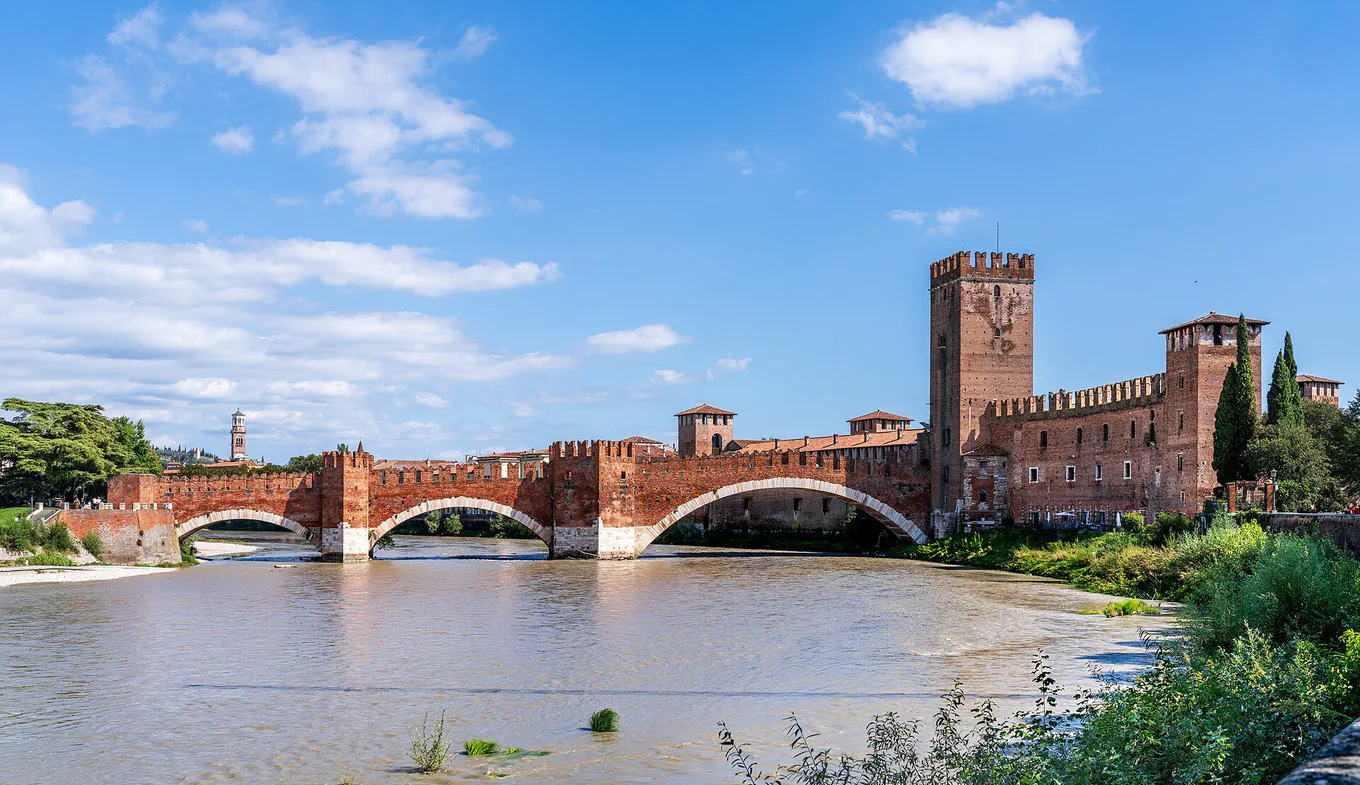
Stand here. Castelvecchio, the della Scala castle on the Adige, now a museum. A wartime trial was held in its concert hall.
Mussolini’s foreign minister was his own son-in-law, Galeazzo Ciano. On 25 July 1943, Ciano voted in the Fascist Grand Council to strip Mussolini of power. In January 1944, Mussolini’s new republic tried him here. His wife Edda, Mussolini’s daughter, tried to trade his papers to the Germans for his life, but Hitler said no, and she fled to Switzerland with his diaries hidden in her clothes. On 11 January, Ciano was tied to a chair to be shot in the back. He twisted round to face his executioners.
Pack nothing. Leave Friday.
Every Friday, I write a free letter, Journey, that takes us on a trip through places, stories, and ideas.
Romeo and Juliet(William Shakespeare). A play, set in Verona. The house at Via Cappello 23 is presented as the Capulets’ home, though it has no historical link.
Letters to Juliet(Lise Friedman and Ceil Friedman, 2006). Non-fiction. A book about the Juliet Club, the Verona volunteers who read and answer the letters sent to Juliet.
Paradiso(Dante Alighieri). A poem, part of the Divine Comedy. In Canto XVII, Dante praises Cangrande della Scala, whose tomb stands outside Santa Maria Antica.
Films to watch before you visit Verona
Letters to Juliet(Gary Winick, 2010). A film. Amanda Seyfried in Verona, with Piazza delle Erbe and Piazza Bra by the Arena.
Love in the Villa(Mark Steven Johnson, 2022). A film. Julie and Charlie share an ice cream on the Ponte Pietra, Verona’s Roman bridge, and Piazza Bra appears too.
Costanza(Fabrizio Costa, 2025). A TV series. A single mother working as a delivery rider in Messina wins a research grant in Verona, where she can at last work as a palaeopathologist.
Questions
Is Juliet’s balcony in Verona real?
The marble is old, but the balcony isn’t original to the house. Antonio Avena, director of the city’s museums, had it built in 1939 from 14th-century marble remains. The medieval house belonged to the Cappello family, who had nothing to do with Shakespeare’s Capulets.
Where is Juliet’s tomb in Verona?
In a crypt in the cloister of the San Francesco al Corso convent, at Via Luigi da Porto 5. It is an empty red marble sarcophagus, moved there from the convent garden in 1938, and since 1973 the site has also held the Museum of Frescoes.
When is opera performed at the Verona Arena?
In summer, during the Arena di Verona Festival. It began in 1913 with Aida, staged for the centenary of Verdi’s birth, and since then the Arena has become the world’s largest open-air opera venue. Audiences still bring small candles and light them as darkness falls.