Shout out to CD Projekt Red, the makers of Cyberpunk 2077. I love that game. A great story wrapped around great characters doing great things in a brilliant space. Brought back memories of poring over Cyberpunk RPG rules in the 80s. Those were the days.
— Nick
Kraków lost the king’s court to Warsaw in 1596, making the city on the River Vistula the capital of Poland, which it still is. About 85% of it was destroyed in the Second World War. A composer’s smuggled heart starts a run through a scientist barred from university, the paintings that helped rebuild the Old Town, a mermaid from legend, and the student who posed for another.
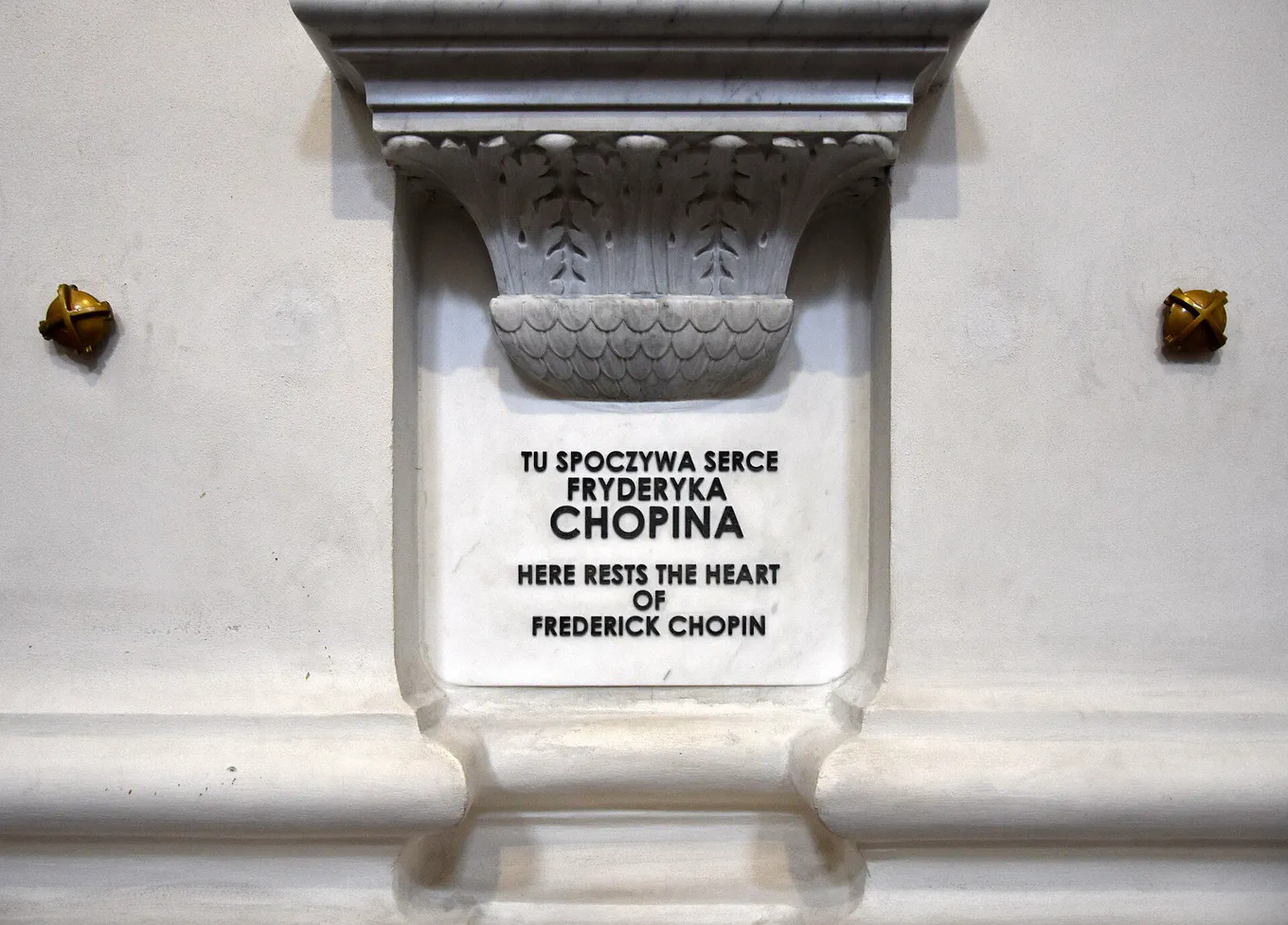
Frédéric Chopin is buried in Paris, but his heart came home to Warsaw, where he grew up. Afraid of being buried alive, he asked his eldest sister, Ludwika, to take it there. After he died in 1849, it was sealed in a crystal jar of alcohol, probably cognac, and Ludwika carried it under her cloak or skirt, past Austrian customs and Russian border agents. In the Warsaw Uprising of 1944, the Germans took it from its pillar. It came back on 17 October 1945, the anniversary of his death.
2 Marie Curie, born on Freta Street and barred from university
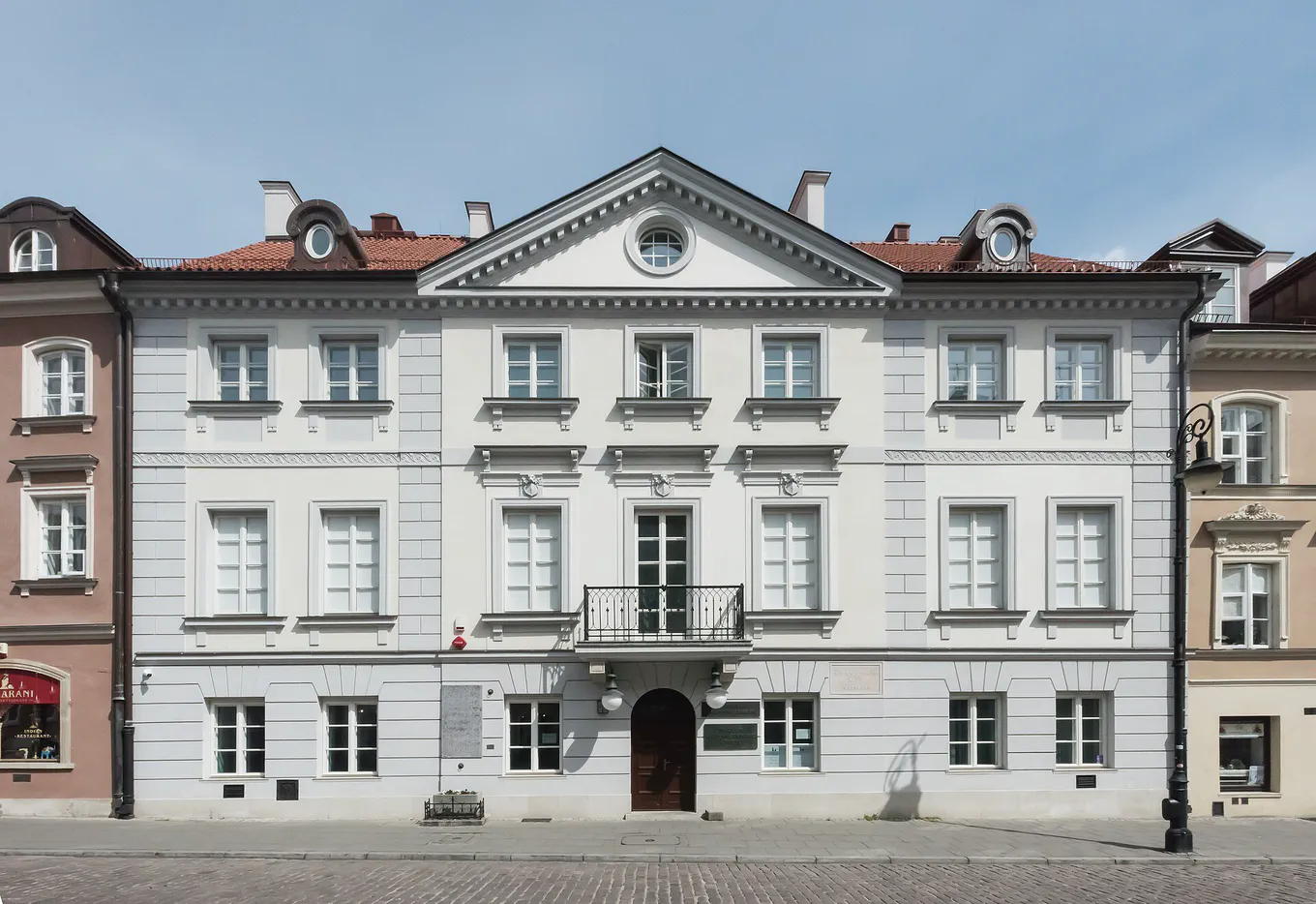
Stand here. 16 Freta Street, in the New Town, now the Maria Skłodowska-Curie Museum. German forces demolished the house, but its plaque survived.
Before she was Marie Curie, the only person to win Nobel Prizes in two sciences, she was Maria Skłodowska, born here. As a woman, she could not enrol at a regular university. So she and her sister Bronisława studied in secret at the Flying University. The sisters struck a deal. Maria worked as a governess to pay for Bronisława’s medical studies in Paris, and Bronisława would help her two years later. In late 1891, Maria left for France. She named the first element she helped discover polonium, after Poland.
3 Bellotto’s paintings and the rebuilding of Warsaw’s Old Town
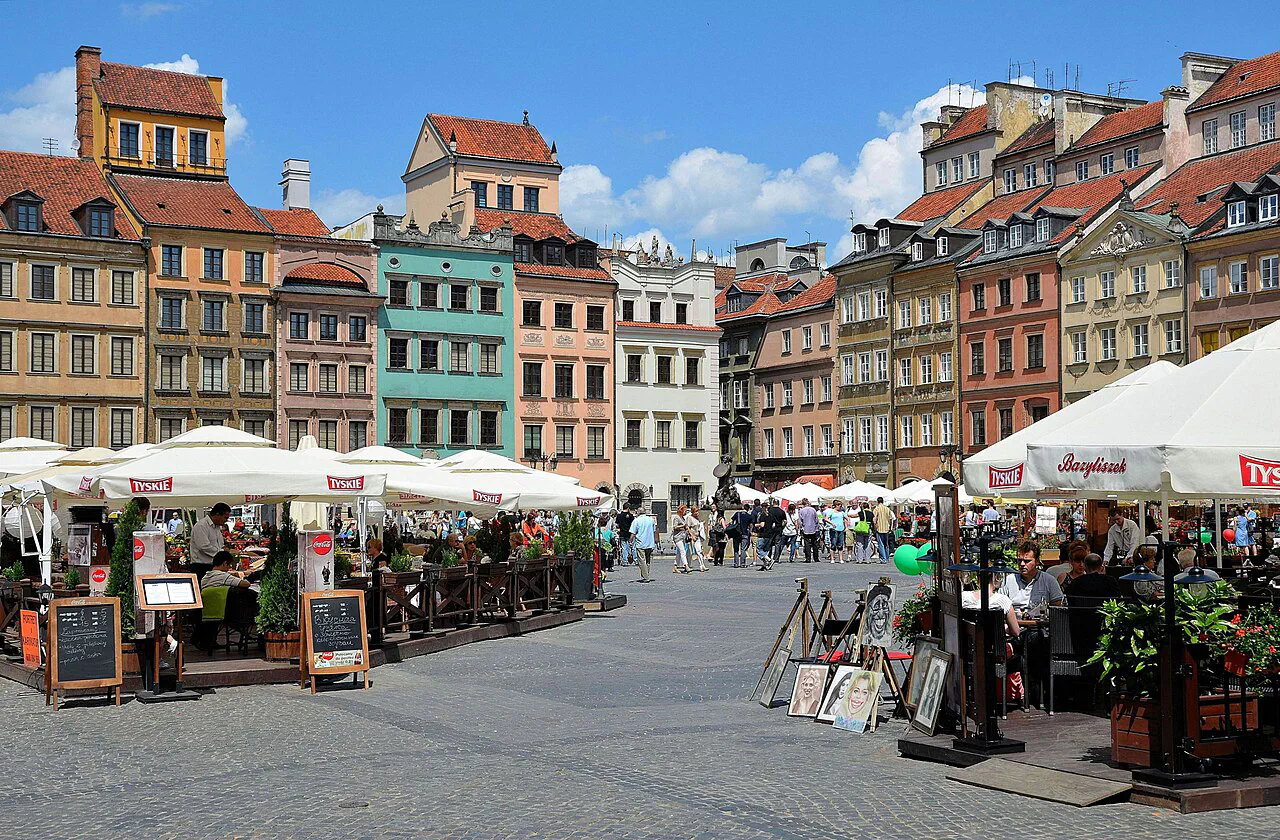
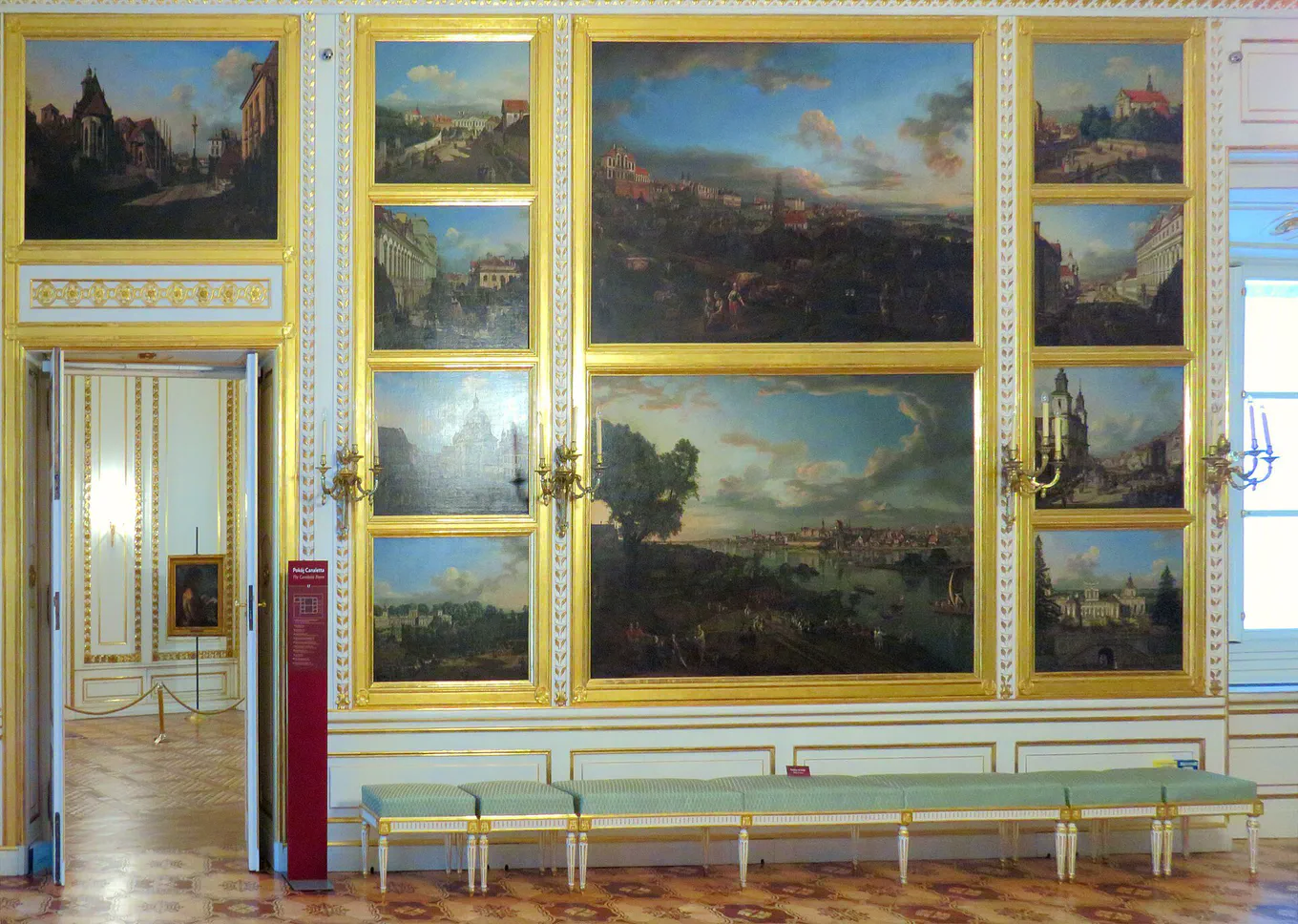
Stand here. The rebuilt Old Town, on the UNESCO World Heritage List since 1980. Bellotto’s views of Warsaw hang in the Canaletto Room of the Royal Castle.
Bellotto’s views of Warsaw hanging in the Canaletto Room of the Royal Castle, Warsaw.Аимаина хикари / CC0.
Canaletto’s nephew, Bernardo Bellotto, went by his uncle’s name in Poland. As court painter to King Stanisław August Poniatowski, he painted 26 views of Warsaw between 1770 and 1780, for a room in the Royal Castle. In 1944, after the Warsaw Uprising, the German Army blew up what was left of the Old Town. When it was rebuilt, his paintings were among the builders’ essential sources. But Bellotto had sometimes embellished what he saw. Here and there, what stands today is not old Warsaw but Bellotto’s improvements on it.
4 The Mermaid of Warsaw, the merchant, and the fishermen
Stand here. In the Old Town Market Square, Konstanty Hegel’s Mermaid stood from 1855 to 1928, and has stood again since 2000.
Some tellings make the Mermaid of Warsaw the sister of Copenhagen’s Little Mermaid, and say the two went separate ways from the Baltic Sea. In the legend, a rich merchant trapped the mermaid and locked her up, but fishermen heard her cries and set her free. Ever since, armed with sword and shield, she has stood ready to protect the city. She didn’t always look the part. On the city’s seal of 1459, she has a bird’s torso, human hands, a fishtail, and a bird’s legs and claws.
5 Krystyna Krahelska, the student who posed for the river Mermaid
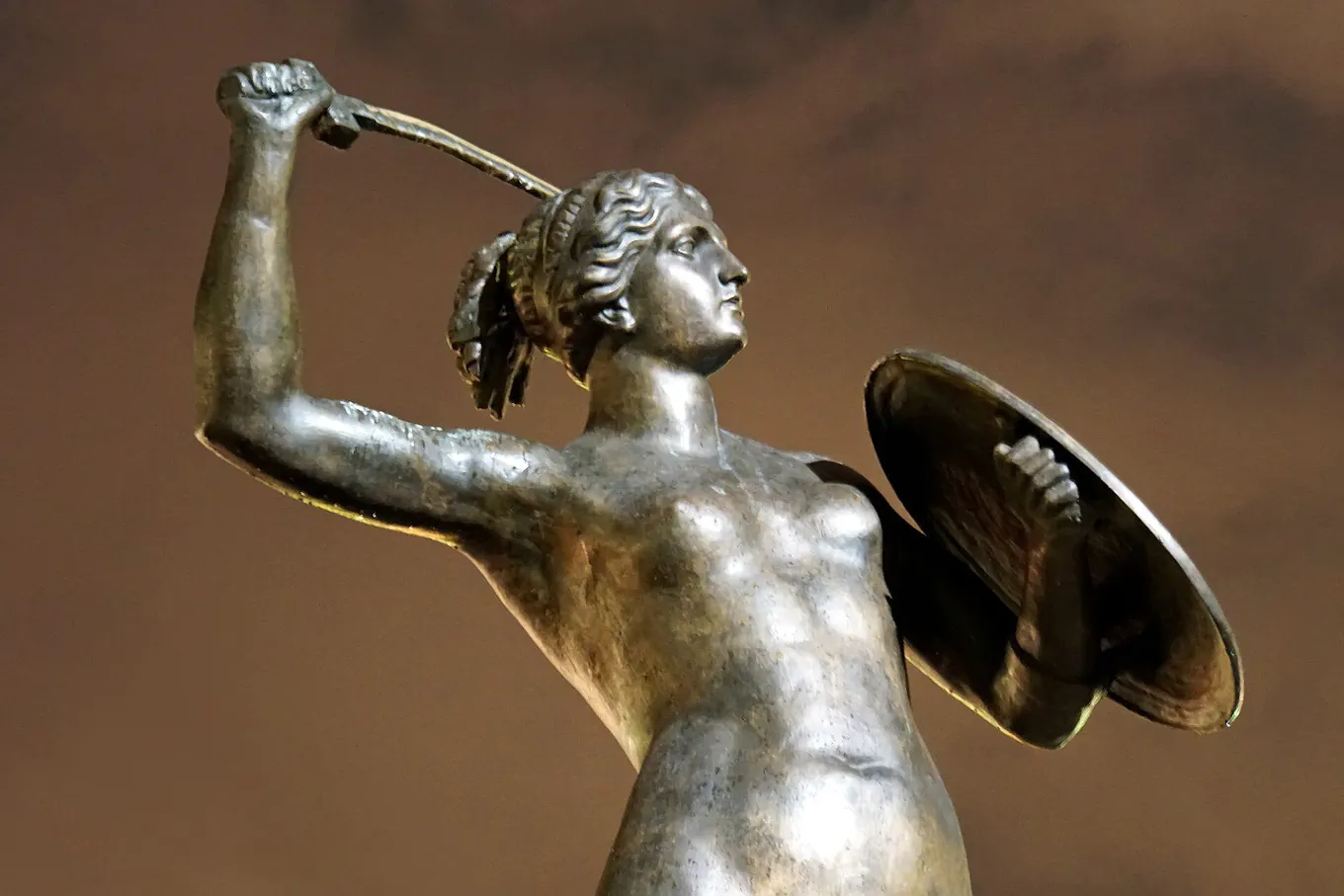
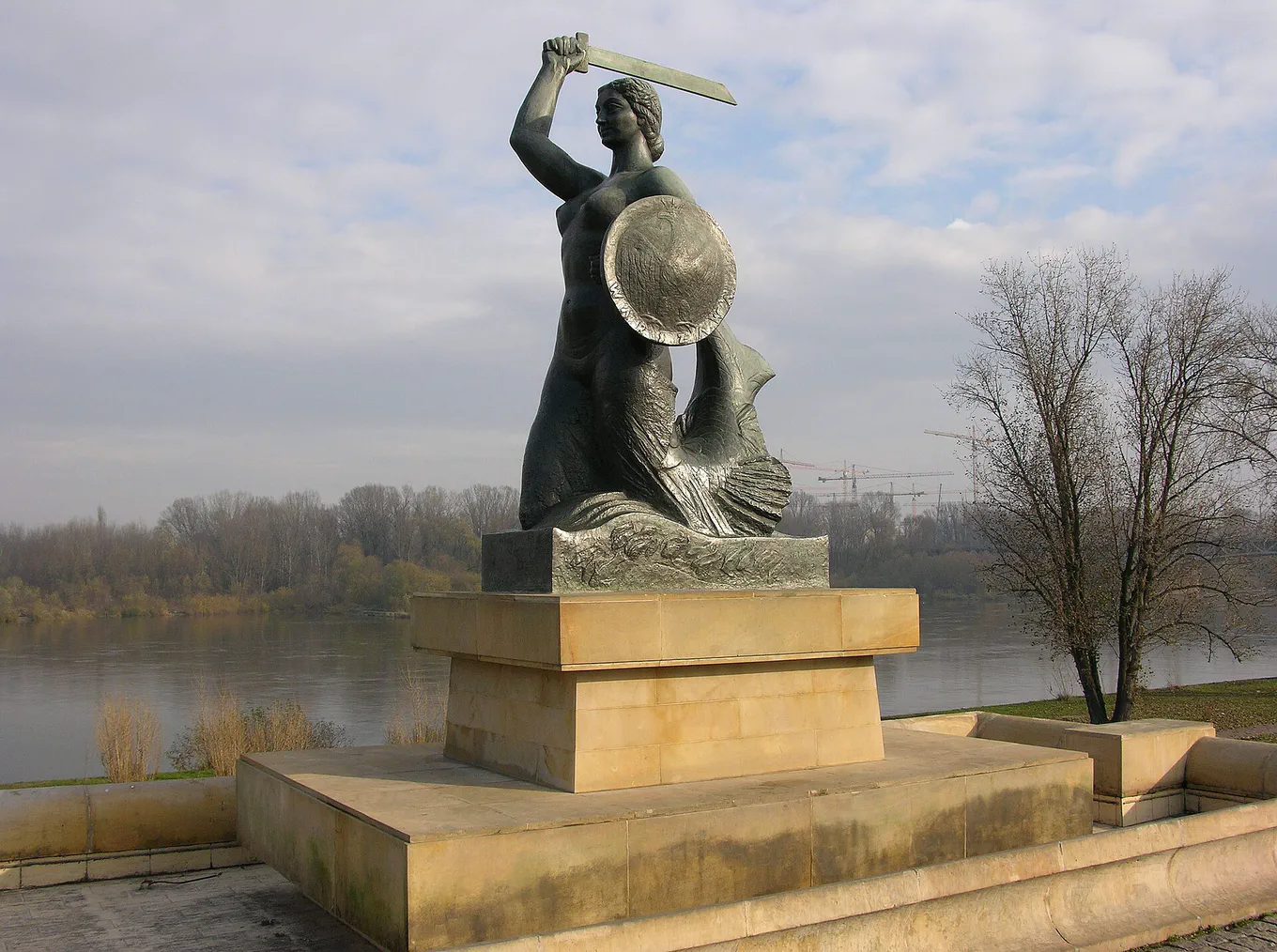
Stand here. The Mermaid monument on Wybrzeże Kościuszkowskie, by the Vistula near Świętokrzyski Bridge. Its 35 bullet holes were patched in 1949.
This Mermaid by the Vistula owes her head and torso to a real woman, though not her face. Krystyna Krahelska, an ethnography student, posed for the sculptor before the war. Krahelska wrote songs, and one of them became the most popular soldiers’ song of the Warsaw Uprising. She went into the Uprising as a Home Army nurse. On the evening of 1 August 1944, she was shot in the chest, and she died at four the next morning. The Mermaid came through the war with 35 bullet holes.
Pack nothing. Leave Friday.
Every Friday, I write a free letter, Journey, that takes us on a trip through places, stories, and ideas.
The Doll(Bolesław Prus, 1890). A realist novel. Wokulski lives and keeps his shop on Krakowskie Przedmieście, in real buildings that have since been identified.
Mila 18(Leon Uris, 1961). A historical novel of occupied Warsaw, named after the Jewish resistance fighters’ headquarters bunker under Miła Street 18.
The Zookeeper’s Wife(Diane Ackerman, 2007). Non-fiction. How Antonina and her husband, Jan Żabiński, director of Warsaw Zoo, saved the lives of 300 Jews.
The Pianist(Władysław Szpilman, 1946). A memoir. The pianist’s life in occupied Warsaw, earning a living at first by playing in the ghetto’s Café Nowoczesna, on Nowolipki Street.
Films to watch before you visit Warsaw
The Zookeeper’s Wife(Niki Caro, 2017). A film, with Jessica Chastain. Jews escaping the Warsaw Ghetto are hidden in the zoo’s villa and buildings.
The Pianist(Roman Polanski, 2002). A film, winner of the Palme d’Or. Szpilman’s story, from the day the Polish Radio station is bombed in September 1939.
Questions
Can you see Chopin’s heart in Warsaw?
Not the heart itself. It is sealed in a crystal jar inside a pillar of Holy Cross Church on Krakowskie Przedmieście, beneath a bust of Chopin. When it was inspected in 2014, the jar was not even opened.
Where was Marie Curie born?
At 16 Freta Street, in Warsaw’s New Town, on 7 November 1867. German forces demolished the house, though its plaque survived. The Maria Skłodowska-Curie Museum, founded in 1967 for the centenary of her birth, now stands at the address. It is open Tuesday to Sunday, and closed on Mondays and Polish national holidays.
Is Warsaw’s Old Town original?
No. After the Warsaw Uprising of 1944, the German Army blew up what was left of it. It was rebuilt, mostly between 1947 and 1951, using Bellotto’s 18th-century paintings and drawings made by architecture students before the war. UNESCO added it to the World Heritage List in 1980.