In 1993, on a Greyhound trip between Dallas and New York, I stopped at Washington D.C. in the early hours. A quick look at the map told me that the White House was a shortish walk away, so I decided to go see it while I waited for the changeover. As I left, one of the Greyhound workers let me know in graphic terms just how bad an idea it was to walk that neighbourhood at night. I took his four-letter word for it.
— Nick
The Potomac River’s northeast bank, across from Virginia, is home to Washington, D.C., capital of the United States. Founded in 1790, it received the capital from Philadelphia in 1800. A president shot at the theatre and the first cherry trees keep company with a diamond sent by post, a shout behind Martin Luther King and a taped door at the Watergate.
1 Abraham Lincoln and the unguarded box at Ford’s Theatre
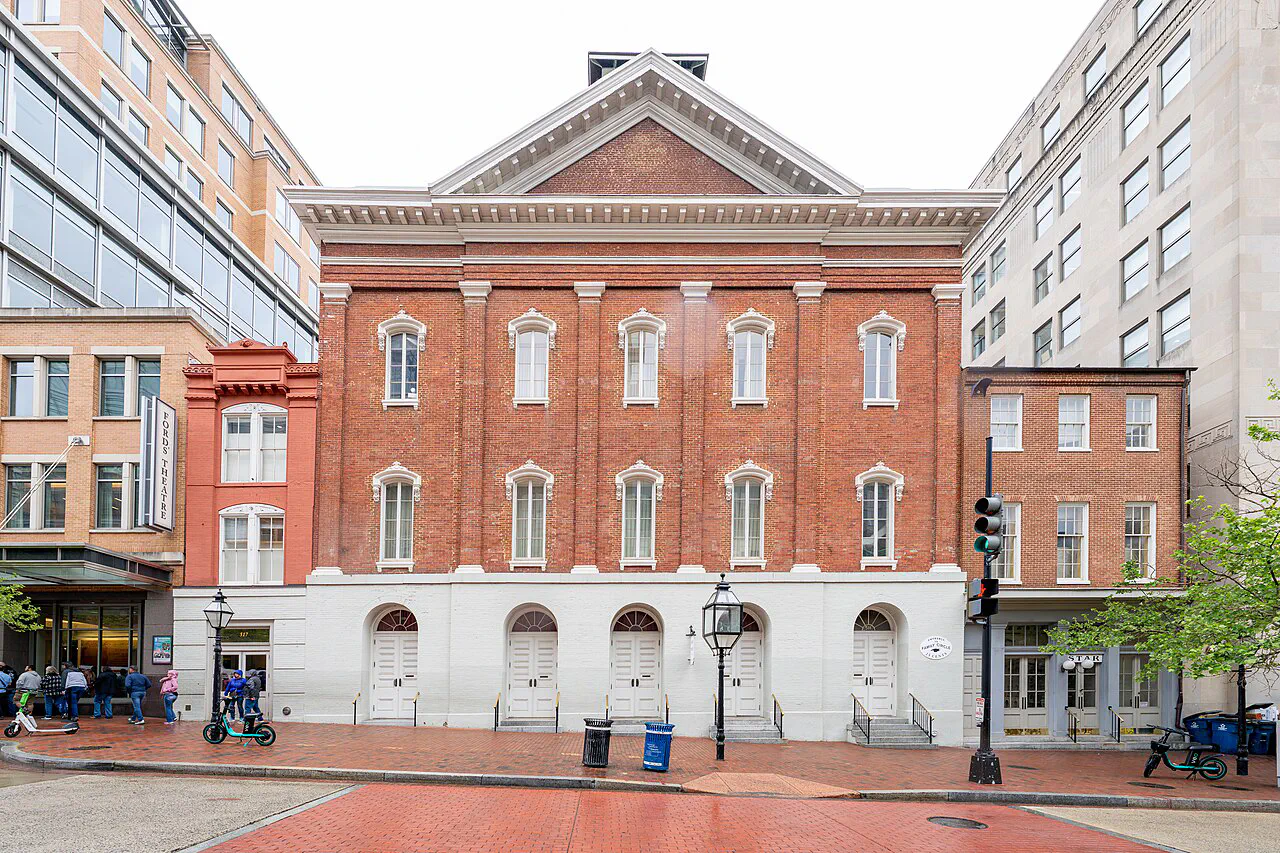
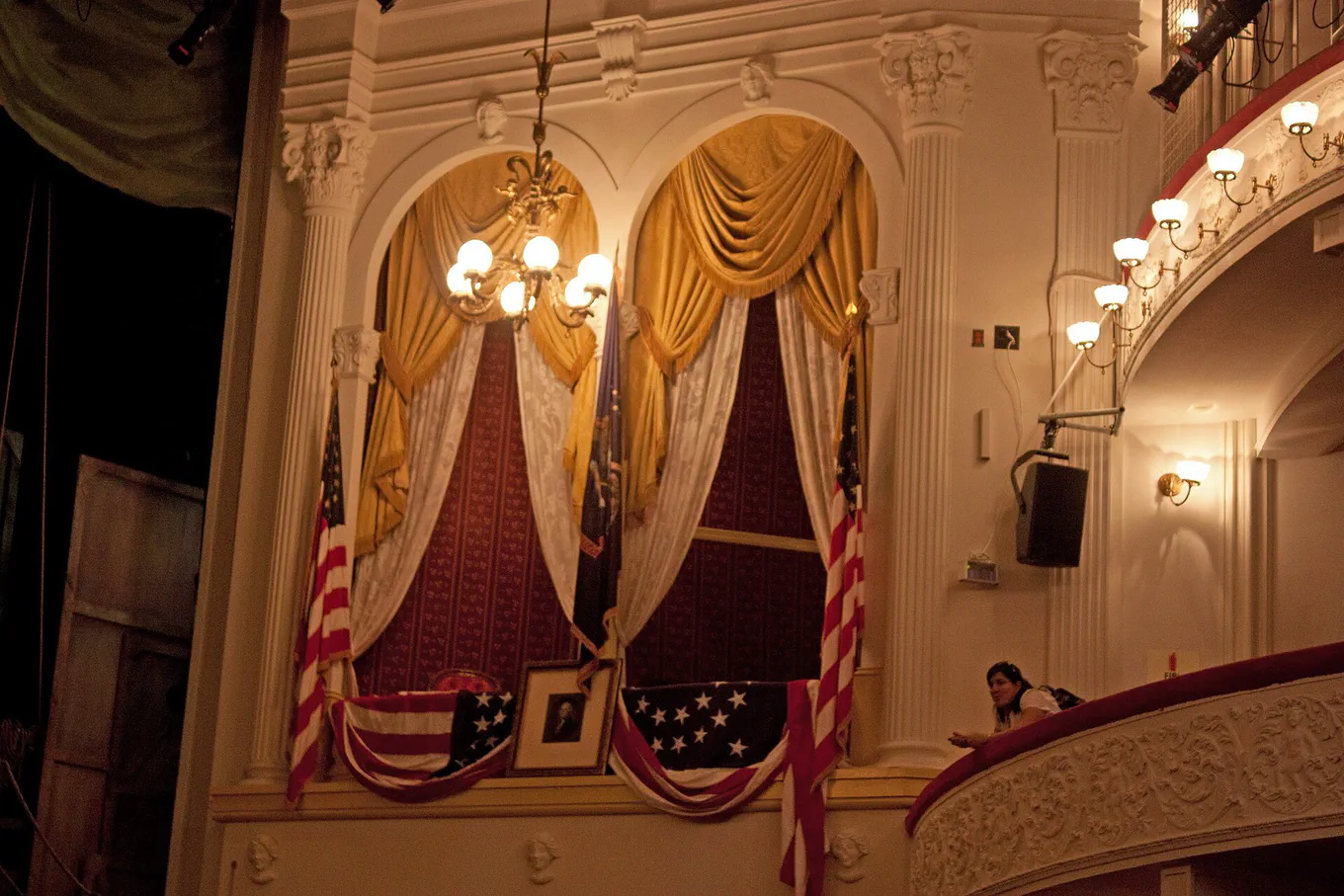
Stand here. Ford’s Theatre, a working theatre again since 1968. The presidential box is never occupied, and the Petersen House across the street is preserved with it.
On 14 April 1865, Abraham Lincoln came here to see a play, Our American Cousin. John Wilkes Booth, a famous actor and Confederate sympathiser, had heard that General Grant would be with him. The Grants declined. At the interval, Lincoln’s guard went to a tavern, and he was not at his post when Booth reached the box. Booth waited for a laugh line, and the president was laughing when the shot came from behind. Lincoln was carried across the street and died the next morning.
2 Eliza Scidmore’s cherry trees on the Tidal Basin
Stand here. The Tidal Basin’s north bank, west of the John Paul Jones Memorial. The two original trees still stand there, with a bronze plaque.
Eliza Scidmore, a travel writer, wanted Japanese cherry trees in Washington, and for 24 years she put the idea to every new superintendent. She finally wrote to the new First Lady, Helen Taft, who had lived in Japan and knew the trees. Tokyo sent 2,000 trees, but inspectors found them infested with insects, and President Taft agreed to burn them. A second gift of 3,020 trees arrived. On 27 March 1912, Helen Taft and the Japanese ambassador’s wife planted the first two by the water. Both are still standing.
3 Harry Winston posts the Hope Diamond to the Smithsonian
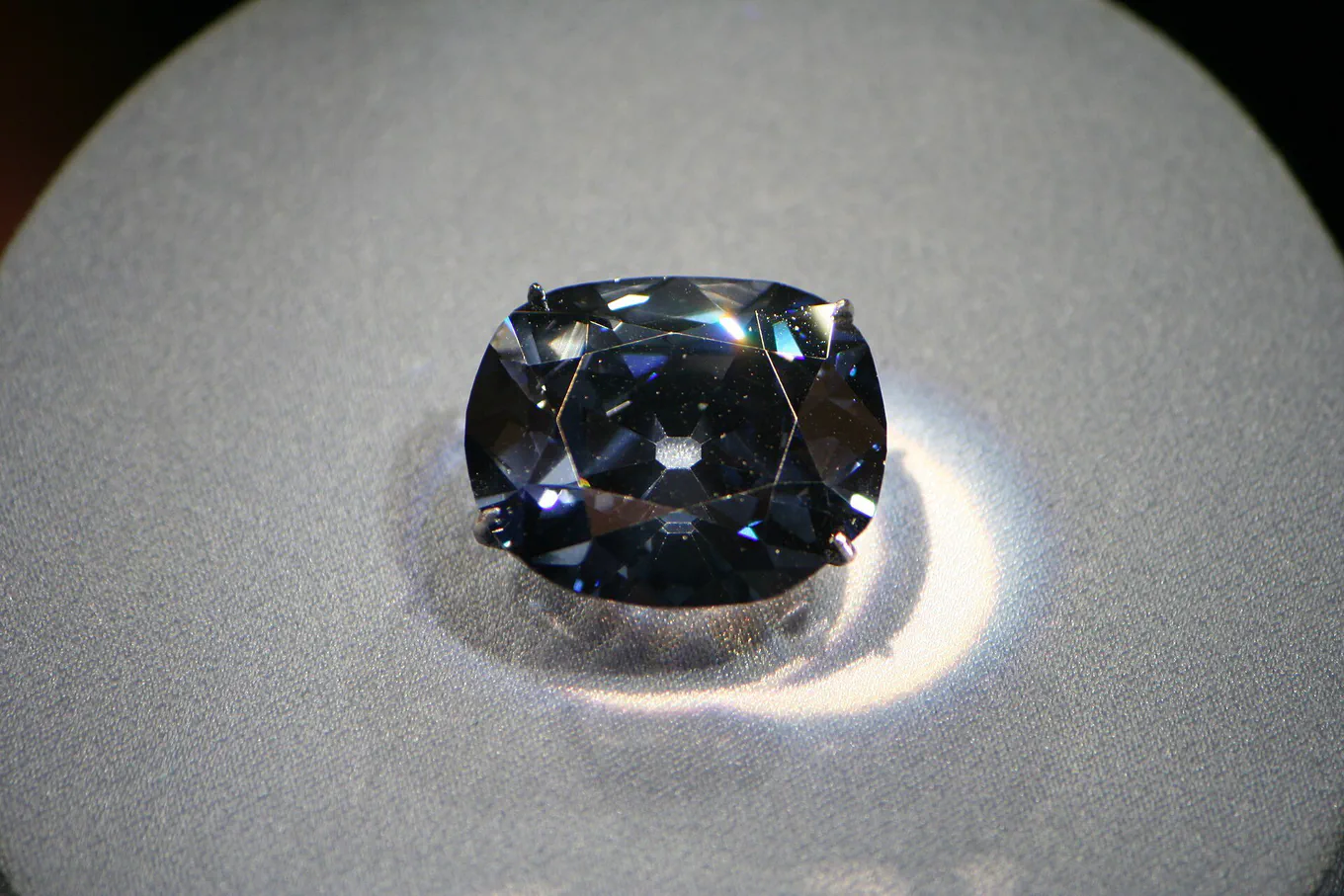
Stand here. The Smithsonian’s National Museum of Natural History, where the diamond is on permanent display.
The 45.52-carat Hope Diamond came with tales of a curse, and its last private owner, the New York jeweller Harry Winston, never believed any of them. He hoped it would help the United States establish a gem collection. On 10 November 1958, he gave it to the Smithsonian and sent it by post, in a box wrapped in brown paper, as simple registered mail. It was insured for $1 million. The postage was $2.44. A Smithsonian curator says the diamond has brought the museum nothing but good luck.
4 Mahalia Jackson’s shout and King’s dream at the Lincoln Memorial
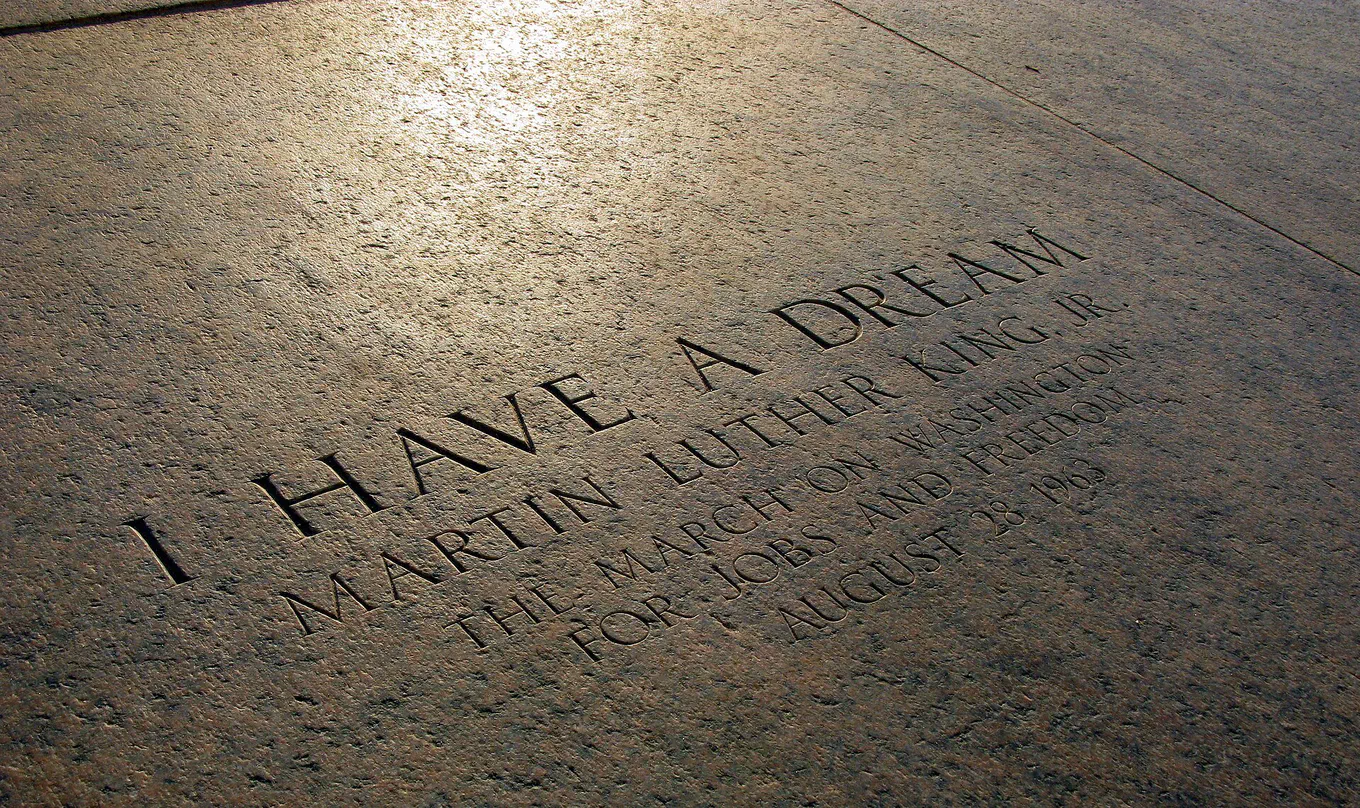
Stand here. The landing eighteen steps below Lincoln’s statue at the Lincoln Memorial, where an inscription engraved in 2003 marks the spot where King stood.
The inscription on the Lincoln Memorial steps marking where Martin Luther King Jr gave his “I Have a Dream” speech.National Park Service / Public domain.
Martin Luther King Jr gave the ‘I Have a Dream’ speech here on 28 August 1963, to more than 250,000 people at the March on Washington. Its most famous part wasn’t in his prepared text. Behind him sat Mahalia Jackson, the gospel singer who had sung just before he spoke, and she knew he had used a dream refrain in Detroit that June. She shouted, ‘Tell ’em about the dream, Martin!’ King left his text and improvised. He said later he never knew whether her words reached him.
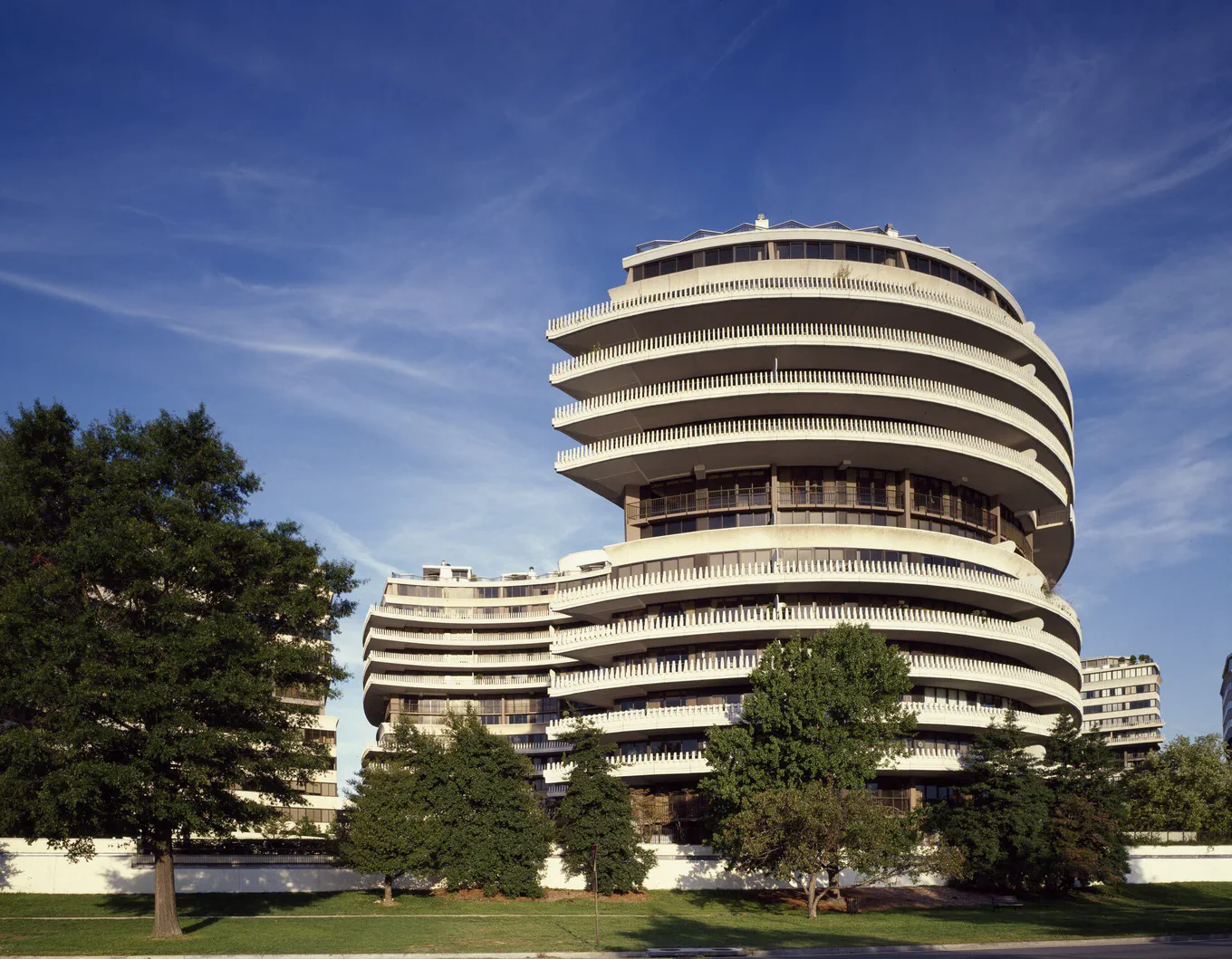
Stand here. The Watergate office building, at 2600 Virginia Avenue in Foggy Bottom. A plaque on the sixth floor, where the Democrats had their headquarters, commemorates the break-in.
Watergate, the scandal that brought down Richard Nixon, began with a security guard, Frank Wills. Early on 17 June 1972, he found tape over the latch of a garage door, to stop it latching shut. He took it off, assuming a worker had left it. When he came back round, the door was taped again. He called the police, and five men were arrested inside the Democratic headquarters. Wills was hailed as a hero, but he got no promotion and spent much of his life jobless and poor.
Pack nothing. Leave Friday.
Every Friday, I write a free letter, Journey, that takes us on a trip through places, stories, and ideas.
The Exorcist(William Peter Blatty, 1971). A horror novel, set in Georgetown near the campus of Georgetown University, where Blatty studied English.
Lincoln in the Bardo(George Saunders, 2017). An experimental novel, drawn from the story of Lincoln visiting his son Willie’s crypt at Oak Hill Cemetery, in Georgetown, to hold the body.
Advise and Consent(Allen Drury, 1959). A political novel. It follows the Senate’s fight over confirming a controversial nominee for Secretary of State.
Films to watch before you visit Washington, D.C.
All the President’s Men(Alan J. Pakula, 1976). A film. Its opening scene finds a door’s bolt taped over at the Watergate, and Frank Wills plays himself.
Mr. Smith Goes to Washington(Frank Capra, 1939). A film. A senator filibusters on the Senate floor to argue his innocence, with some scenes shot at the Capitol and Union Station.
The Day the Earth Stood Still(Robert Wise, 1951). A science-fiction film. A flying saucer lands on the National Mall, and Klaatu later tours the city, the Lincoln Memorial included.
Questions
Can you visit Ford’s Theatre, where Lincoln was shot?
Yes. Ford’s Theatre has been a working theatre again since 1968. The theatre and the Petersen House across the street, where Lincoln died, form Ford’s Theatre National Historic Site, run by the National Park Service.
When do the cherry blossoms bloom in Washington, D.C.?
Peak bloom, the day when 70% of the Yoshino cherry blossoms are open, usually comes between the last week of March and the first week of April, depending on the weather. It has come as early as 15 March (1990) and as late as 18 April (1958), and it is almost impossible to forecast more than ten days ahead.
Why isn’t Washington, D.C. a state?
The Constitution places the federal district outside any state. Its residents have no senators and elect only a non-voting delegate to the House of Representatives. The city’s licence plates carry the protest slogan ‘End Taxation Without Representation’.