I live between Winchester and the market town of Romsey, in a cottage that was built in the 1600s and used by the butlers of the Hursley Park Estate. I work in the smaller cottage next door, that was once a sheepshed or something.
— Nick
Venta Belgarum, a Roman town, grew into Winchester, a cathedral city on the River Itchen in Hampshire, England, 60 miles south-west of London. A king who had himself painted as Arthur and a diver who worked in the dark bookend a novelist’s grave that forgot her novels, a bishop who asked to be rained on and a widow’s last night at an inn.
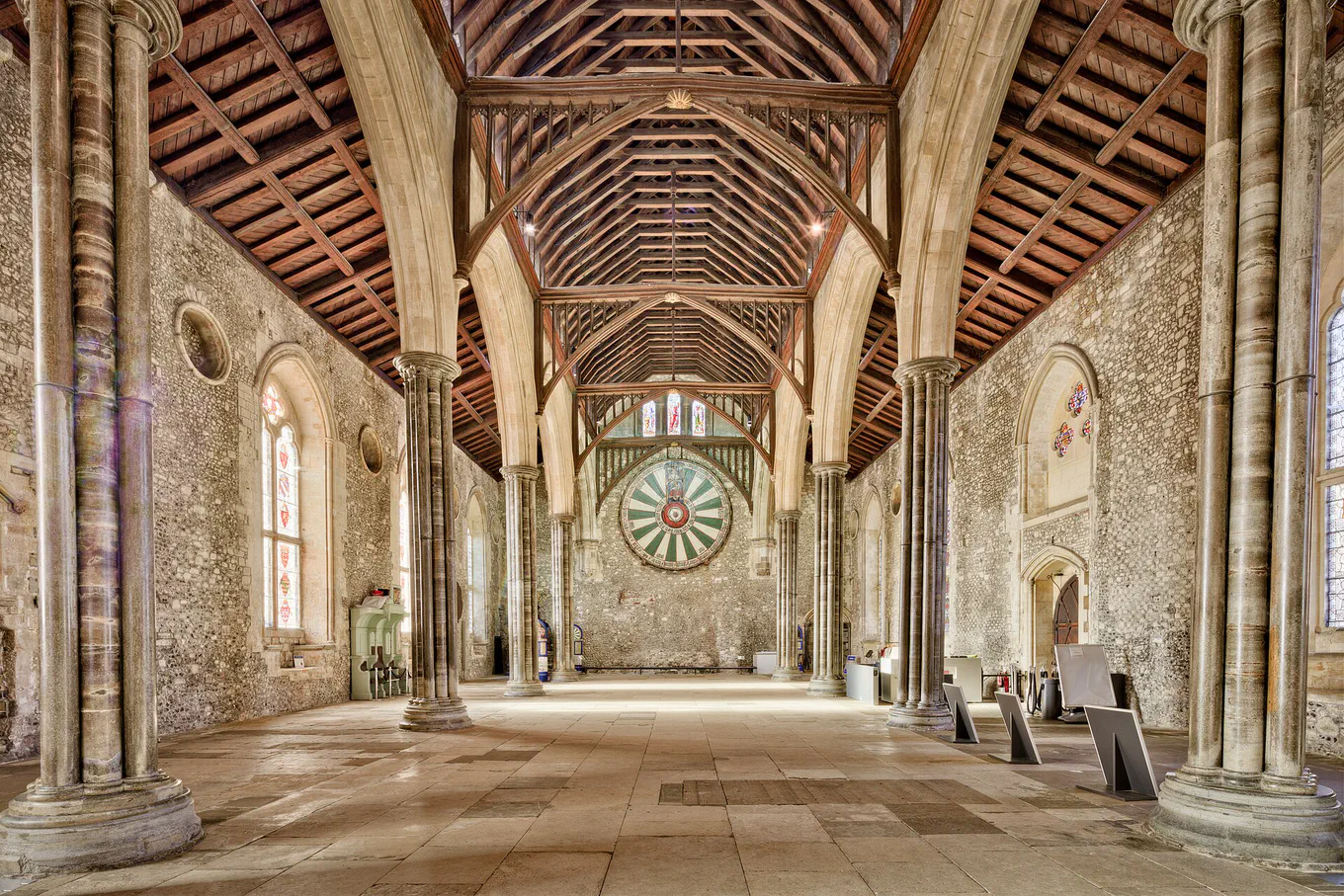
Stand here. The Great Hall of Winchester Castle, on Castle Avenue. The Round Table hangs on an end wall, and the hall opens daily.
The Great Hall of Winchester Castle, with the Round Table on its end wall.Michael D Beckwith / CC0.
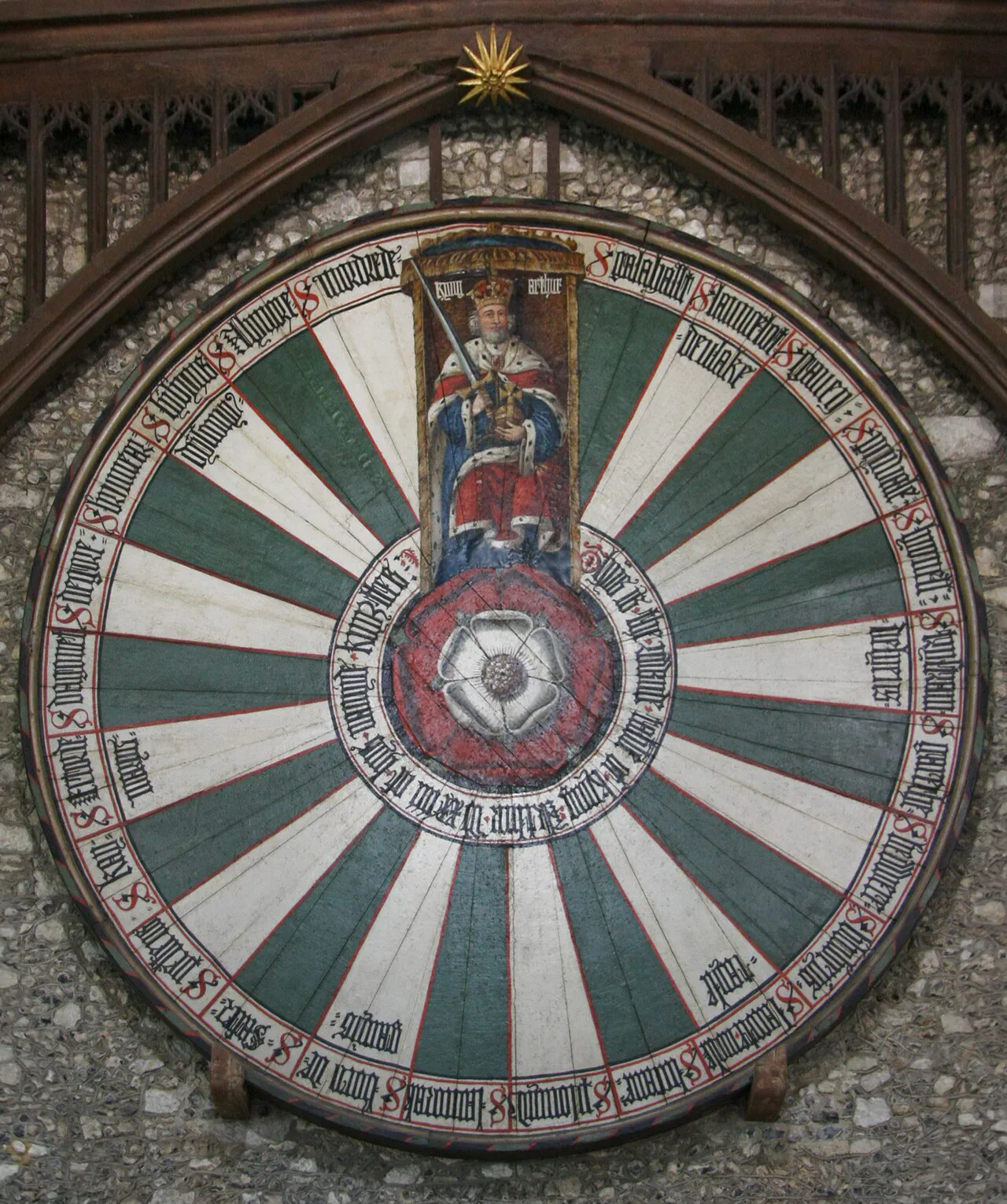
King Arthur’s Round Table hangs on this wall, 5.5 metres across and painted with the names of his knights, but it was never Arthur’s. It was made in the 13th century, probably for a tournament held by Edward I, a king who loved the Arthur stories. Henry VIII, who claimed Arthur as an ancestor, had it repainted with a Tudor rose at the centre. In 1522, he brought the Holy Roman Emperor, Charles V, to admire it. The Arthur painted on it wore the young Henry’s face.
2 Jane Austen’s last weeks and silent gravestone in Winchester
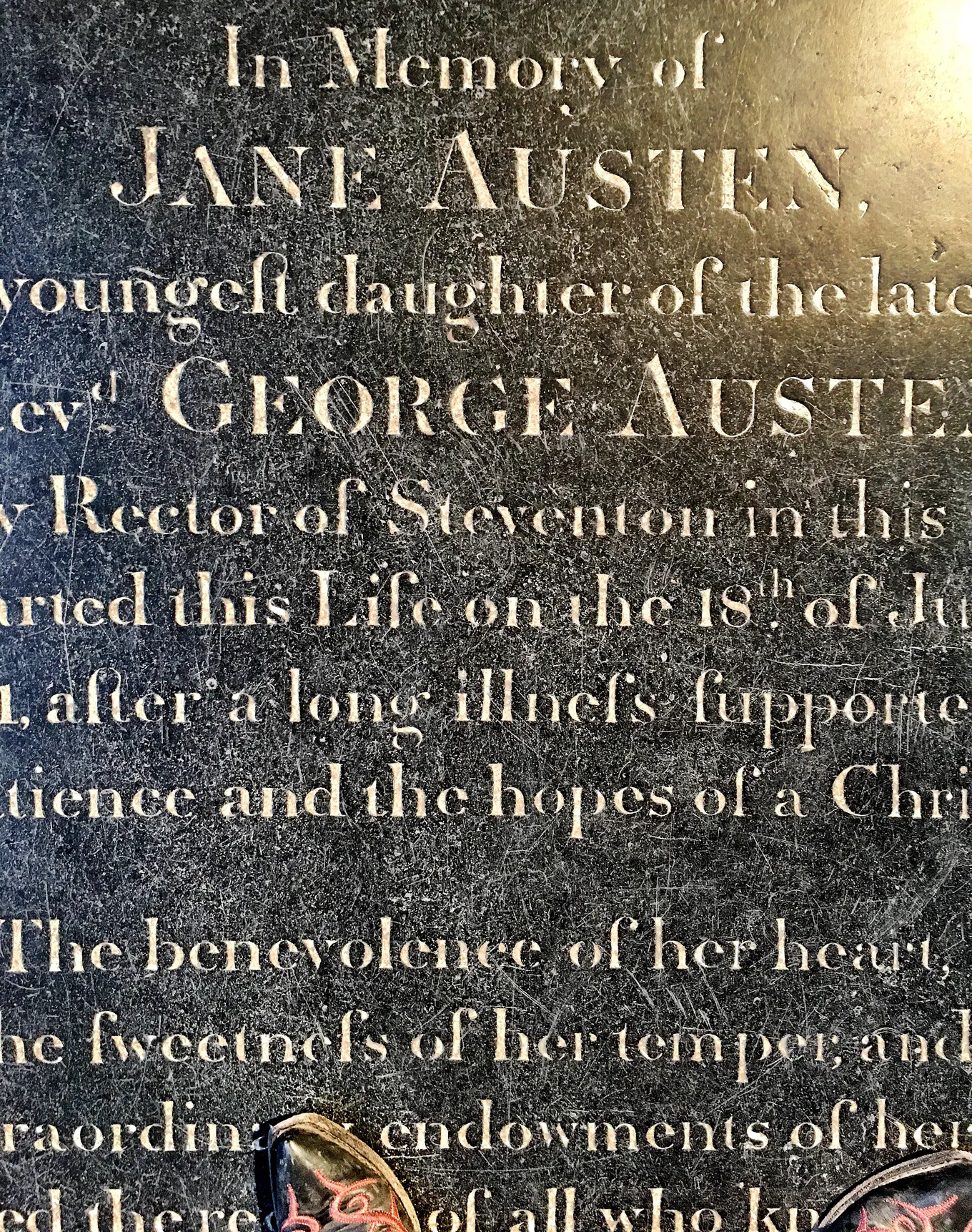
Stand here. Her grave in the north nave aisle of Winchester Cathedral, where visitors leave letters and flowers by a brass plaque of 1872.
In May 1817, Jane Austen had stopped writing, and her sister Cassandra and brother Henry took her to Winchester to be treated by a surgeon. She lodged at 8 College Street and died there on 18 July, aged 41. Her brother James wrote the words for her grave in the cathedral. They praised “the extraordinary endowments of her mind” and never mentioned her books. Within months, Henry named her in print as their author. The grave itself stayed silent until 1872, when a brass plaque went up beside it.
3 St Swithun’s grave and the forty days of rain
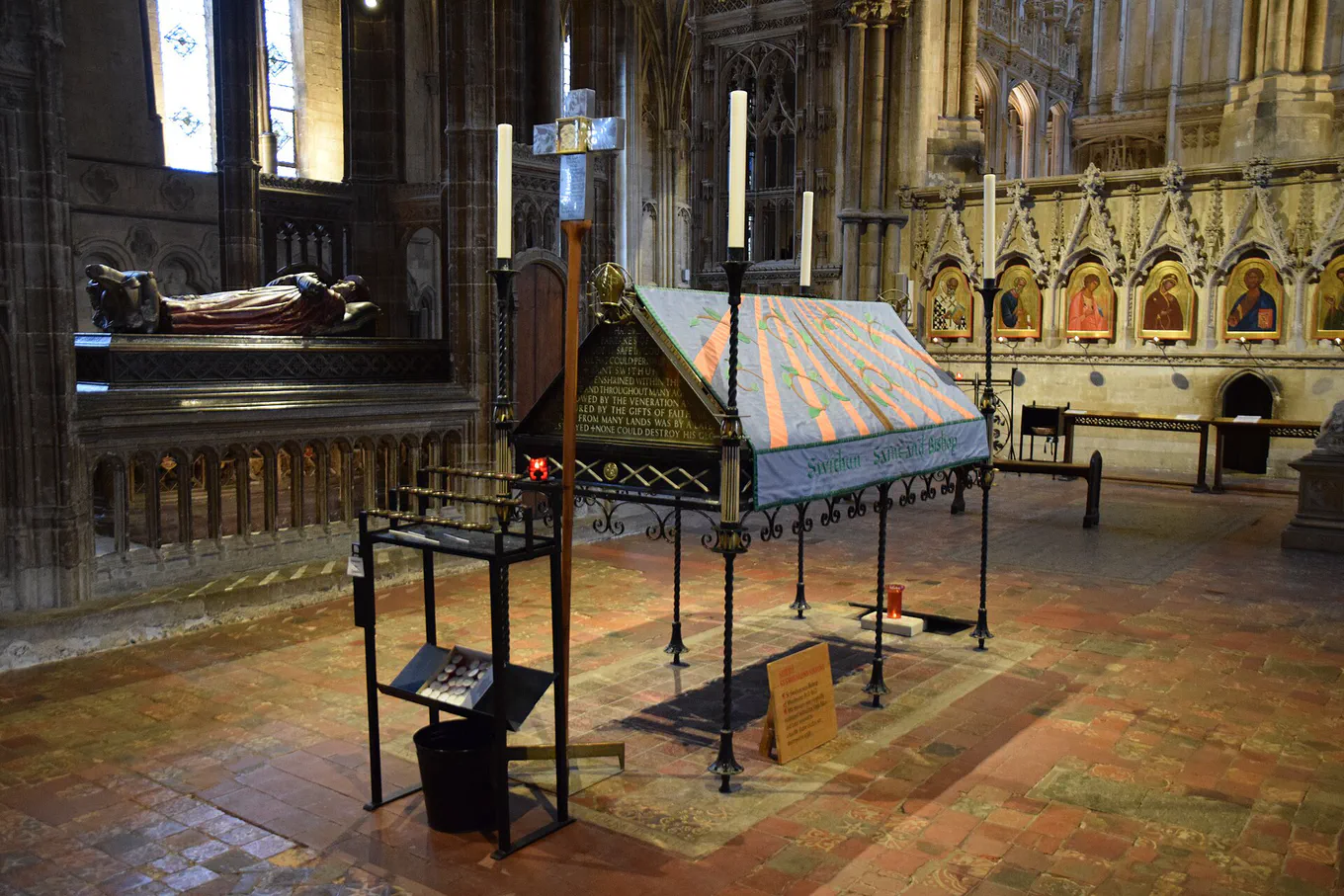
Stand here. The retrochoir, at the far east end of Winchester Cathedral, where a modern shrine stands on the site of the medieval one, demolished in 1538.
The old rhyme says that if it rains on St Swithun’s Day, 15 July, it will rain for forty days. Swithun was Bishop of Winchester in the ninth century, and on his deathbed he begged to be buried outside the north wall of his cathedral, where passers-by would walk over his grave and rain from the eaves would fall on it. On 15 July 971, his body was moved indoors to a shrine. The story goes that the saint showed what he thought of that with a downpour.
4 Alice Lisle’s last night at the Eclipse Inn
Stand here. The Square, opposite the Eclipse Inn. A plaque on the wall of the city museum marks the spot where she was executed.
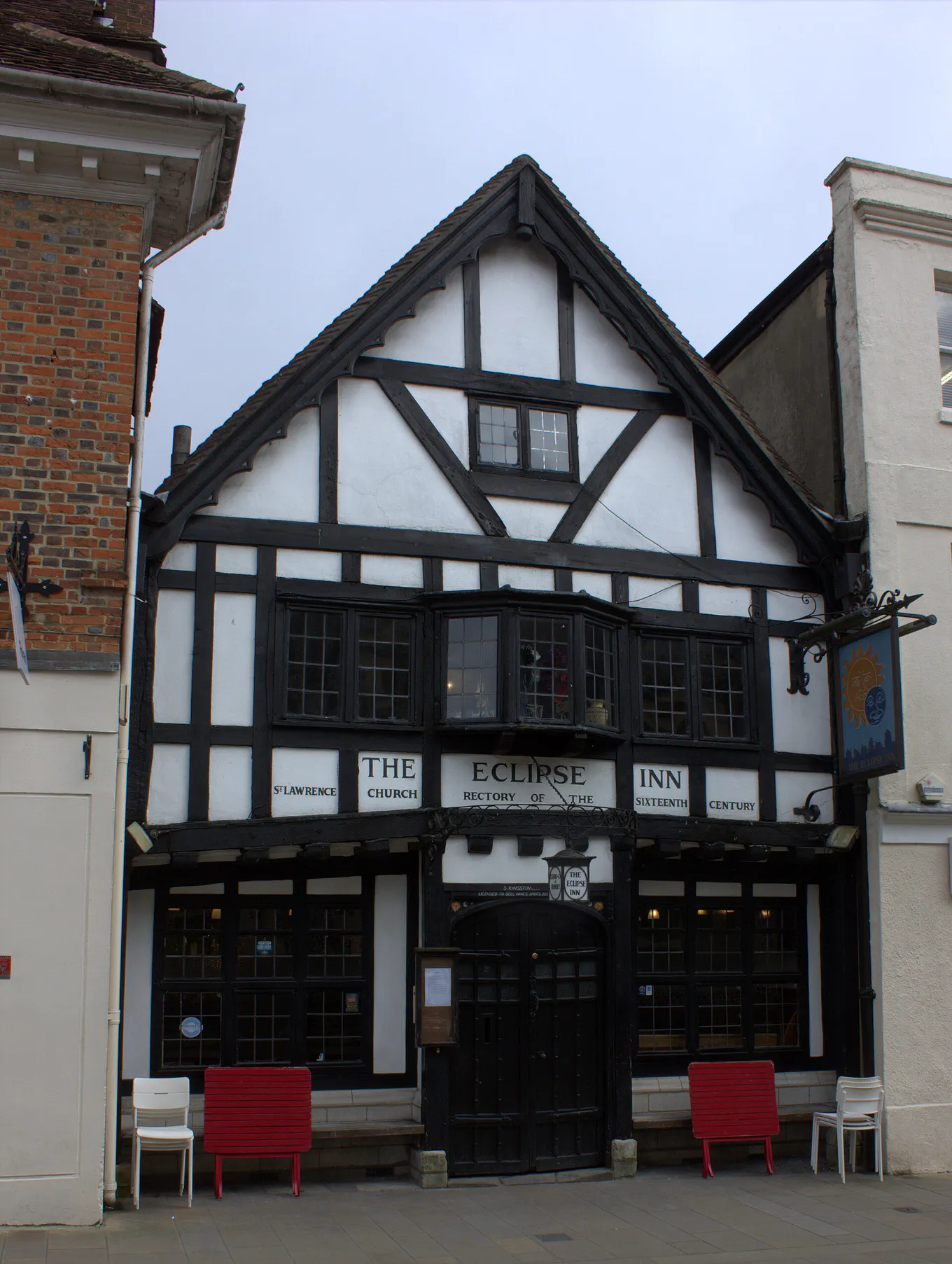
Judge Jeffreys opened the Bloody Assizes, the trials that followed the Monmouth Rebellion, with Alice Lisle, a widow in her late sixties. In July 1685, she had agreed to shelter a minister at her house near Ringwood, and he arrived with an outlawed rebel. Jeffreys pressed a reluctant jury into a guilty verdict. The sentence was burning, and King James II refused mercy, allowing only the axe. Lady Lisle spent her last night in an upper room of the Eclipse Inn, then stepped from its window onto the scaffold.
5 William Walker, the diver who saved Winchester Cathedral
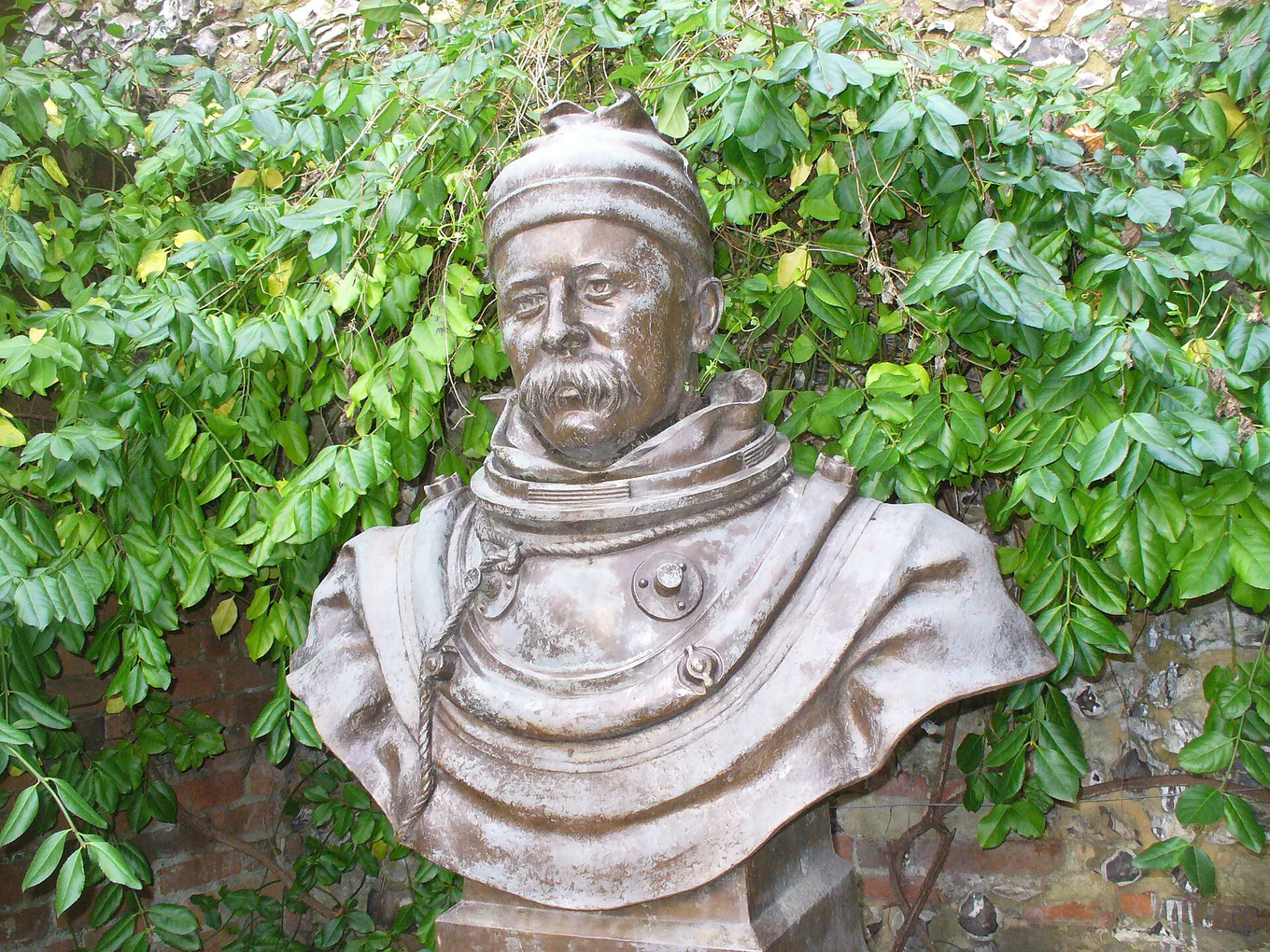
Stand here. Inside Winchester Cathedral, near the shrine of St Swithun, where a small statue of Walker stands. There’s a bust of him in the cathedral gardens.
By the early 1900s, Winchester Cathedral was sinking into the peat beneath it, and attempts to shore it up had failed. William Walker, a deep-sea diver, went down under its walls. From 1906 to 1911, six hours a day, in water so thick with silt that no light got through, he packed more than 25,800 bags of concrete beneath them. Then the water was pumped out for the bricklayers. King George V gave him a silver rose bowl. Until 2001, though, his statue in the cathedral was modelled on the wrong man, the engineer.
Pack nothing. Leave Friday.
Every Friday, I write a free letter, Journey, that takes us on a trip through places, stories, and ideas.
To Autumn(John Keats, 1820). A poem. Keats wrote it in September 1819, inspired by his daily walks through the Cathedral Close and the water meadows to St Cross.
The Warden(Anthony Trollope, 1855). A novel. It seems to draw on an 1849 inquiry by a Winchester vicar into the finances of the Hospital of St Cross.
Films to watch before you visit Winchester
The Da Vinci Code(Ron Howard, 2006). A film. Westminster Abbey refused the film-makers, so the film’s Abbey scenes were shot at Lincoln and Winchester cathedrals instead.
Wolf Hall(Peter Kosminsky, 2015). A TV series. The Hospital of St Cross, an almshouse founded in 1136, was among its filming locations.
The Crown(Netflix). A TV series. Winchester Cathedral and the area around it have been used several times as filming locations.
Questions
Can you see King Arthur’s Round Table in Winchester?
Yes. It hangs on an end wall of the Great Hall of Winchester Castle, which Henry III added between 1222 and 1235, and which opens daily. The table was made in the 13th century, probably for a tournament, and painted later by order of Henry VIII.
Where is Jane Austen buried?
In the north nave aisle of Winchester Cathedral, with a brass plaque of 1872 beside her grave. She died at 8 College Street, also in Winchester. The house isn’t open to the public, but it carries a plaque, and you can stand outside.
Was Winchester the capital of England?
Not in the modern sense. It was one of the most important cities in Anglo-Saxon England, but the royal court moved about and there was no fixed capital. It has been called the premier city of the West Saxon kingdom, and the historian Janet Nelson describes London and Winchester as Alfred the Great’s “proto-capitals”.