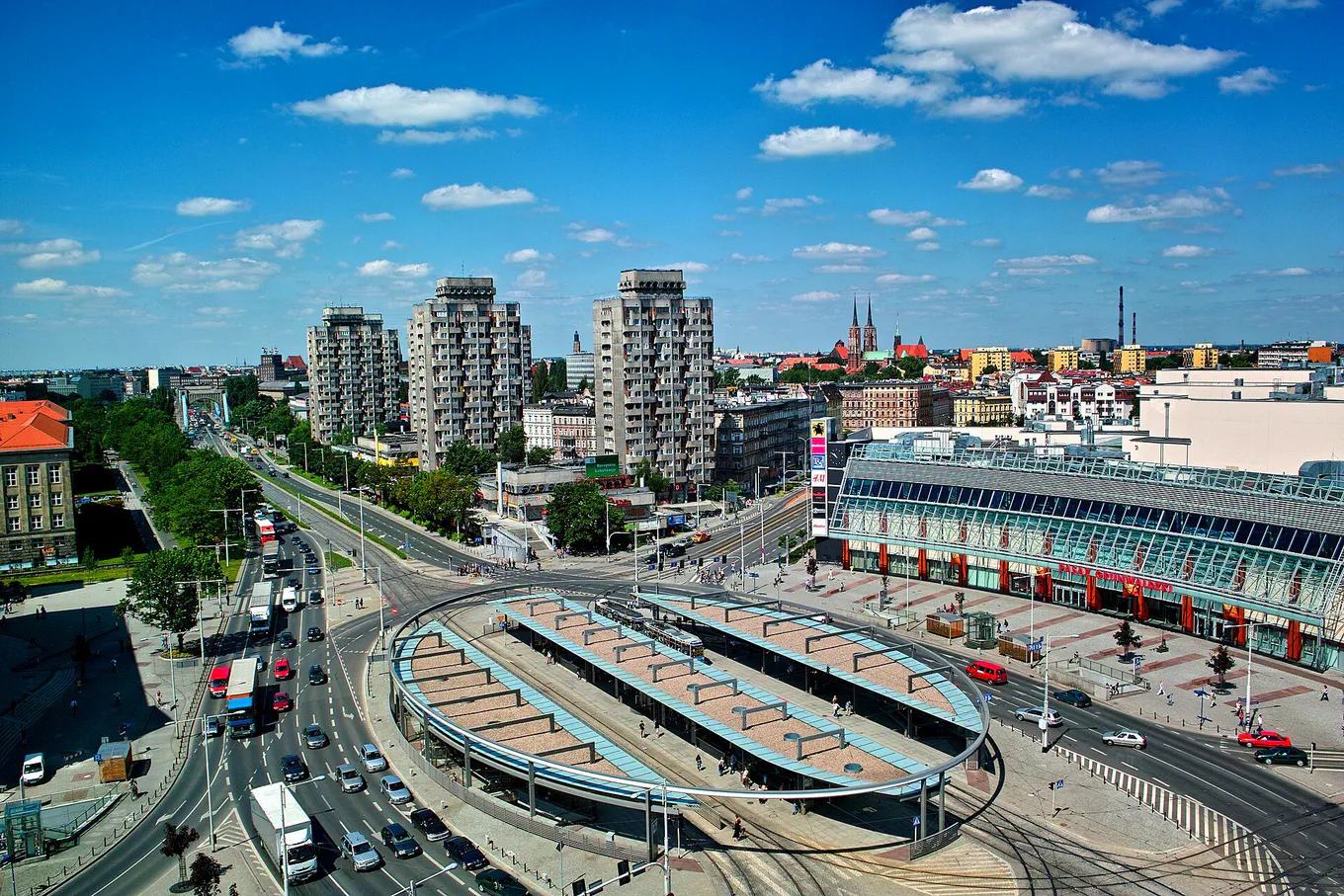
I spent time in Wrocław in 2024. Lots to love about it, from the wonderful and playful bronze dwarf statues, scattered around the city, to a truly beautiful Japanese garden. Sadly, my greatest achievement was probably climbing the 247 steps to the Bridge of Penitents. If you are of advanced years or frequently short of breath, I recommend oxygen.
— Nick
Wrocław sits on the Oder in southwestern Poland, the capital of Lower Silesia and the largest city of Silesia. As Breslau, it was part of the German Empire from 1871 until 1945, when it became part of Poland and most German residents fled or were expelled. Its stories here are a dwarf protest, a film star’s last train, a battle painting kept out of sight, a duellist’s grave, and a Nazi leader’s flight.
1 The Orange Alternative and the dwarfs of Świdnicka Street
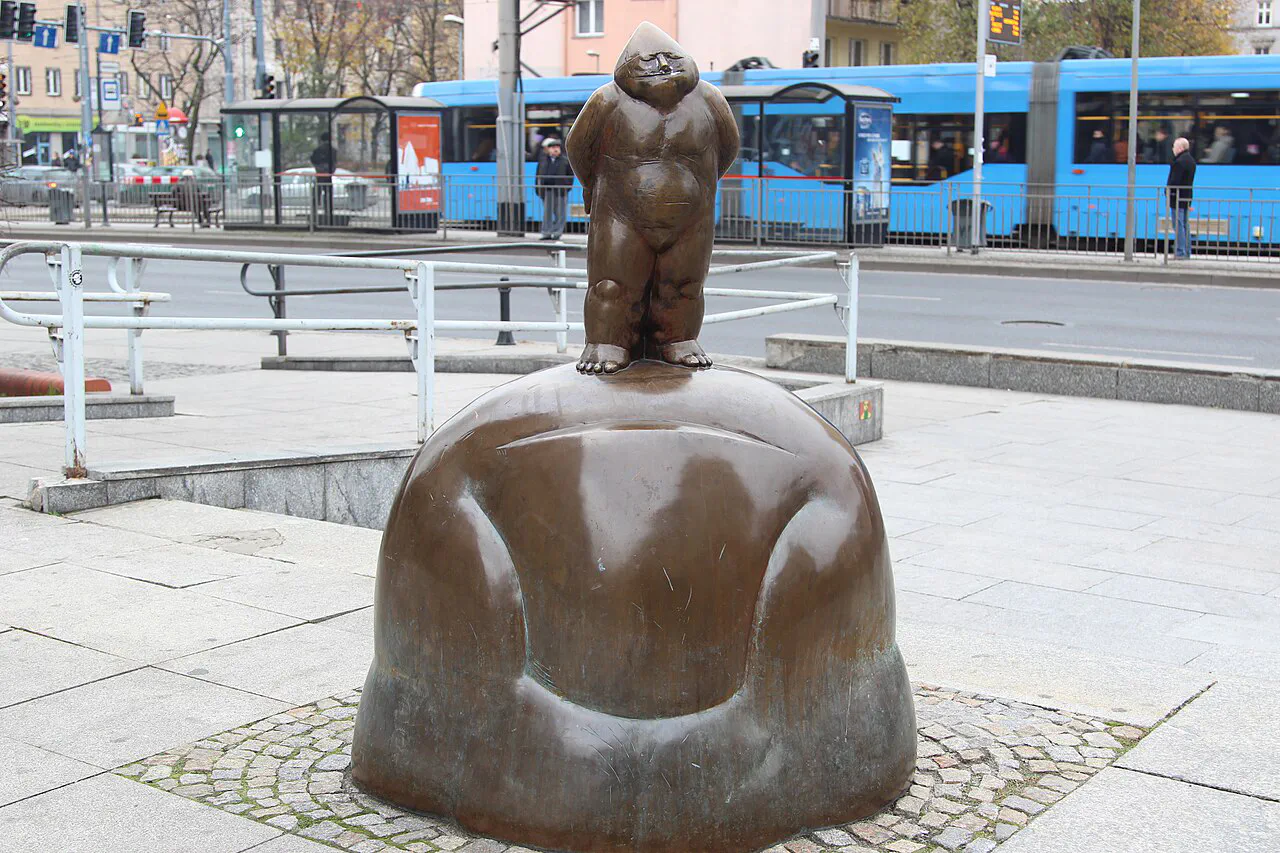
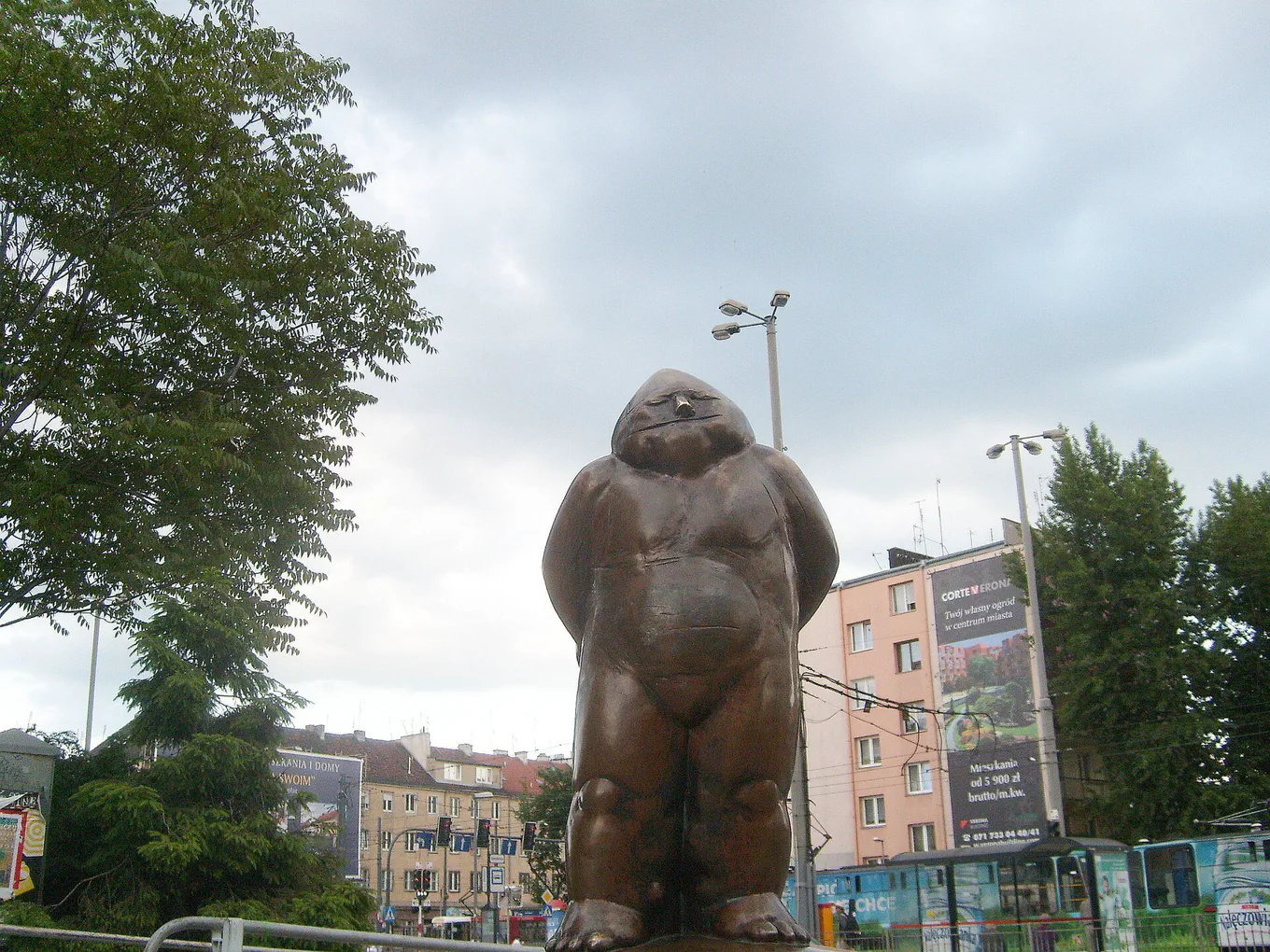
Stand here. Papa Krasnal, the dwarf statue on Świdnicka Street, stands where the Orange Alternative held its protests.
Papa Krasnal, the bronze dwarf on Świdnicka Street in Wrocław that commemorates the Orange Alternative.Aniax / Public domain.
Before the first small dwarf figures appeared around Wrocław in 2005, the city’s dwarfs were a protest. The Orange Alternative was a protest movement led by Waldemar Fydrych, known as Major. When anti-government slogans on the city’s walls were painted over, its members painted ridiculous dwarfs on the paint spots. Their protests usually ended in mass arrests, and Major himself was arrested. But on 1 June 1988, more than 10,000 people marched through the centre in orange dwarf hats. Thirteen years later, a dwarf statue went up here to honour them.
2 Zbigniew Cybulski’s last train at Wrocław Główny
Stand here. Platform 3 at Wrocław Główny, the city’s main railway station, completed in 1857. A plaque to the actor is on the platform.
In Andrzej Wajda’s Ashes and Diamonds (1958), a story set in 1945, Zbigniew Cybulski, called “the Polish James Dean”, played Maciek in fifties-style dark glasses, a jacket, and tight jeans. He also had a habit of jumping onto moving trains. On a frosty night in January 1967, he jumped for the Warsaw train here. He slipped on the icy carriage steps, fell under the wheels, and was killed. Thirty years later, Wajda, his mentor, came to platform 3 to unveil a plaque to him.
3 The Racławice Panorama and its long wait in Wrocław
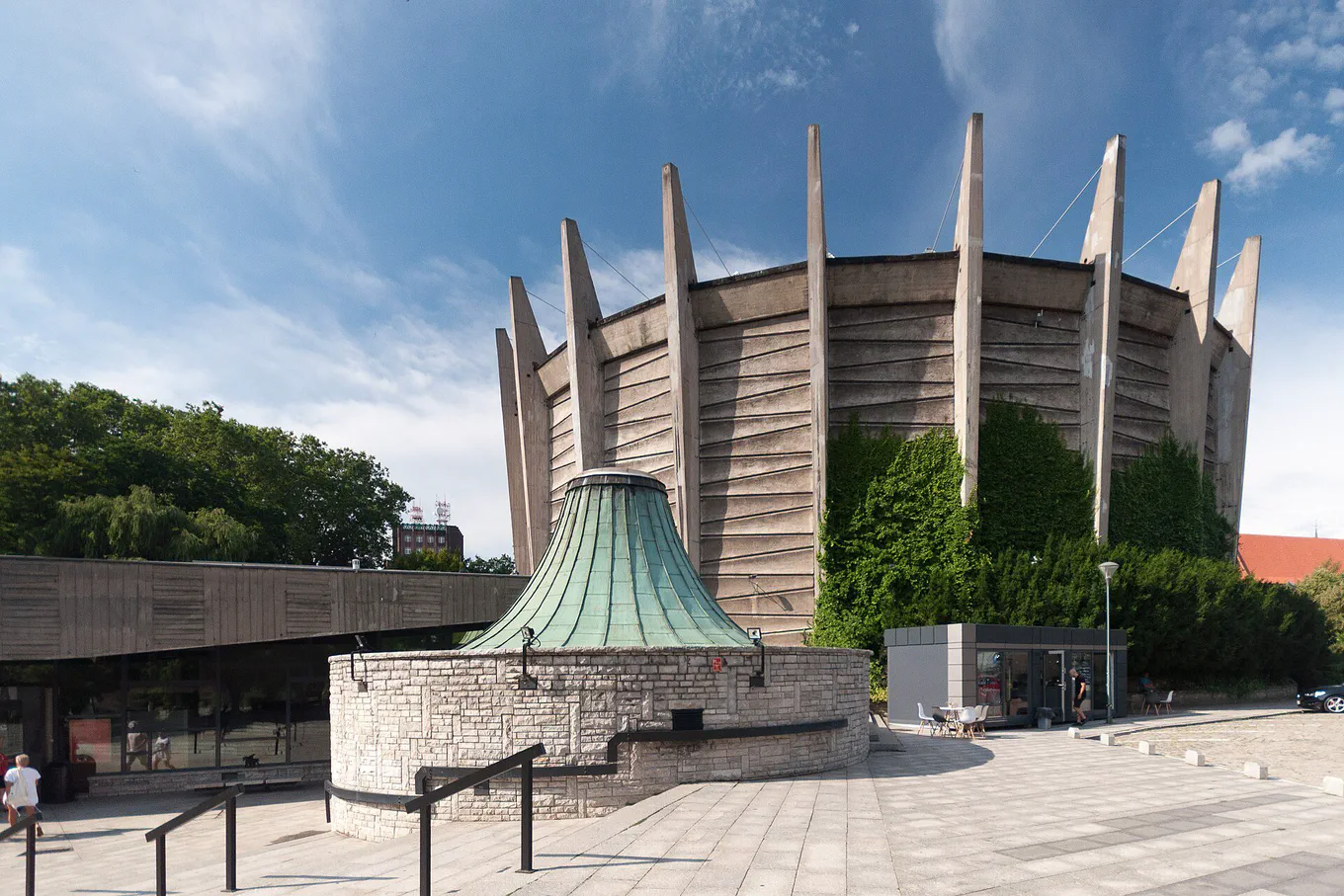
Stand here. The Panorama rotunda on Jana Ewangelisty Purkyniego Street, where the canvas, 15 metres high and 114 metres long, is shown in the round.
In 1794, Tadeusz Kościuszko’s insurgents fought a Russian army at Racławice. A century later, a vast panorama of the battle, Jan Styka’s idea, opened in Lwów. Hidden in a wooden box, the canvas survived the bombing of Lwów in 1944, and two years later it came to Wrocław by train. The canvas went into military warehouses. Its theme was politically sensitive for a communist regime determined not to offend the Soviet Union. It was 1985 before the rotunda here opened and Wrocław saw the battle at last.
4 Ferdinand Lassalle, the duel, and a grave on Ślężna Street
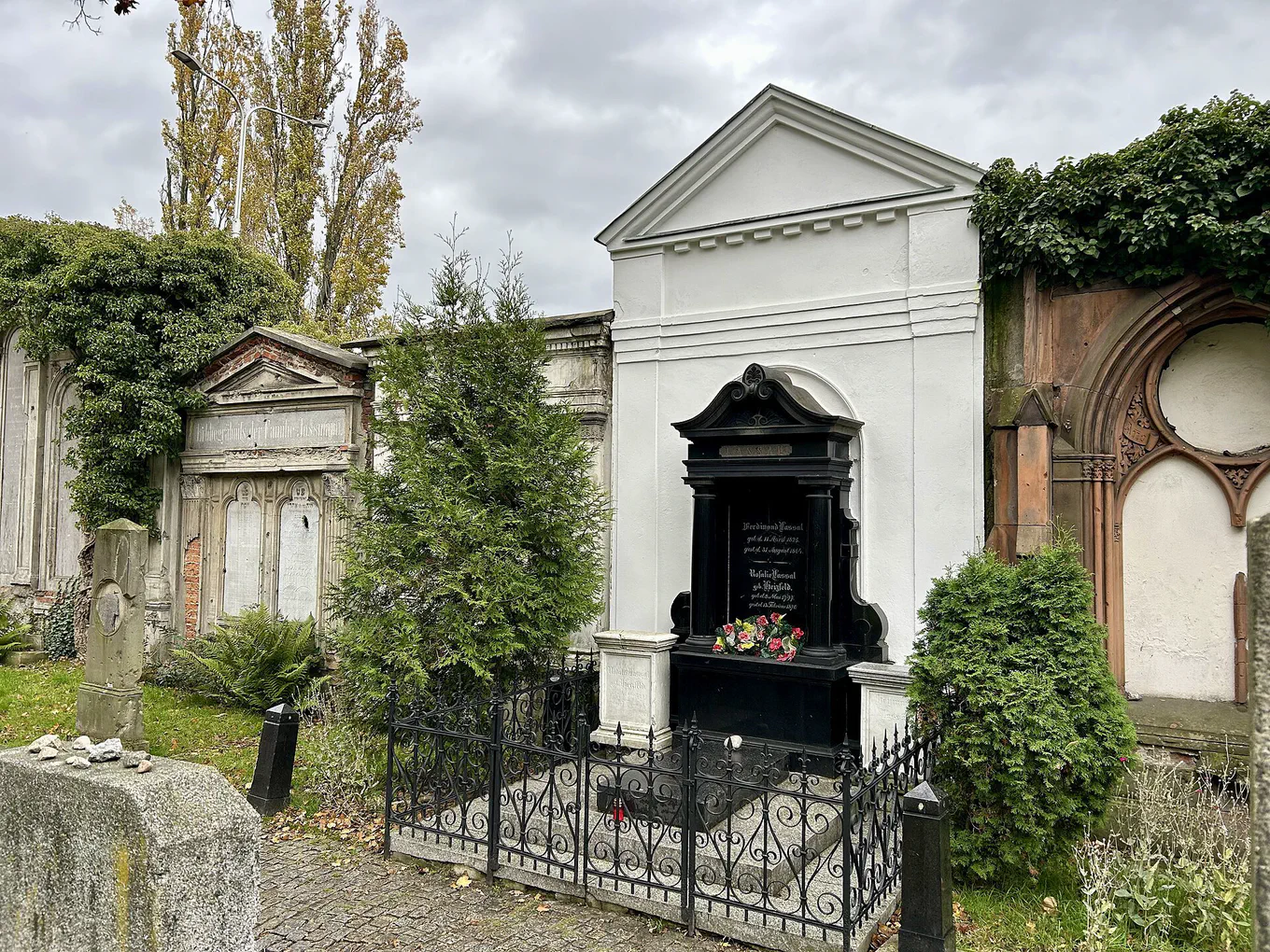
Stand here. The Old Jewish Cemetery at 37/39 Ślężna Street, opened in 1856 and now a museum of about 12,000 graves.
The founder of the first organised German workers’ party, Ferdinand Lassalle, was born in Breslau to a Jewish family. After a whirlwind romance, he proposed to Helene von Dönniges, a Bavarian diplomat’s daughter. Her family vehemently opposed the match, and Helene wrote renouncing him for a previous suitor. Lassalle challenged her father to a duel. The father declined, but the suitor accepted in his place. They met near Geneva on 28 August 1864. Lassalle died three days later, aged 39. He lies here, in the city where he was born.
5 Karl Hanke and the flight from Festung Breslau
Stand here. Plac Grunwaldzki, once the Kaiserstraße. The homes that lined it are gone, and the wide square they left is now a centre of student life.
Hitler declared Breslau a fortress in August 1944. Karl Hanke, the Nazi Gauleiter, or regional party chief, of Lower Silesia, ran its defence fanatically. A large area of the centre was demolished for an airstrip, and on his order the whole residential district along the Kaiserstraße was razed. On 5 May 1945, a month before Czech guards beat him to death, Hanke flew out to Prague in a small Fieseler Storch plane. The next day, the fortress he had razed a district to defend surrendered to the Soviets.
Pack nothing. Leave Friday.
Every Friday, I write a free letter, Journey, that takes us on a trip through places, stories, and ideas.
Death in Breslau(Marek Krajewski, 1999). A novel. Set in Breslau in 1933–34, around the bodies of a baron’s daughter and her governess, found in a train car.
Microcosm: Portrait of a Central European City(Norman Davies and Roger Moorhouse, 2002). A history of the city by two British historians.
The End of the World in Breslau(Marek Krajewski, 2003). A novel from Krajewski’s series set in pre-war Wrocław, then known by its German name Breslau. Krajewski was born in Wrocław.
Films to watch before you visit Wrocław
Ashes and Diamonds(Andrzej Wajda, 1958). A film. Zbigniew Cybulski in a story set in 1945, shot in a Wrocław studio, with scenes at St Barbara’s Church.
Bridge of Spies(Steven Spielberg, 2015). A film. Wrocław stands in for Berlin, and Ptasia Street gets a rebuilt Berlin Wall, with barbed wire and a barrier.
The Plagues of Breslau(Patryk Vega, 2018). A crime thriller film set in Wrocław, where detective Helena Rus finds a corpse sewn in a cowhide. It is loosely based on Marek Krajewski’s crime novels.
Questions
Where do Wrocław’s dwarfs come from?
The Orange Alternative protest movement painted ridiculous dwarfs on the paint spots covering anti-government slogans. In 2001, a dwarf statue honouring the movement was placed on Świdnicka Street, where its protests took place. The first five of the city’s small dwarf figures followed in August 2005, designed by Tomasz Moczek, a graduate of Wrocław’s Academy of Fine Arts.
Where is the plaque to Zbigniew Cybulski in Wrocław?
On platform 3 of Wrocław Główny, the station where the actor died on 8 January 1967, jumping onto a moving train. His mentor Andrzej Wajda, who directed him in Ashes and Diamonds, unveiled it in 1997. A second plaque is on the wall of the city’s Feature Film Studio.
Was Wrocław a German city?
Yes. As Breslau, it became part of the German Empire in 1871, and before that it had been under Bohemian, Austrian, and Prussian rule. In 1945, after the Second World War, it became part of Poland. Most German residents fled or were expelled, and Polish settlers arrived.