Xi’an is the capital of Shaanxi province in China, on the Guanzhong Plain. As Chang’an, it was capital of the Tang dynasty, and its Ming city wall, begun in 1370, is one of China’s best preserved. Its stories are a monk home from India, a Japanese poet mourned too soon, an emperor’s doomed consort, a Dane after a Christian stone, and a leader seized on a snowy mountain.
1 Xuanzang’s scriptures and the Giant Wild Goose Pagoda
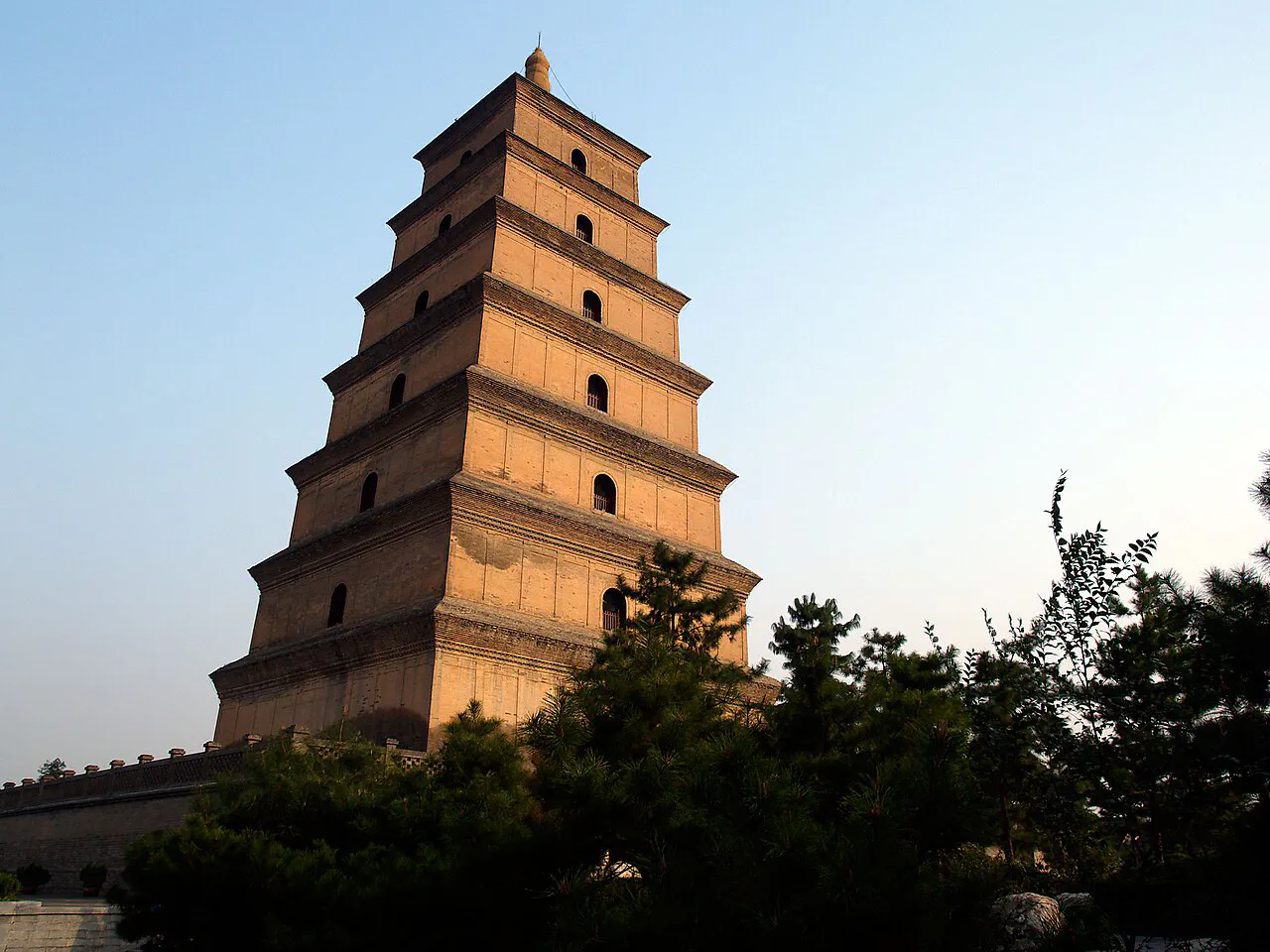
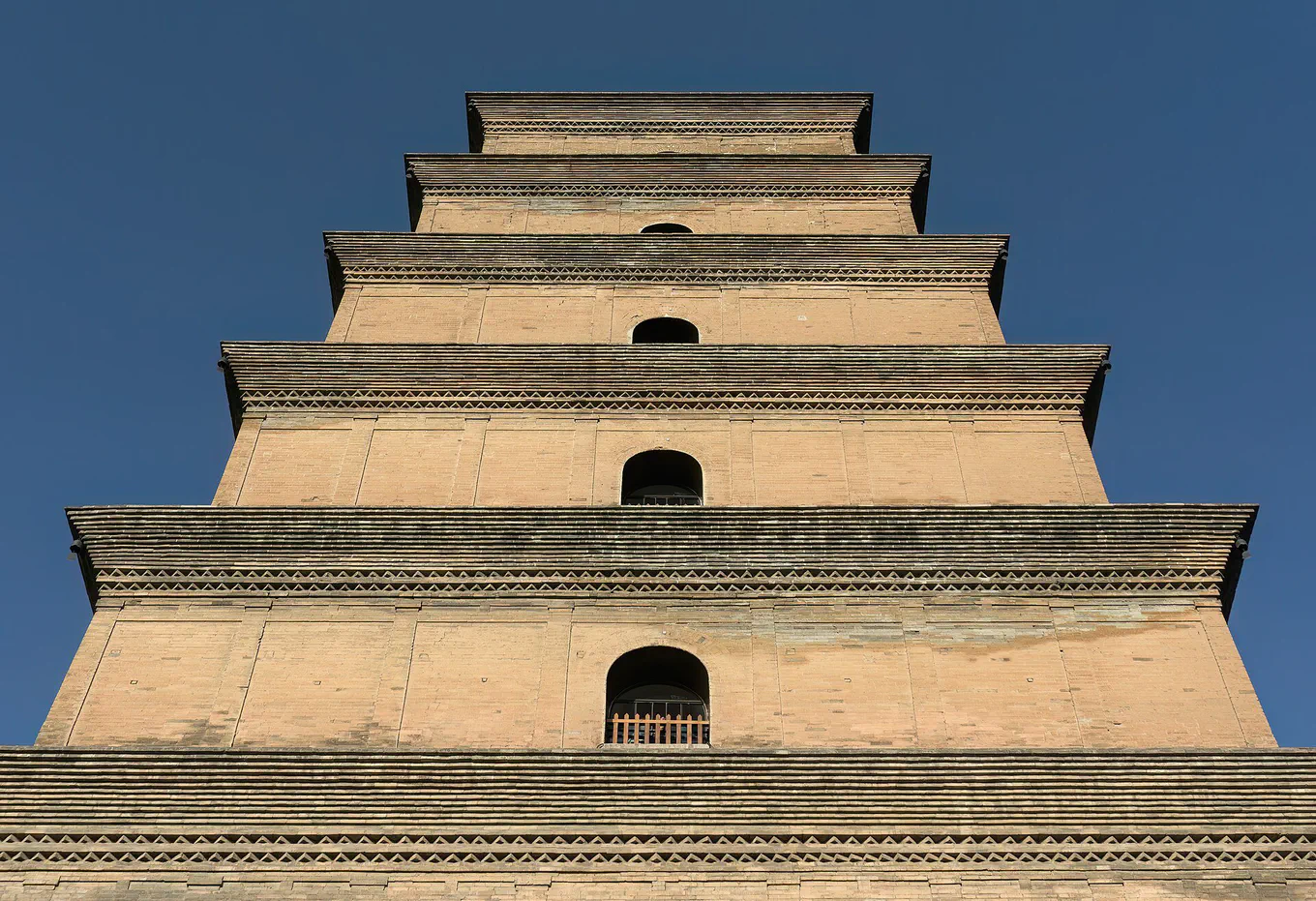
Stand here. The Giant Wild Goose Pagoda, in the Daci’en Temple in southern Xi’an. The temple’s Xuanzang Sanzang Hall holds a copper statue of the monk.
The novel Journey to the West, whose monk sets out from Chang’an, was inspired by the travelogue of a real monk, Xuanzang. Chang’an was the Tang capital, today’s Xi’an, and Xuanzang left it in defiance of Emperor Taizong’s ban on travel abroad, making his way through Central Asia to India. He left India with Sanskrit texts on a caravan of twenty packhorses, and the emperor whose ban he had broken welcomed him home. In 652, this pagoda was raised under his direction to keep the scriptures and images he had carried home.
2 Abe no Nakamaro, the Japanese poet who never got home
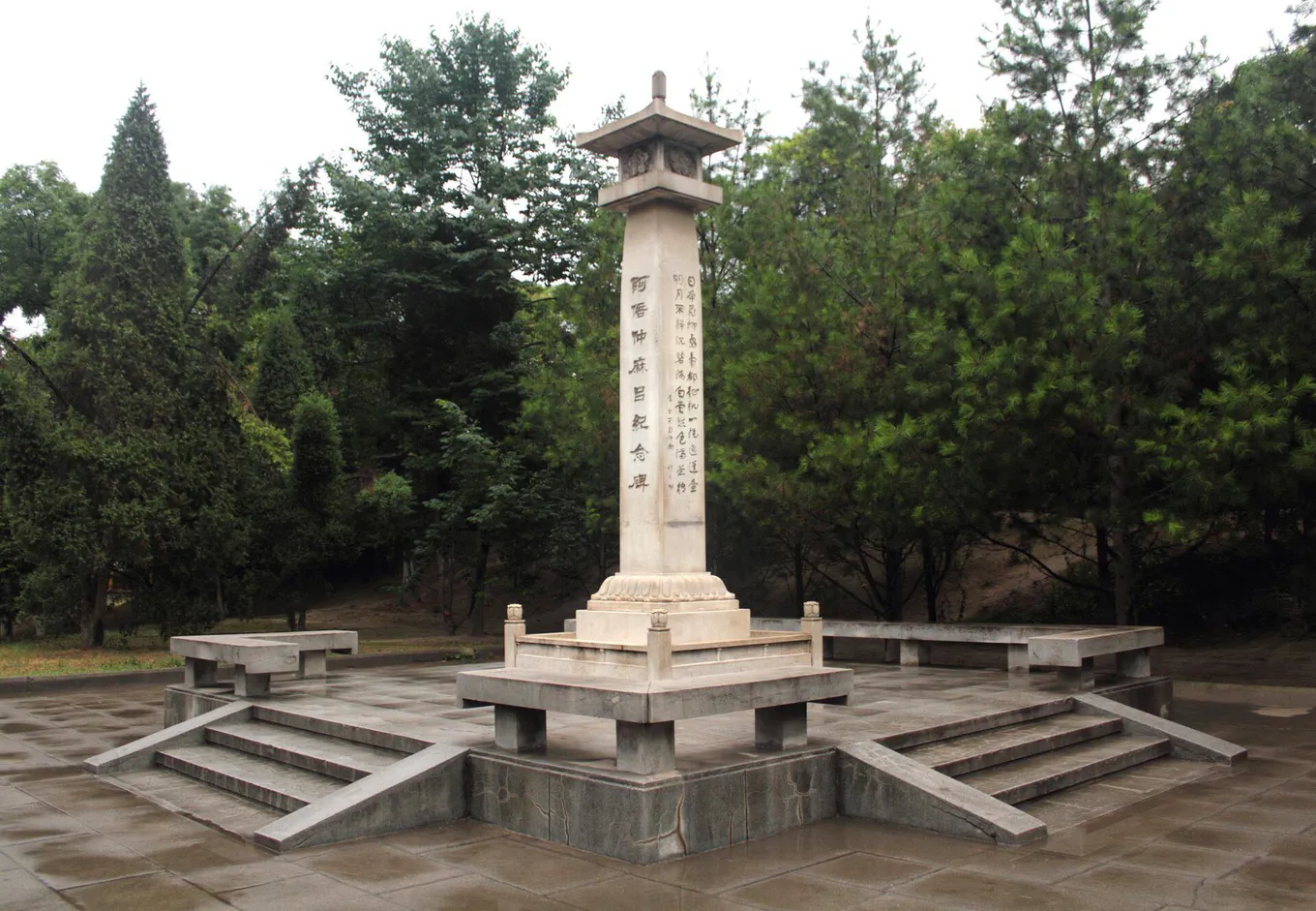
Stand here. The memorial to Abe no Nakamaro in Xingqing Palace Park, inscribed in Chinese verse form with his poem of longing for home.
Li Bai, the Tang poet, mourned his friend Abe no Nakamaro as “a bright moon” that “sunk in the blue ocean”. Abe had come from Japan with an envoy mission, passed China’s civil-service examination, and served the Tang court for 35 years before sailing for home. His ship was caught in a storm and drifted south to Annam, in today’s Vietnam, and Li Bai heard he had drowned. But Abe was alive, and came back to Chang’an. He died there in 770, still planning the voyage home.
3 Yang Guifei’s pool at Huaqing Palace
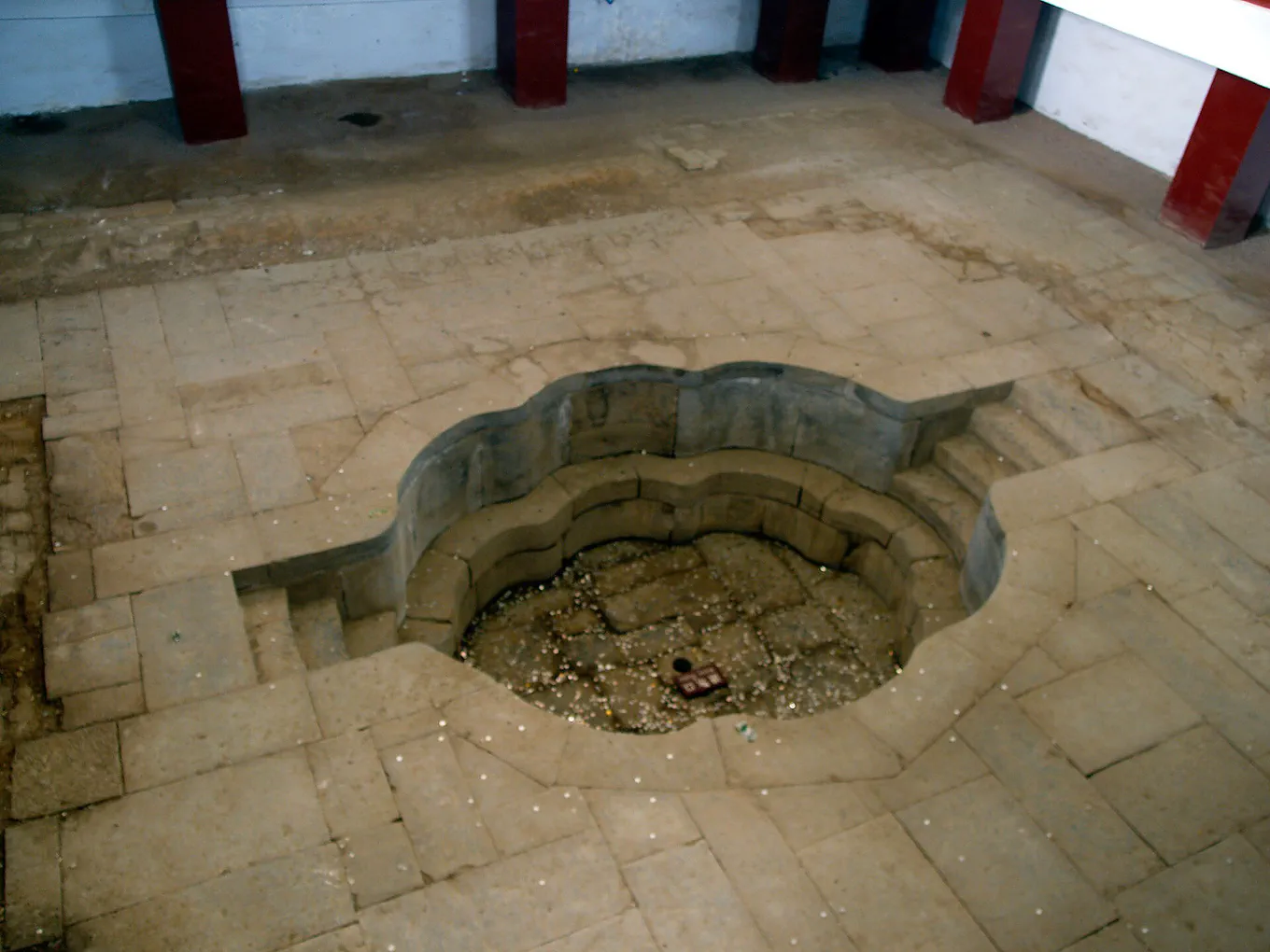
Stand here. The Haitang Pool at Huaqing Palace, at the foot of Mount Li east of Xi’an. Shaped like a crabapple flower, it was Yang Guifei’s bath.
Huaqing Palace was the setting for Emperor Xuanzong’s love for Yang Guifei, immortalised in Bai Juyi’s poem Song of Everlasting Regret. Yang had first married the emperor’s son. Xuanzong had her made a Taoist nun, gave his son a new wife, and took her as his consort. Then rebels marched on the capital, and the court fled. At Mawei, in July 756, the emperor’s guards mutinied and demanded her death. He allowed her a forced suicide in a Buddhist shrine. She was buried without a coffin.
4 Frits Holm’s bid for Xi’an’s Nestorian Stele
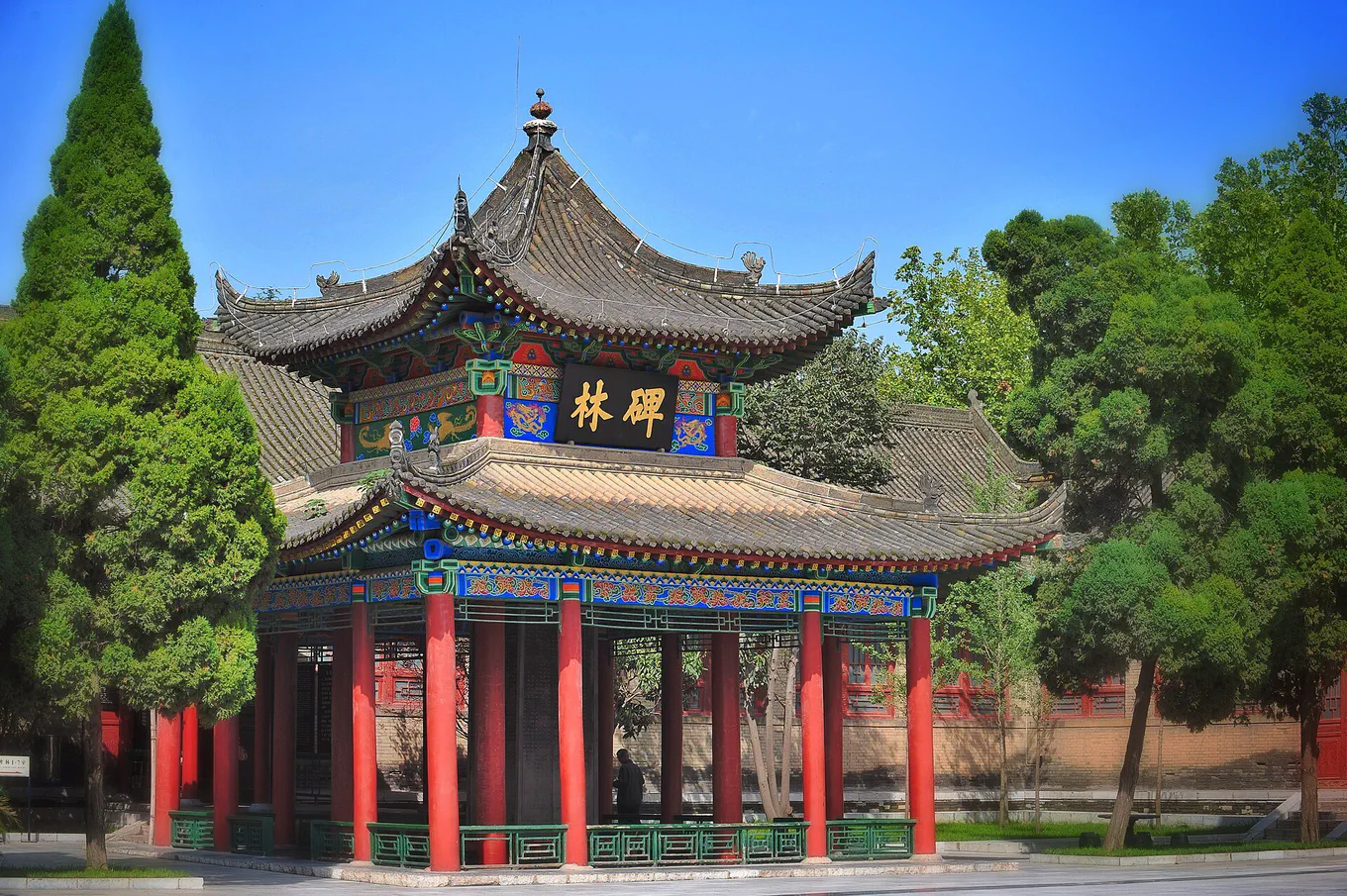
Stand here. The Beilin Museum, or Forest of Steles, in Beilin District. The original Nestorian Stele is still there, among nearly 3,000 inscribed stones.
New York’s Metropolitan Museum of Art was once offered a copy of this stone. The original, the Nestorian Stele, is a Tang stone recording early Christianity in China. In 1907, a Danish explorer, Frits Holm, came to Xi’an to take it to Europe. But the local authorities stopped him and moved the stele into the Forest of Steles. So Holm had an exact copy made and shipped it to New York. The Met’s director was less than enthusiastic about “so large a stone … of no artistic value”.
5 Chiang Kai-shek’s kidnapping at Huaqing Pool
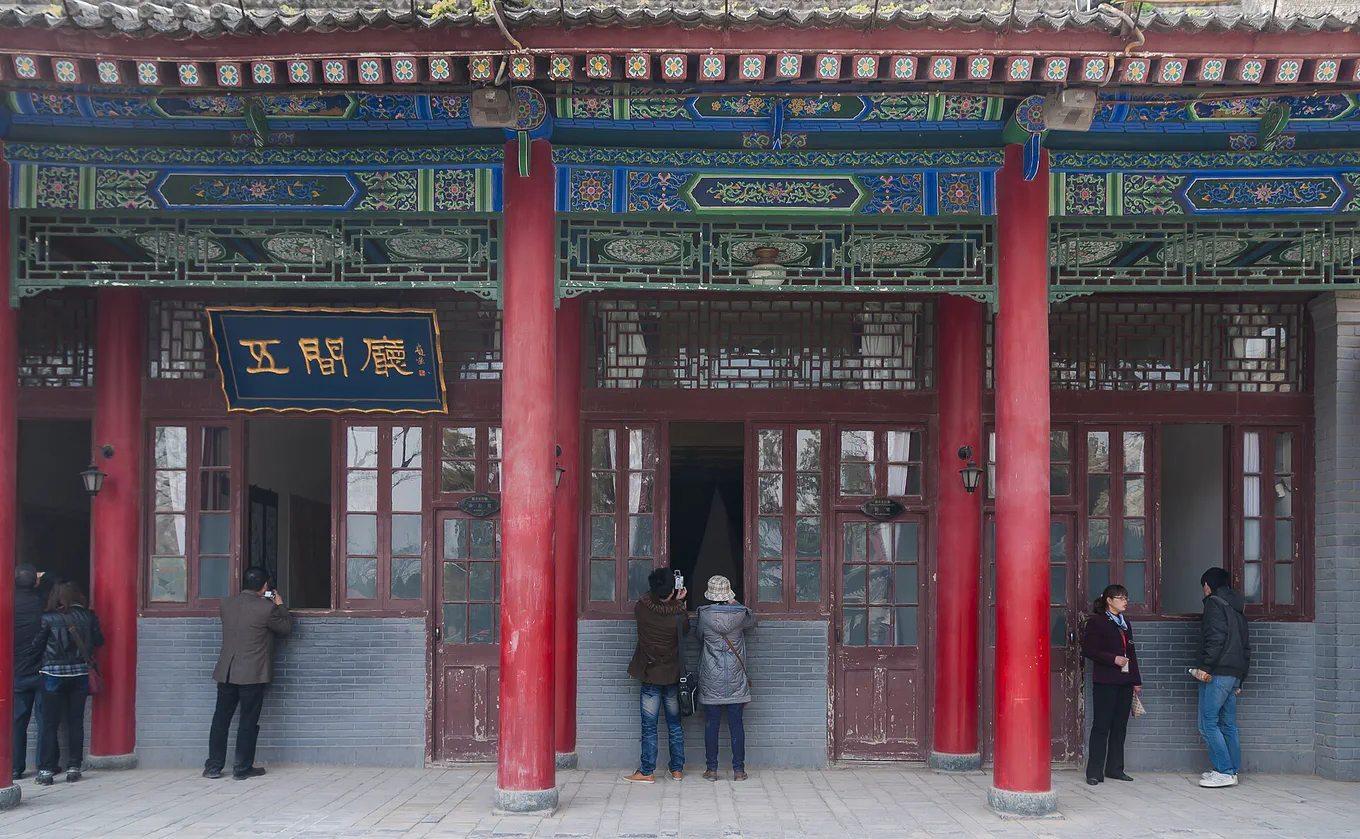
Stand here. A building at Huaqing Pool still shows bullet holes.
In December 1936, Chiang Kai-shek was staying here when two former warlords, Zhang Xueliang and Yang Hucheng, had him seized. They wanted him to stop fighting the Communists and unite with them against Japan. Chiang fled up the snowy mountain without his false teeth or a shoe, and was found hours later in a crevice, shivering. He agreed to their united front. Yang was later executed in Chongqing. Zhang lived to 100, dying in Honolulu, and spent more than fifty of those years under house arrest.
Journey to the West(attributed to Wu Cheng’en, printed 1592). A novel. The monk Tang Sanzang sets out from Chang’an, the Tang capital that is now Xi’an.
Ruined City(Jia Pingwa, 1993). A novel, translated by Howard Goldblatt, set in Xijing, a thinly disguised version of Jia’s hometown, Xi’an.
White Deer Plain(Chen Zhongshi, 1993). A novel. Two rural clans on the Bailu, or White Deer, Plain near Xi’an, in Shaanxi province.
Films to watch before you visit Xi’an
Legend of the Demon Cat(Chen Kaige, 2017). A film. A reimagining of the romance between Emperor Xuanzong and Yang Guifei, with the Japanese monk Kūkai in Tang Chang’an.
The Longest Day in Chang’an(Cao Dun, 2019). A TV series, from Ma Boyong’s novel, set in Chang’an, the Tang capital that is now Xi’an.
Kung Fu Yoga(Stanley Tong, 2017). A film. An action adventure comedy starring Jackie Chan, in which an archaeology professor at the Terracotta Warriors Museum in Xi’an hunts a lost treasure. Partly filmed in Xi’an.
Questions
How far is the Terracotta Army from Xi’an?
About 40 kilometres east of the city, near the tomb mound of Qin Shi Huang, China’s first emperor. Farmers digging a well found it in 1974, and a museum built over the site opened in 1979. Its three pits hold more than 8,000 soldiers.
Where did the Xi’an Incident happen?
At Huaqing Pool in Lintong, at the foot of Mount Li east of Xi’an, where Chiang Kai-shek was staying. The crisis ran from 12 to 26 December 1936 and led to the Second United Front against Japan. A building there still shows bullet holes.
How old is Xi’an’s city wall?
Building began in 1370, under the Hongwu Emperor of the Ming dynasty, and it is one of the oldest, largest, and best preserved city walls in China. It runs for 13.74 kilometres and stands 12 metres high, with a walkway along the top that takes about four hours to walk.