Yerevan, on the Hrazdan River, has been the capital of Armenia since 1918 and is its largest city. It dates itself to 782 BC, when a king of Urartu built the fortress of Erebuni, whose name became Yerevan. Its stories here are that king’s boast, two women and a giant manuscript, the house a film director never lived in, an unfinished stairway, and a heavy metal band’s first show in Armenia.
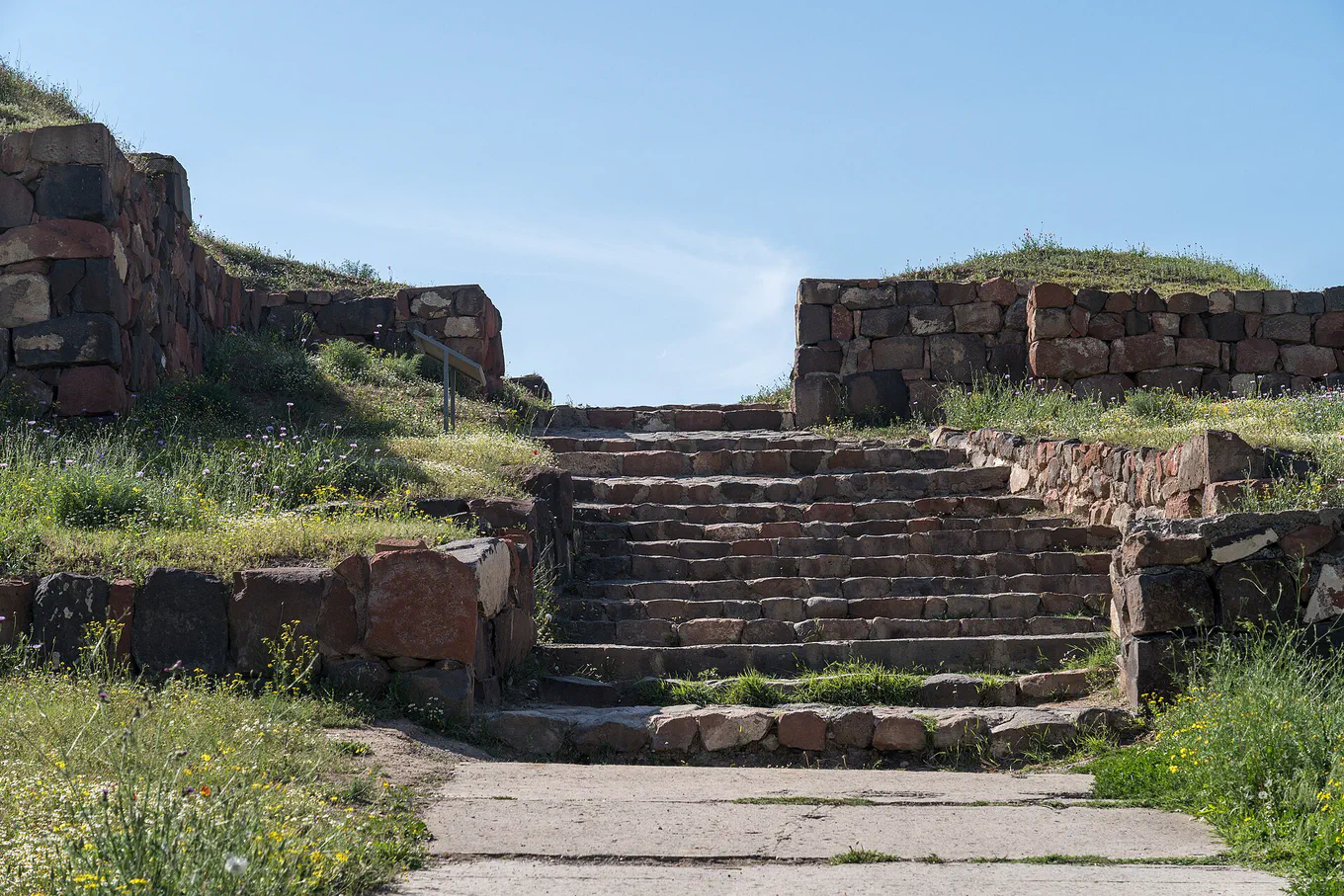
In 782 BC, Argishti I, king of Urartu, built a fortress on a hill called Arin Berd and announced it in an inscription: “By the greatness of the God Khaldi, Argishti, son of Menua, built this mighty stronghold and proclaimed it Erebuni.” In another inscription, he boasted of bringing 6,600 prisoners of war to people his new city. Twenty-seven centuries later, in 1950, archaeologists found an inscription at Arin Berd. Erebuni had become Yerevan, which dates its birth to the fortress. In 1968, the city celebrated its 2,750th birthday.
2 Two women and the Homilies of Mush in the Matenadaran
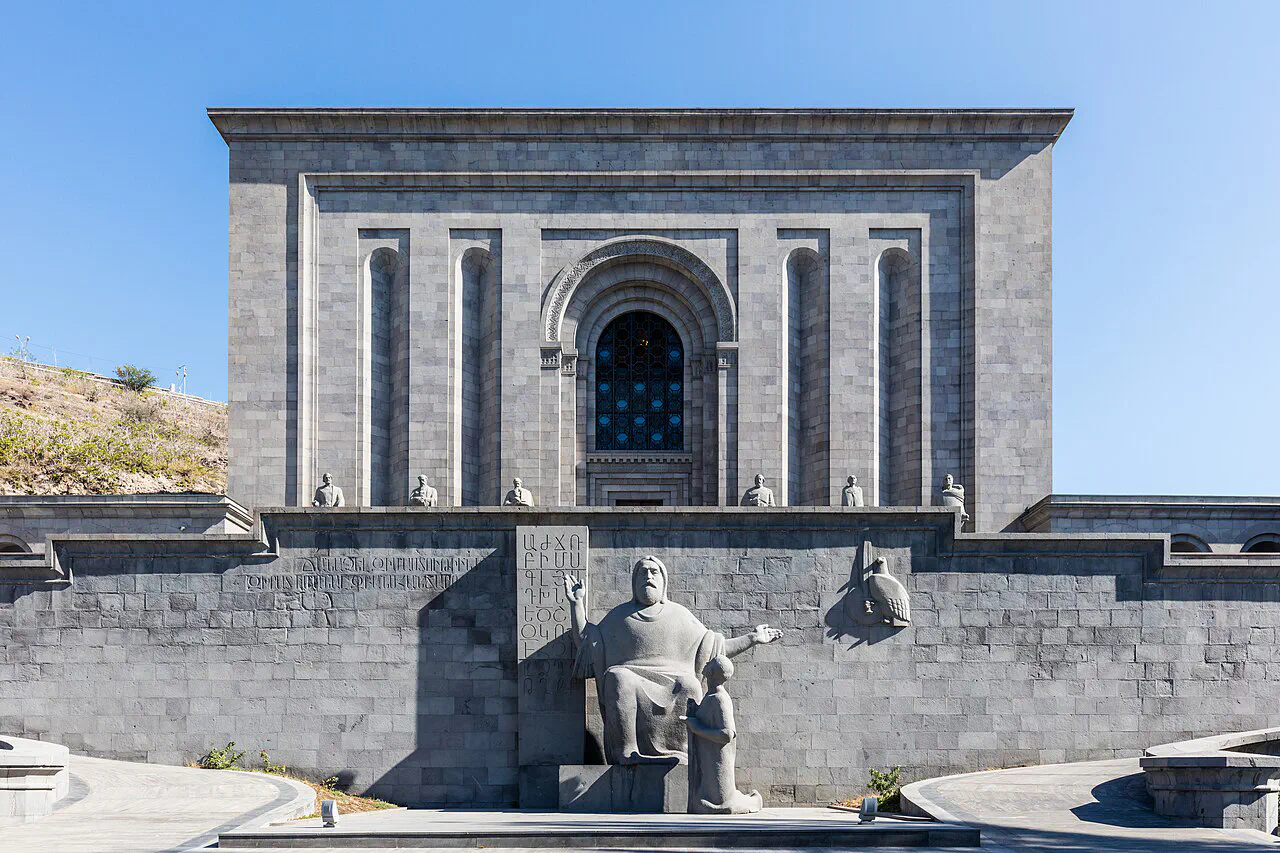
Stand here. The Matenadaran, Armenia’s manuscript library, on Mashtots Avenue. A monument to the two women stands on the greenway near Teryan and Moskovyan streets.
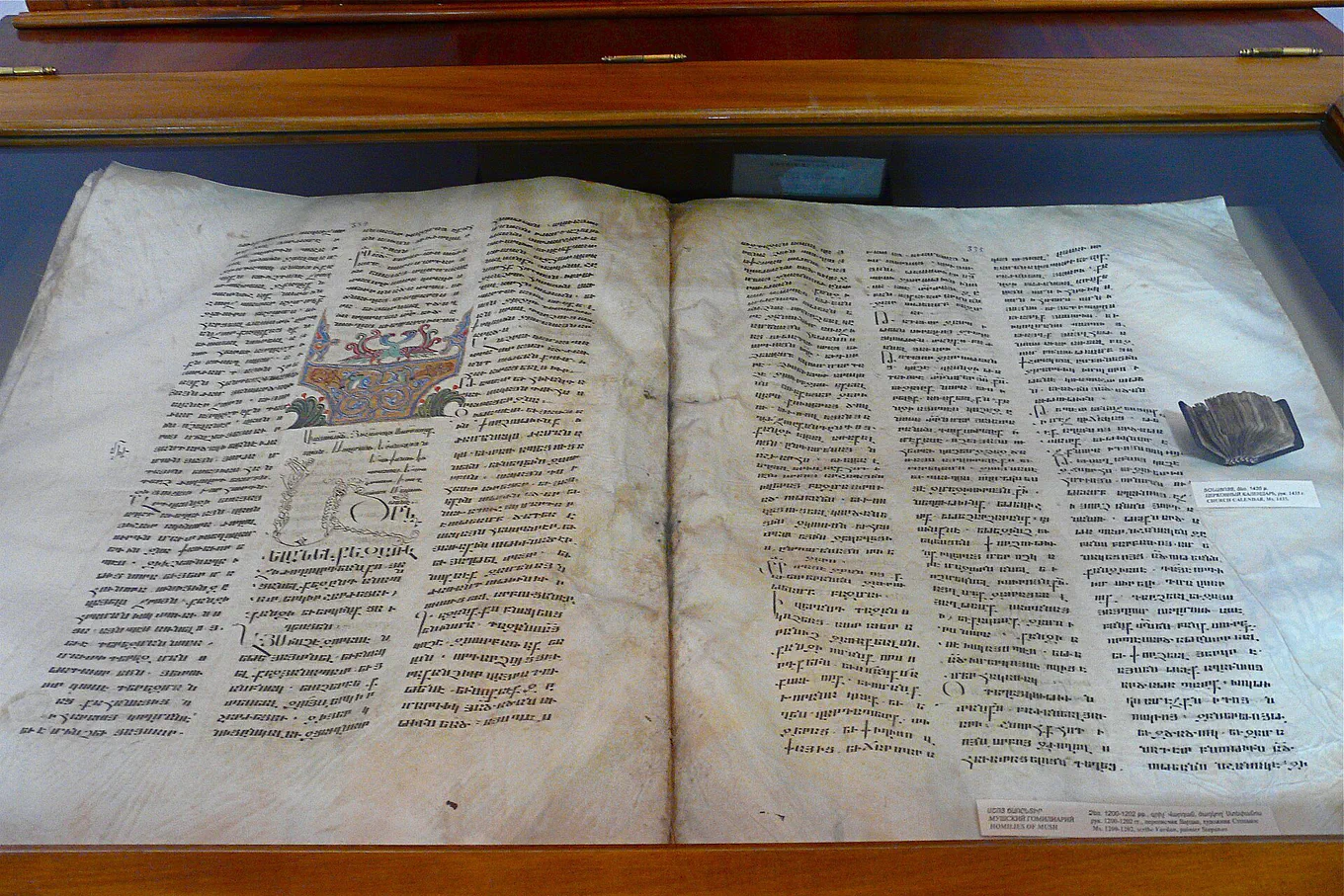
Two women from Mush found a huge manuscript in a ruined monastery in 1915 and set out to save it. It weighed about 27.5 kilograms, and they split it in two. One woman reached Holy Etchmiadzin, where, it is said, the priest forgot to ask her name. The other got as far as Erzurum, buried her half at a monastery, and died. A Russian soldier later found it. Both halves ended up in the Matenadaran, where the book is the largest in the collection. Neither woman’s name is known.
3 Sergei Parajanov’s Yerevan house that he never lived in
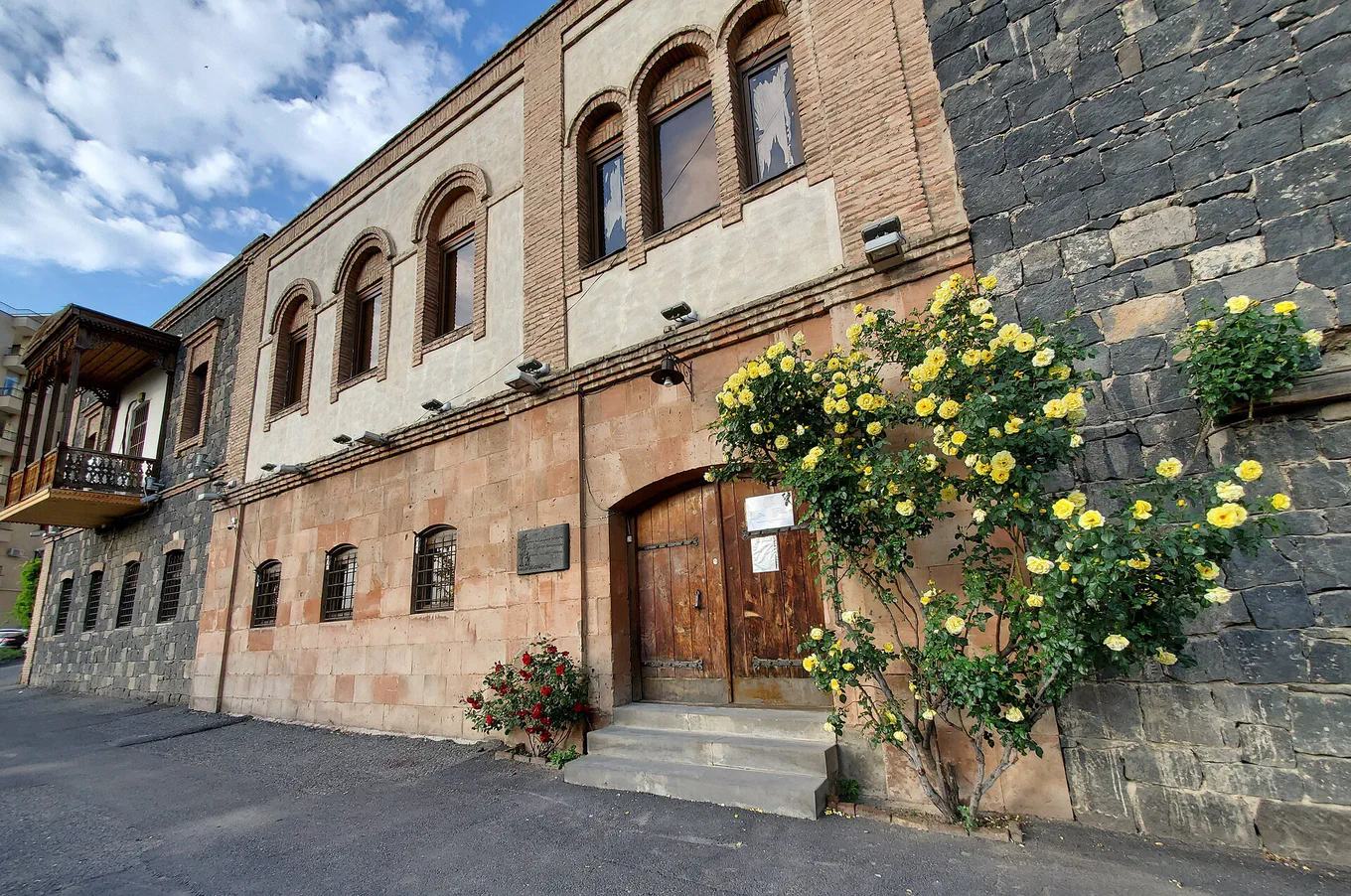
Stand here. The Sergei Parajanov Museum, a two-storey Caucasian-style house in the Dzoragyugh ethnographic centre. It shows art he made in prison.
Sergei Parajanov, the Soviet film director, was sentenced to five years in a hard labour camp, and he made art in prison. In 1988, he moved to Yerevan and chose the site for a museum and a home. But that year’s earthquake held up the building. Parajanov died of lung cancer in Yerevan in July 1990, and the museum opened the next year. He never got to live in his new home.
4 Gerard Cafesjian and Yerevan’s unfinished Cascade
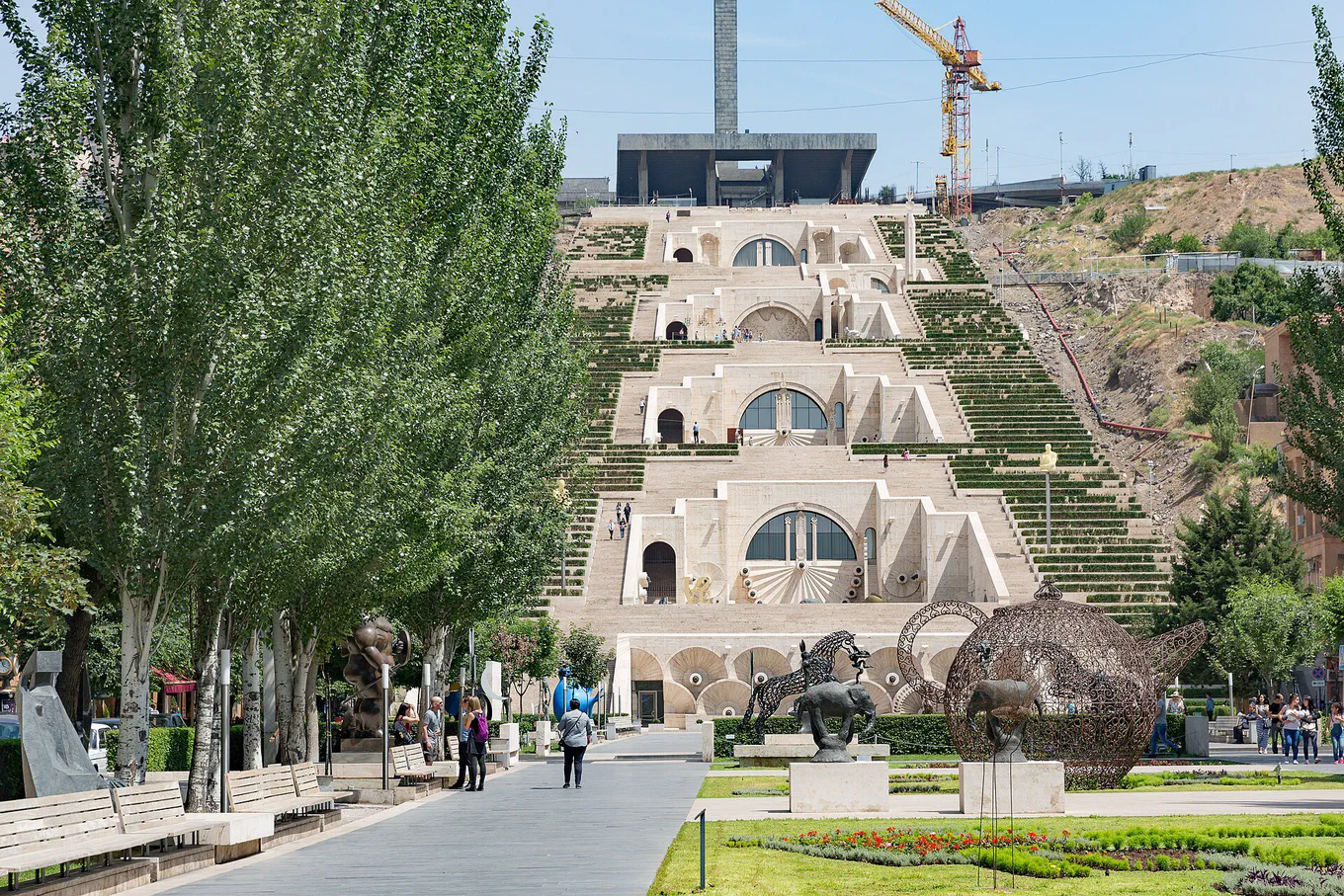
Stand here. The foot of the Cascade, by the statue of Alexander Tamanian. Its stairway of white stone climbs towards the upper city, with escalators inside.
The Cascade stairway was the idea of Alexander Tamanian, the architect who drew up the city’s first plan. Building stopped after the 1988 earthquake. In 2002, the city handed the unfinished site to the foundation of Gerard Cafesjian, a philanthropist born in Brooklyn, who gave $128 million to rebuild it. His arts centre opened inside the Cascade in 2009, and he died four years later. In 2022, the city called the ground above the Cascade neglected. Nobody had decided what to do with it.
5 System of a Down’s first show in Armenia, Republic Square
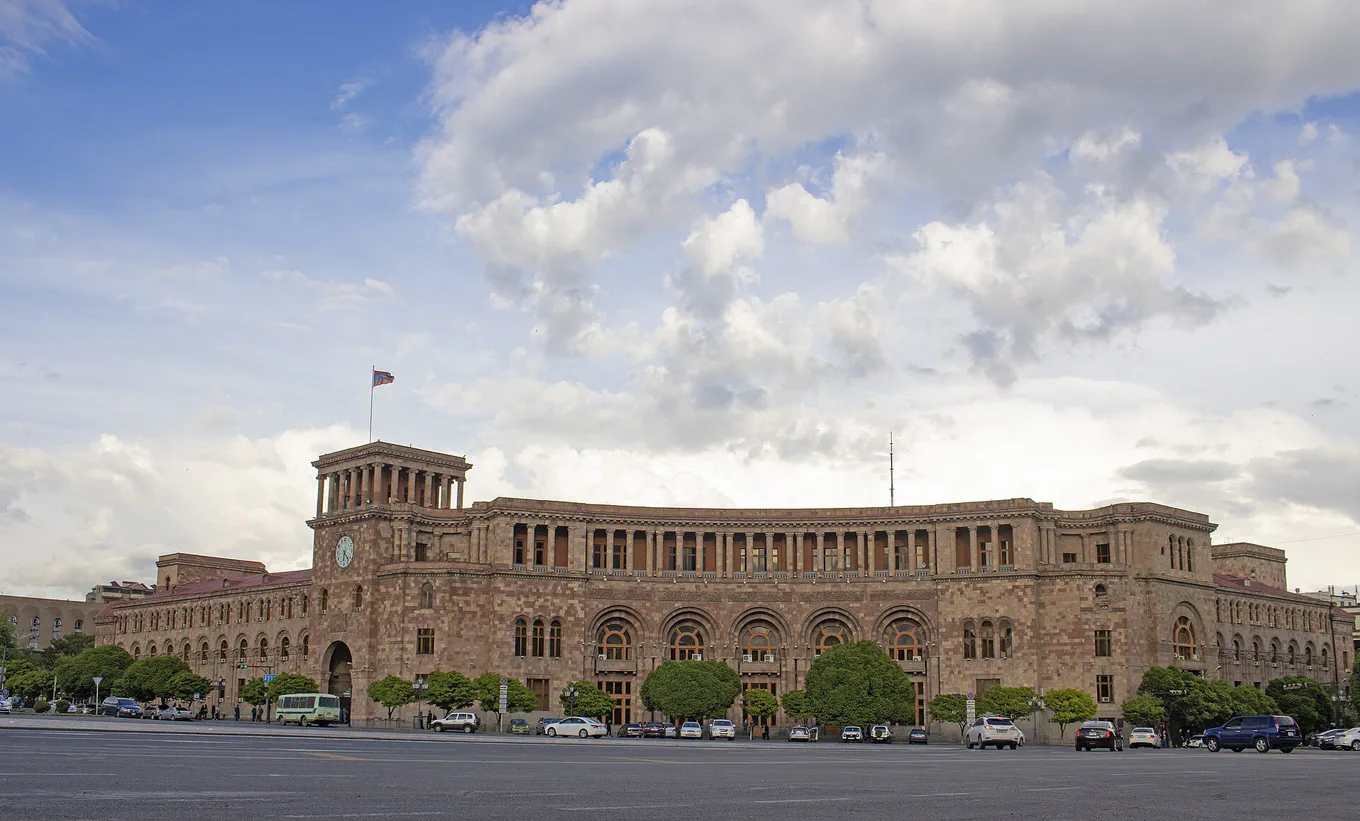
Stand here. Republic Square, in the centre of Yerevan, designed by the architect Alexander Tamanian in the years 1926 to 1941.
System of a Down, the heavy metal band formed in Glendale, California, in 1994, are all of Armenian descent, and two of them campaigned for the United States to recognise the Armenian genocide. Yet in more than twenty years they had never played in Armenia. In 2015, their tour for the genocide’s 100th anniversary ended in Yerevan, on 23 April, with their first show in their ethnic homeland. It was free. In front of a massive crowd in Republic Square, they played 37 songs.
Pack nothing. Leave Friday.
Every Friday, I write a free letter, Journey, that takes us on a trip through places, stories, and ideas.
An Armenian Sketchbook(Vasily Grossman, 1965). A memoir. Grossman arrives in Yerevan with nobody to meet him and sets about building “my own Yerevan”. Published eight months after his death.
Fleeting City(Hovhannes Tekgyozyan). A novel. Two young men, Gagik and Grigor, narrate a trip out of the capital, Yerevan.
A Book, Untitled(Shushan Avagyan, 2006). An experimental novel. It opens with a meeting in a café on Abovyan Street and imagines an encounter between two women in Yerevan in 1926.
Films to watch before you visit Yerevan
Amerikatsi(Michael A. Goorjian, 2022). A film. An Armenian-American returns to Armenia in 1948 and is shipped off to a prison in Yerevan.
The Men(Edmond Keosayan, 1972). A film, Tghamardik in Armenian. Its heroes are Yerevan taxi drivers, and a statue of them stands in Saryan Park.
I Am Not Alone(Garin Hovannisian, 2019). A documentary. In March 2018, Nikol Pashinyan began a protest march; by the time he reached Yerevan, thousands had joined, and its streets became the battleground for a non-violent revolution.
Questions
Can you see Mount Ararat from Yerevan, and is it in Armenia?
Yes, and no. Mount Ararat dominates Yerevan’s skyline, but it stands in the Eastern Anatolia region of Turkey. Its highest peak, Greater Ararat, rises to 5,137 metres. Even so, the mountain has been on Armenia’s coat of arms since 1918.
How many steps does the Yerevan Cascade have?
Between 555 and 572, depending on which side you count. The whole complex is about 302 metres long, with escalators inside, and the Cafesjian Center for the Arts opened in the Cascade in 2009.
How old is Yerevan?
Yerevan dates itself to 782 BC, when Argishti I, king of Urartu, founded the fortress of Erebuni on Arin Berd hill. The name Yerevan comes from Erebuni, and in 1968 the city held a festival for its 2,750th birthday.