James Clavell’s Gai-Jin opens with a British merchant cut down on the Tōkaidō road outside Yokohama in 1862. The real victim was Charles Richardson, killed at Namamugi for riding alongside a Satsuma procession without dismounting. Clavell didn’t need to invent much here to get his opening… although honestly, I much preferred Clavell’s earlier books.
— Nick
Yokohama, on Tokyo Bay south of Tokyo, is the capital of Kanagawa Prefecture and Japan’s second-largest city. It was a small fishing village before its port officially opened on 2 June 1859. Its stories here are a commodore’s treaty, a merchant on the wrong road, the engineer of Japan’s first railway, Charlie Chaplin’s ship home, and a Studio Ghibli girl’s signal flags.
Commodore Matthew Perry had orders from President Millard Fillmore to open Japan’s ports to American trade, with gunboat diplomacy if need be. In 1854, he came back to Japan with eight warships and made it plain he would not leave without a treaty. On 31 March, at what was then the fishing village of Yokohama, he signed one. Japan had given him two ports, Shimoda and Hakodate, safety for castaways, and a consul. Only the commercial agreement was missing, and Perry agreed to wait for it.
2 Charles Richardson and the Namamugi Incident on the Tōkaidō
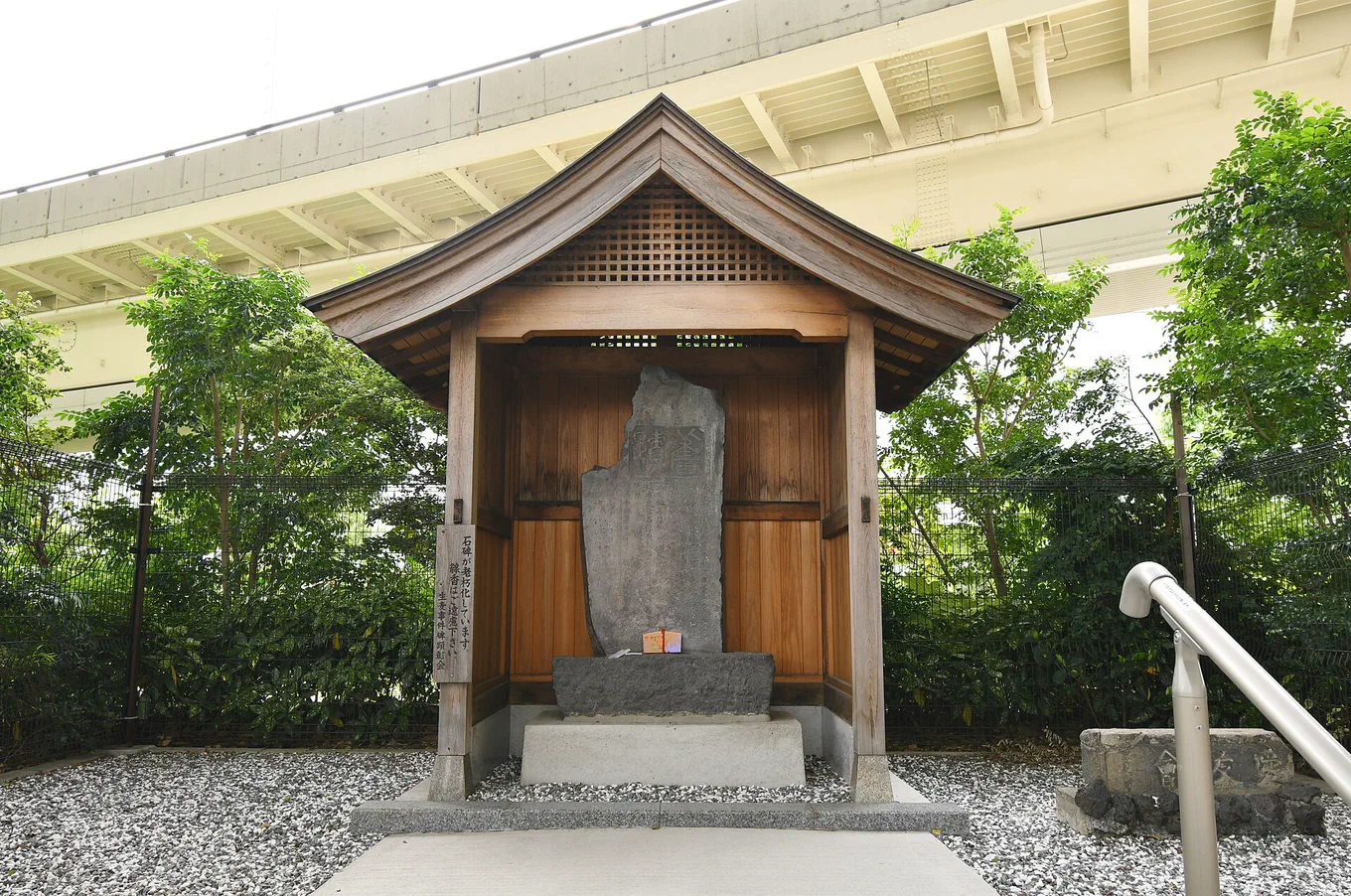
Stand here. The Namamugi Incident monument, a weathered stone close to the Kirin Brewery entrance, a walk from Namamugi station in Yokohama’s Tsurumi Ward.
The Namamugi Incident memorial stone in its wooden shelter at Namamugi, in Yokohama’s Tsurumi Ward.Saigen Jiro / CC0.
On 14 September 1862, Charles Richardson, a newly retired British merchant from Shanghai, rode out with three friends to a temple. Officials had warned them off the Tōkaidō road that day. At Namamugi, they met the procession of Shimazu Hisamitsu, regent of Satsuma, and rode along its side without dismounting. A Satsuma bodyguard slashed and mortally wounded Richardson, and two of his friends were badly wounded. Britain’s demand for compensation ended in the bombardment of Kagoshima. Out of that war came a friendship between Satsuma and Britain.
3 Edmund Morel, the engineer who never saw his railway open
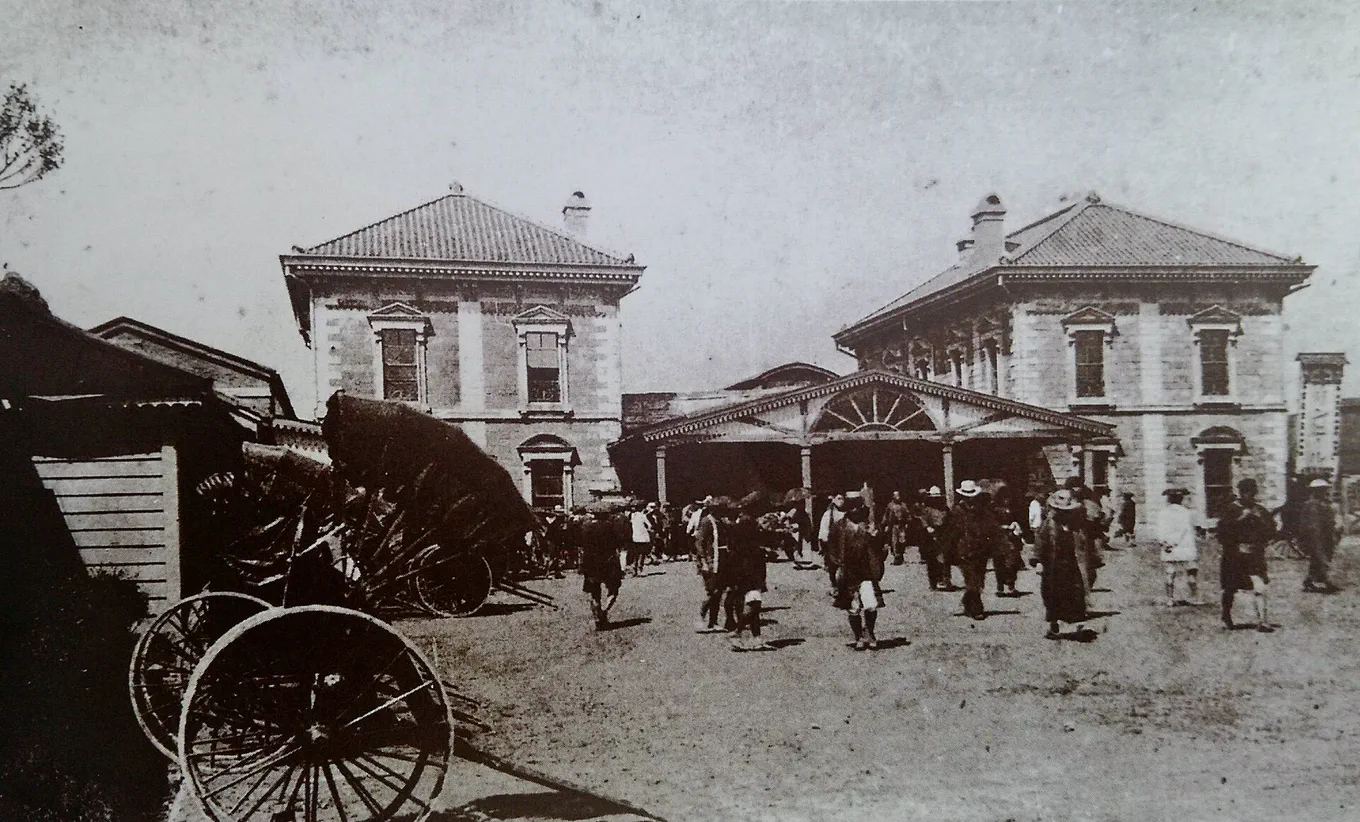
Stand here. Sakuragichō Station, which opened in 1872 as the first Yokohama Station. A bronze bust of Morel stands outside.
The original Yokohama Station, terminus of Japan’s first railway, on the site of Sakuragichō Station.Unknown / Public domain.
Edmund Morel already had tuberculosis when he came to Japan, invited by the British envoy, Sir Harry Parkes. As the government’s first foreign Engineer-in-Chief, Morel designed the country’s first railway, from Shimbashi in Tokyo to Yokohama, and on days when bad weather stopped work he took his Japanese engineers and surveyors into his house for lectures. His illness worsened, and he resigned, meaning to go to India. He died in Yokohama on 5 November 1871, aged thirty, shortly before the railway’s opening ceremonies. His wife, Harriett, died the next day.
4 Charlie Chaplin, the Hikawa Maru, and a plot in 1932
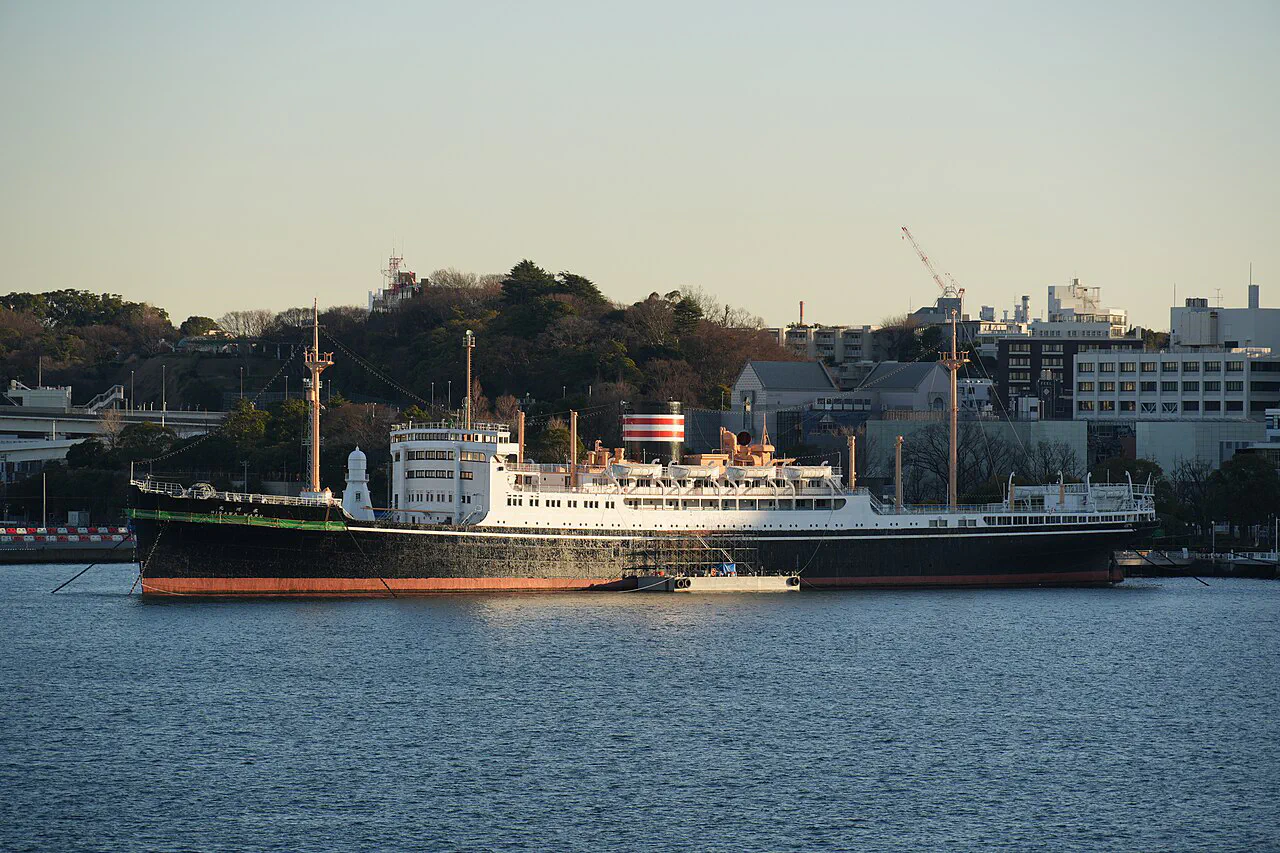
Stand here. The Hikawa Maru, the liner that carried Chaplin away from Japan, has been a museum ship at Yamashita Park since 1961.
The Hikawa Maru carried Charlie Chaplin from Yokohama to Seattle in June 1932, on his way home, weeks after a plot that was meant to kill him. He had arrived in Japan on a whim, and Prime Minister Inukai Tsuyoshi planned a reception for him. The young naval officers plotting against Inukai meant to kill Chaplin there too. The day after Chaplin arrived, they shot the prime minister at his residence. Chaplin was at a sumo match with Inukai’s son. It probably saved both their lives.
5 From Up on Poppy Hill: Umi’s flags over Yokohama harbour
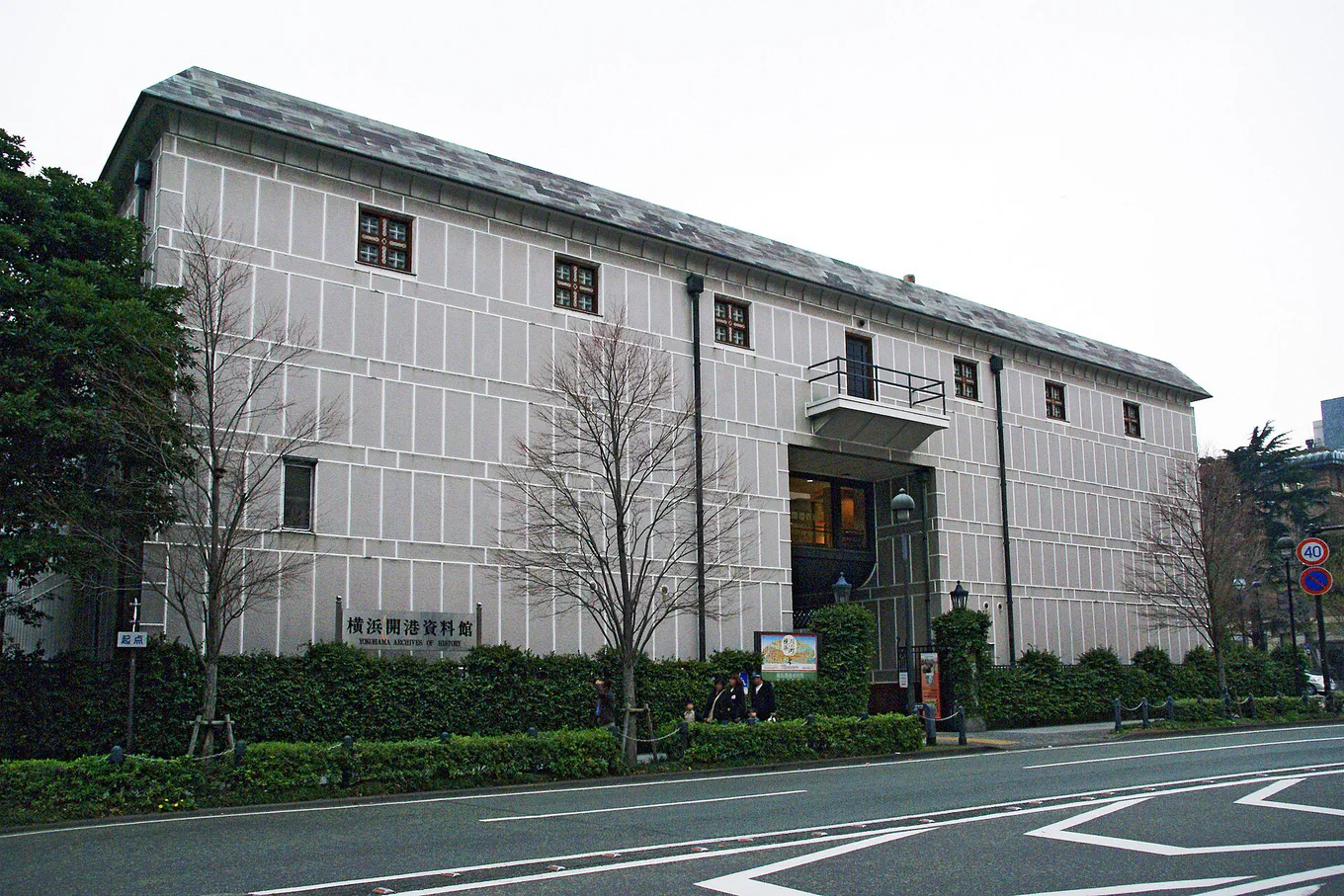
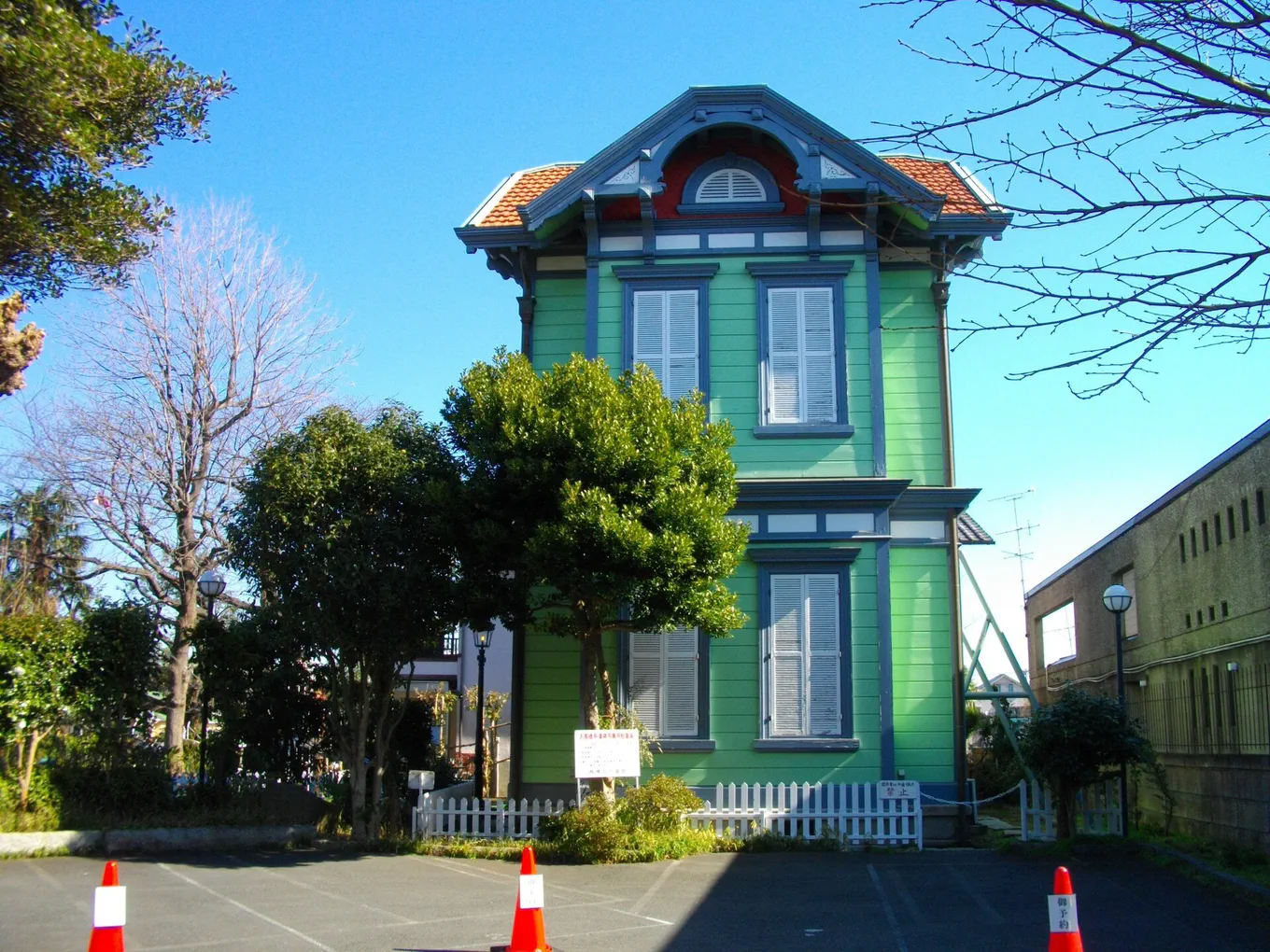
Stand here. Yamate, the Yokohama neighbourhood where the film is set, and home to the Yamate Archives Museum.
The Yamate Archives Museum, a Western-style wooden house in Yamate, the hillside district above Yokohama’s port.Abasaa / Public domain.
Studio Ghibli’s From Up on Poppy Hill, co-written by Hayao Miyazaki, is set in 1963 in a boarding house above the Port of Yokohama. Each morning, Umi Matsuzaki, a teenager, raises signal flags reading “I pray for safe voyages”. Her father was killed when his ship was sunk by mines in the Korean War. Umi and her fellow students clean up their clubhouse, the Latin Quarter, which is threatened with demolition for the 1964 Olympics. By the end, she raises the flags again each morning, but not just for her father.
Pack nothing. Leave Friday.
Every Friday, I write a free letter, Journey, that takes us on a trip through places, stories, and ideas.
The Sailor Who Fell from Grace with the Sea(Yukio Mishima, 1963). A novel. Noboru Kuroda, an adolescent boy living in Yokohama, is at the centre of a plan to lure a man named Ryuji to the dry dock in Sugita.
Yokohama Burning(Joshua Hammer, 2006). A history of the earthquake and fire that destroyed Yokohama and parts of Tokyo shortly before noon on 1 September 1923.
Bungo Stray Dogs(Kafka Asagiri and Sango Harukawa, 2012). A manga series set in Yokohama, a city teeming with individuals with supernatural abilities, which the Armed Detective Agency tries to protect from groups such as the Port Mafia.
Films to watch before you visit Yokohama
High and Low(Akira Kurosawa, 1963). A film, shot partly on location in Yokohama, where a house set was built overlooking the city. The slum where the kidnapper buys heroin was modelled on Koganechō.
From Up on Poppy Hill(Gorō Miyazaki, Studio Ghibli, 2011). An animated film from Studio Ghibli, set in 1963 in a boarding house in Yamate, above the Port of Yokohama.
Yokohama Mary(Takayuki Nakamura, 2006). A film searching for Yokohama Mary, a post-war prostitute who became a city icon in geisha-like face paint, until she disappeared in 1995.
Questions
Where is the Hikawa Maru today?
At Yamashita Park, in Naka-ku, where the liner, launched in 1929, has been permanently berthed since 1961. She was renamed NYK Hikawamaru and reopened to the public in 2008, and in 2016 Japan designated her an Important Cultural Property.
Where are Charles Richardson and Edmund Morel buried?
Richardson is in the Yokohama Foreign General Cemetery, at 96 Yamate-cho in Naka Ward, and Morel in the foreigners’ cemetery in Naka-ku. Richardson lies between the later graves of Marshall and Clark, two of the friends who rode with him. Morel’s grave is a national railway memorial. The Yokohama Foreign General Cemetery began with sailors of Commodore Perry’s squadron, and more than 5,000 people from about 40 countries are buried there.
Is Yokohama part of Tokyo?
No. Yokohama is a separate city, the capital of Kanagawa Prefecture, on Tokyo Bay south of Tokyo, and the second-largest city in Japan. It is a major hub of the Greater Tokyo Area, and Japan’s first railway, built in 1872, linked it to Shinagawa and Shimbashi in Tokyo.