At sixteen, Einstein failed the general part of the entrance exam at what’s now ETH Zurich. In 1912, the same school made him Professor of Theoretical Physics. Given my own academic record, I find this cheering.
— Nick
Zurich is the largest city in Switzerland, at the north-western tip of Lake Zurich, where the Limmat flows out. The Romans built a fort on the Lindenhof hill in 15 BC, and in 1351 the city joined the Swiss Confederacy. Its stories are two saints who carried their heads, a printer’s sausage supper, Einstein’s failed exam, the birth of Dada, and James Joyce’s last escape.
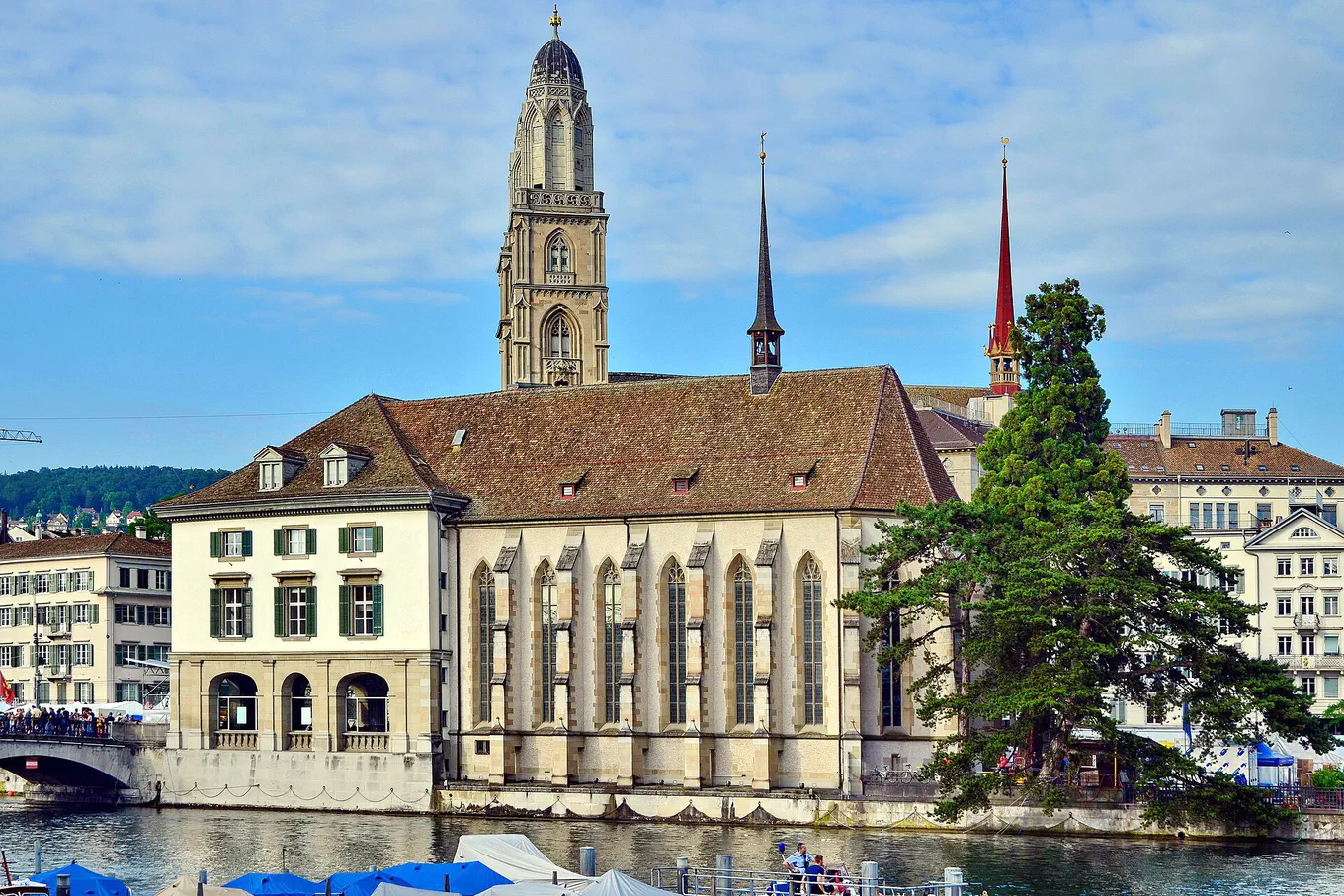
Zurich’s patron saints are a brother and sister, Felix and Regula, said to be soldiers of the Theban Legion. They fled via Glarus to Roman Zurich, and in 286 they were caught and beheaded, medieval tradition says, on this spot by the Limmat. Then, the legend says, they stood up, picked up their own heads, and walked forty paces uphill before lying down. The Grossmünster rose over their graves. The tale came to a monk in a dream, in the eighth century. Zurich still puts them on its seal.
2 Zwingli, a printer’s sausages, and the Zurich Reformation
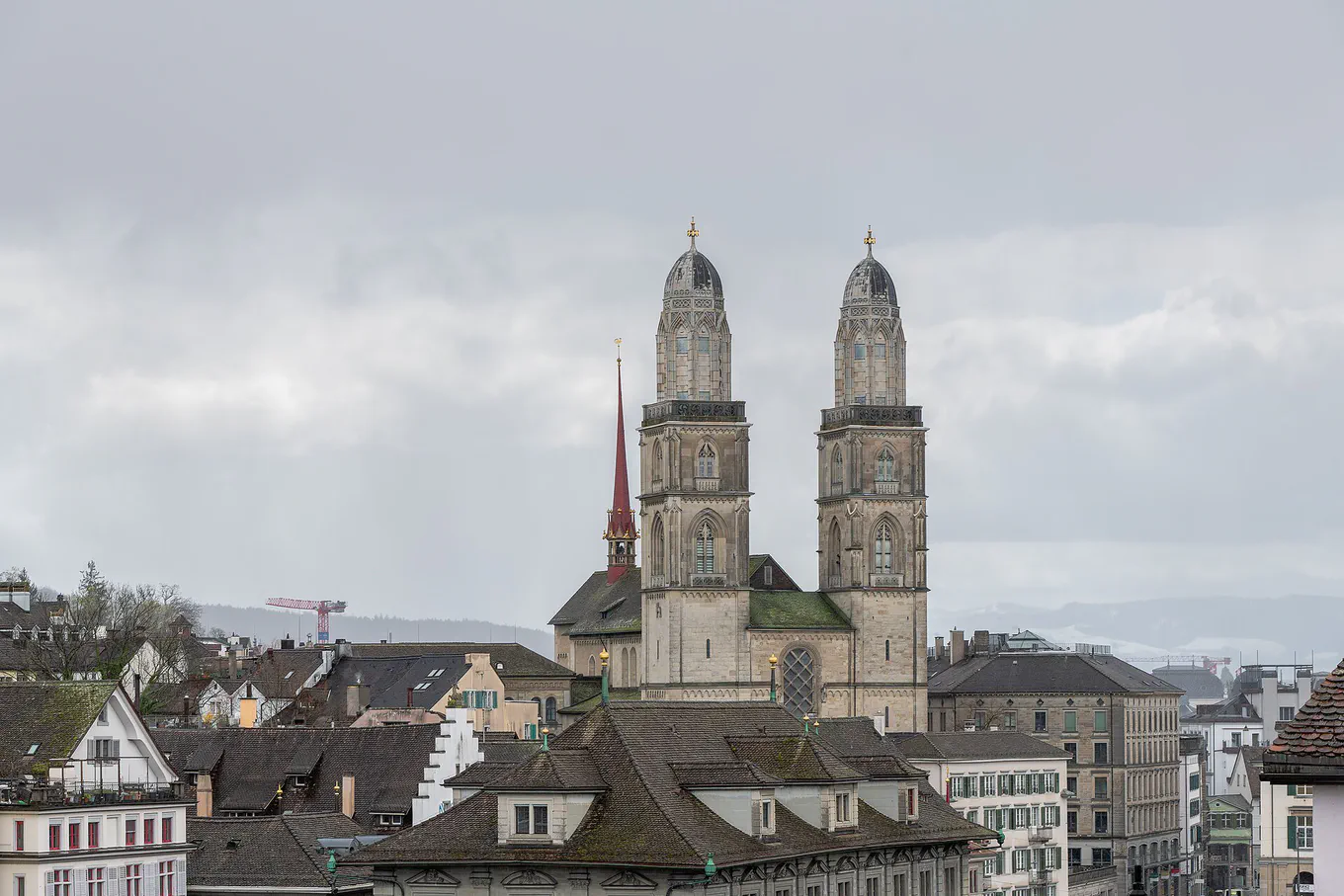
Stand here. The Grossmünster, on Zwingliplatz in the old town. Its cloister holds a permanent Reformation exhibition, and 187 steps climb to a platform 50 metres up.
Luther had his 95 theses, and Zurich had two smoked sausages. On 9 March 1522, in Lent, the printer Christoph Froschauer served them to about a dozen people in his workshop, claiming later that his workers were exhausted from printing St Paul’s Epistles. Meat was banned in Lent, and Froschauer was arrested. Huldrych Zwingli, priest of the Grossmünster, had been at the table without eating, and he preached in the printer’s defence that fasting should be voluntary. Two years later, Froschauer was printing Zwingli’s Bible.
3 Albert Einstein’s failed entrance exam at ETH Zurich
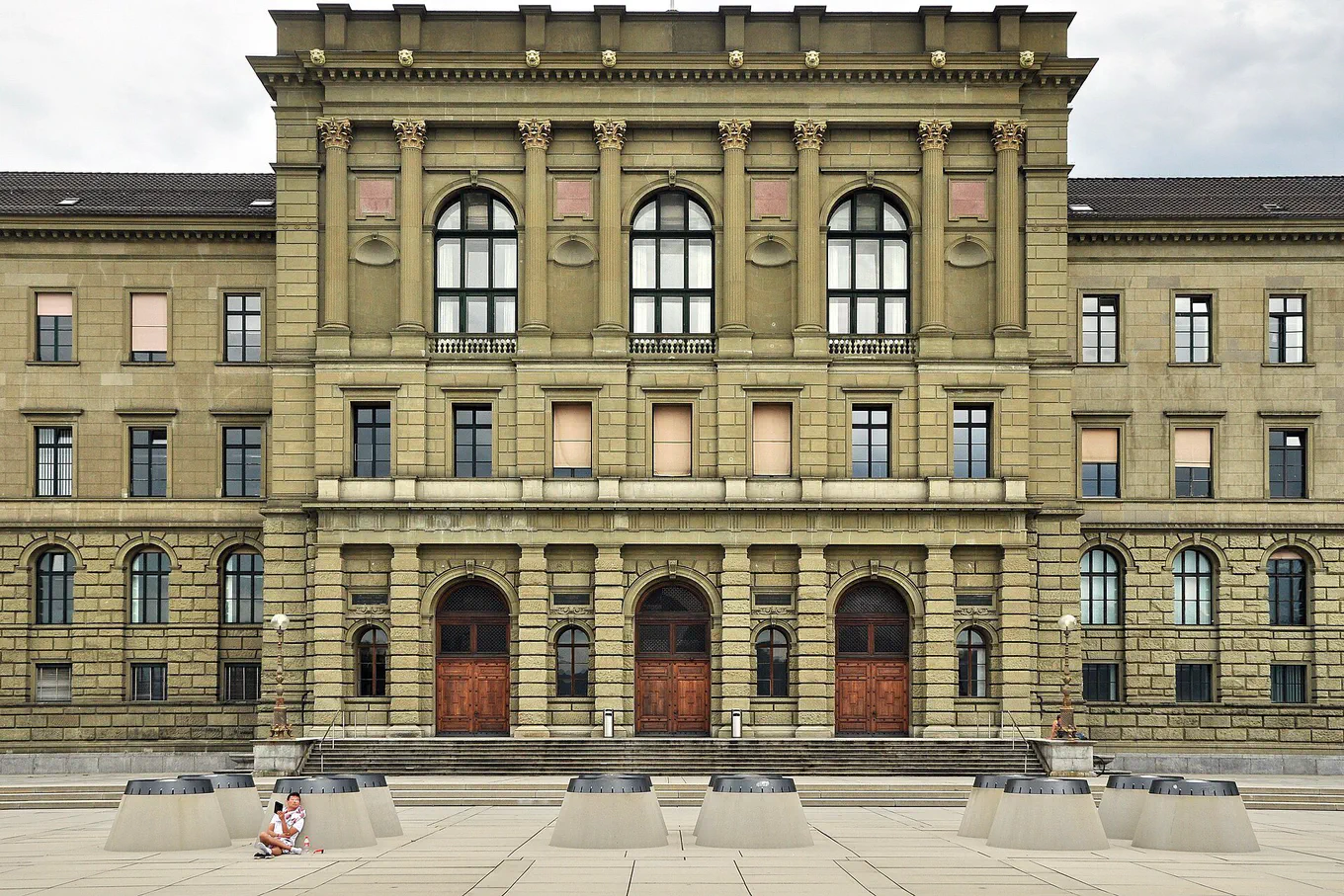
Stand here. ETH Zurich’s main building, Rämistrasse 101, designed by Gottfried Semper. A café on the Polyterrasse bears Einstein’s name, and ETH runs an Einstein tour.
At sixteen, Albert Einstein failed to get into ETH Zurich. In 1895, he sat the entrance exam for what was then the Federal Polytechnic and fell short in the general part, though he shone in physics and maths. He finished school in Aarau and started here a year later. At graduation in 1900, he was the only student not offered an assistant’s post, and he ended up at the patent office in Bern. In 1912, the school that had turned him away made him Professor of Theoretical Physics.
4 Hugo Ball, Emmy Hennings, and Dada at the Cabaret Voltaire
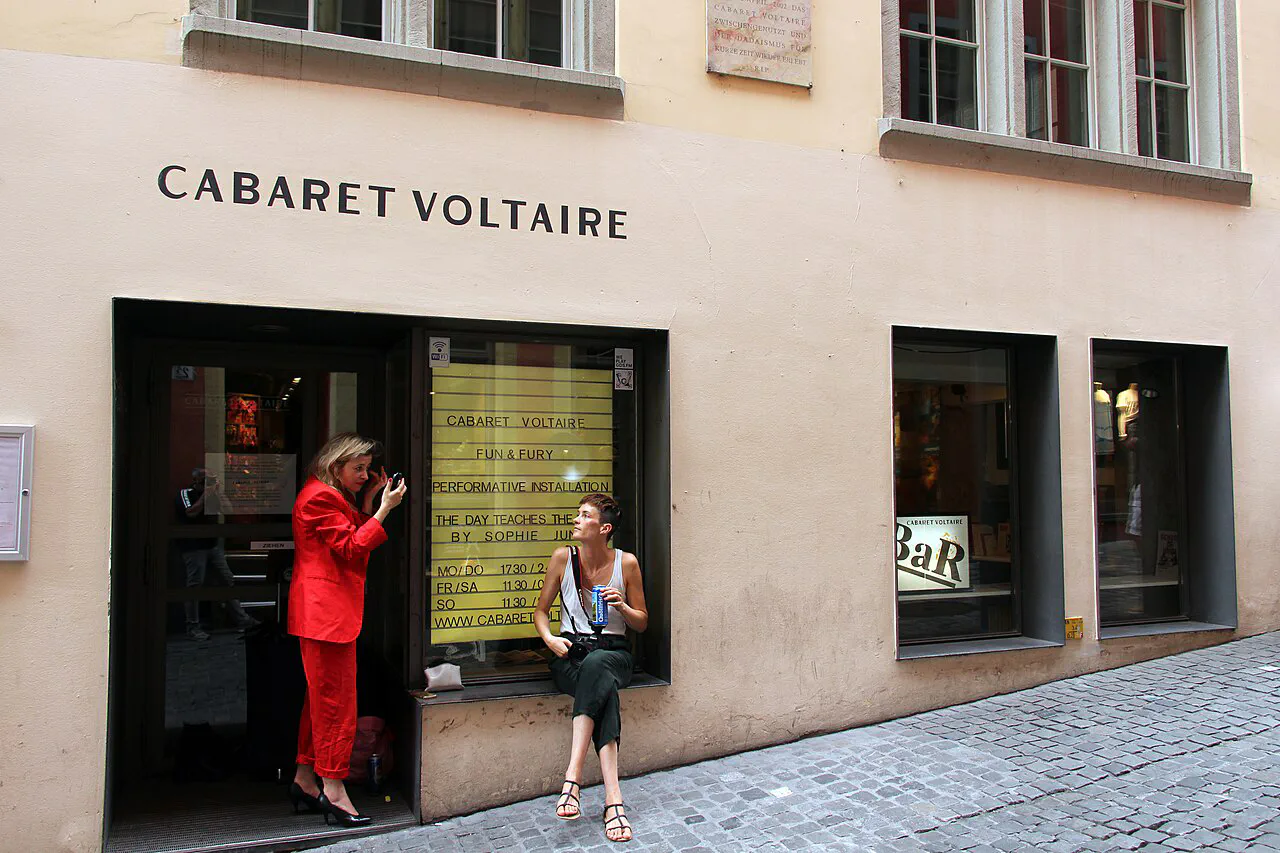
Stand here. The Cabaret Voltaire, Spiegelgasse 1, in the old town. It is now a museum, bar, and cultural space, open to the public.
Dada began in a tavern’s back room here, in 1916. Hugo Ball, a German poet who had turned against the war and was considered a traitor at home, had crossed into Switzerland with the performer Emmy Hennings. Their cabaret became a refuge for young emigrants, and in April its circle agreed on the name Dada. The Cabaret Voltaire lasted only five months. Eighty-five years later, with the building due to close, artists calling themselves neo-Dadaists squatted it. By the venue’s own telling, they saved it from becoming a pharmacy.
5 James Joyce’s escape to Zurich and his grave at Fluntern
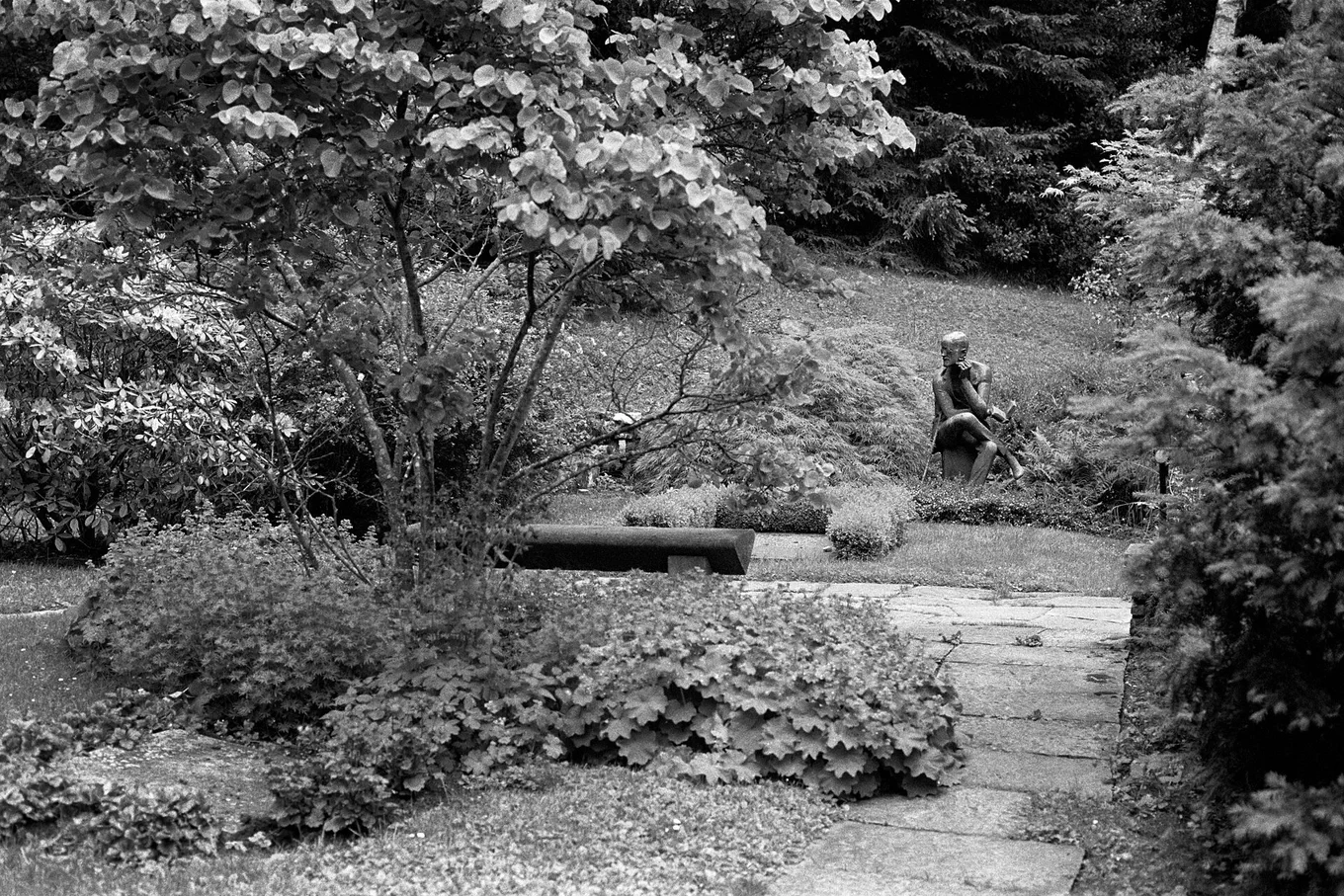
Stand here. Joyce’s honour grave in Fluntern Cemetery, near the zoo, with a bronze statue of him added in 1966.
James Joyce worked on Ulysses in Zurich through most of the First World War. When the Nazis invaded France, he and his wife, Nora Barnacle, fled, and made it back to Zurich in December 1940. Within weeks he needed surgery for a perforated ulcer, and two days after it he died, aged 58. Ireland’s government declined Nora’s request to bring his body home. He lies here, near the zoo, and the Joyce Foundation says Nora took comfort that, from his grave, he would hear the lions roar.
Flight Out of Time: A Dada Diary(Hugo Ball, 1927). A memoir. Ball’s diary of the Dada years, including his time at the Cabaret Voltaire on the Spiegelgasse.
Travesties(Tom Stoppard, 1974). A play. An old man, Henry Carr, looks back on Zurich in 1917, during the First World War, and on arguing far into the night at the Odeon.
Tender Is the Night(F. Scott Fitzgerald, 1934). A novel. In spring 1917, Dick Diver, a promising young doctor, visits the psychopathologist Franz Gregorovius in Zurich.
Films to watch before you visit Zurich
A Dangerous Method(David Cronenberg, 2011). A historical drama film. In August 1904, Sabina Spielrein arrives at the Burghölzli, the pre-eminent psychiatric hospital in Zurich.
The Bourne Identity(Doug Liman, 2002). A film. A laser projector implanted in a man’s hip gives the number of a safe-deposit box in Zurich. Several of its Zurich scenes were shot in Prague.
The Circle(Stefan Haupt, 2014). A docudrama film set in Zurich, about the social network of gay men that developed there in the 1940s and 1950s.
Questions
Where is James Joyce buried?
In Fluntern Cemetery, near Zurich’s zoo. He was buried there in a simple grave in January 1941 and moved to an honour grave in 1966, when a bronze statue of him by the American sculptor Milton Hebald was added. His wife, Nora, and their son Giorgio lie in the same plot.
Where did Lenin live in Zurich?
At Spiegelgasse 14, a few doors up from the Cabaret Voltaire, from February 1916 to April 1917. He and his wife, Nadezhda Krupskaya, sublet a room in a shoemaker’s flat. The house was demolished in 1971 and rebuilt, and a plaque put up in 1928 records his stay.
What is Sechseläuten?
A Zurich holiday, usually on the third Monday in April. After a parade of the city’s guilds, Winter is burned in effigy on Sechseläutenplatz, by the lake, in the form of the Böögg, a snowman packed with explosives. Tradition says a quick explosion promises a warm, sunny summer, and a slow burn a cold, rainy one.